
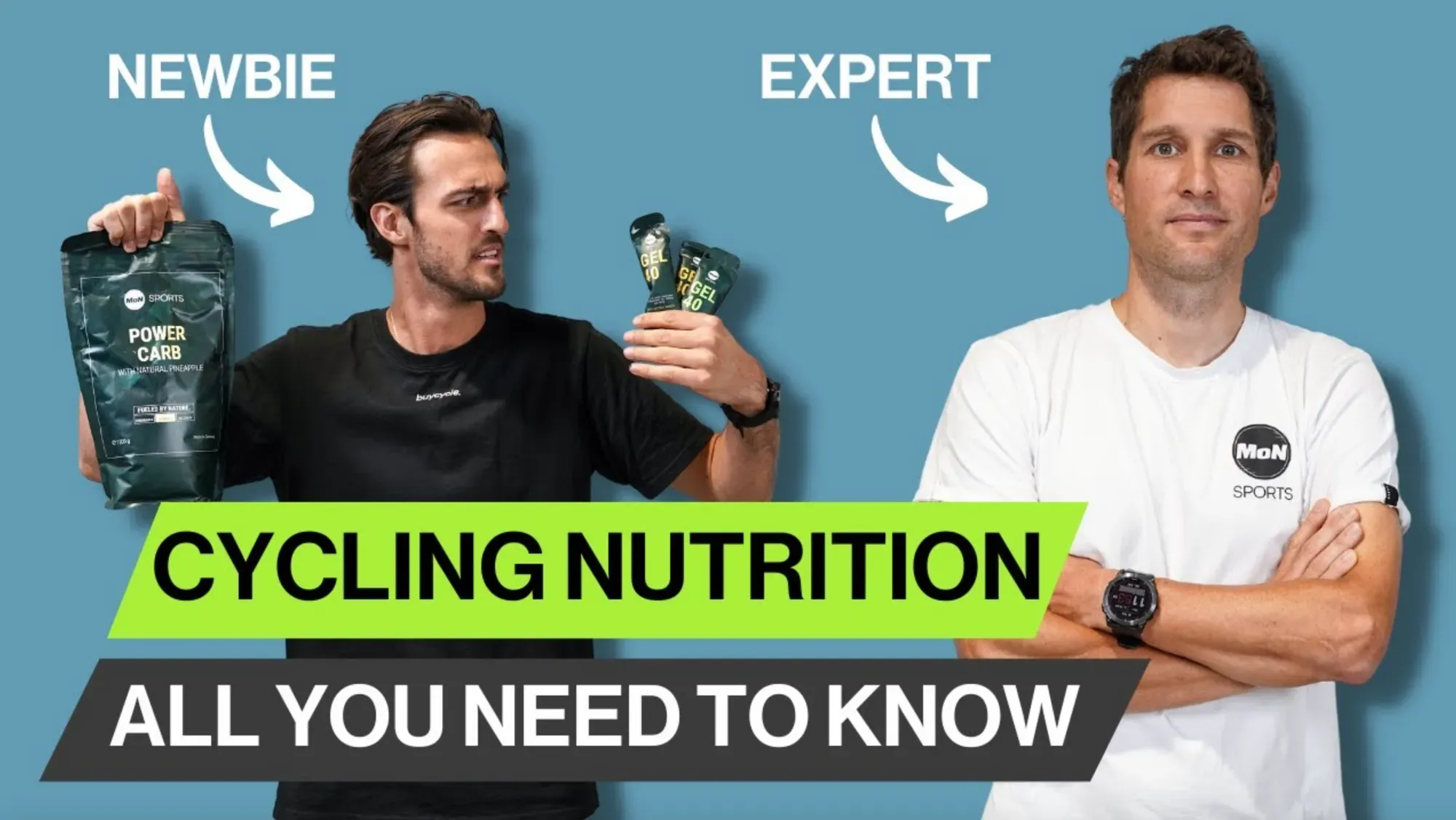
An expert explains how you can best fuel yourself on the bike!
We at buycycle know a lot about bikes, of course. We have expertise in the larger cosmos of cycling, but we also have expertise in nutritional sciences and the best power fuel for cyclists. In that case, even a Nic from buycycle prefers to confide in a true expert: Robert Gorgos, co-founder of sports nutrition manufacturer MNSTRY and sports and nutrition consultant for a World Tour cycling team.
We invited him to our studio to get all the tips and tricks on proper nutrition before, during and after cycling. Discover them on YouTube, interviewers, or get the crisp and short version here on the blog.
1. Nutrition 1x1.
What is the best diet for cyclists? As so often, it depends on the type of ride and training, individual performance potential, weight, etc.
But: As long as you are on shorter, relatively relaxed and easy rides, you don't have to worry about the proper supply of carbohydrates and proteins. From four-hour tours on or if you have specific training goals, it is worthwhile to look more closely at the right nutrition to improve your performance. Lots of carbs that are easy and quick to digest are good, and in most cases, 70-80g per hour is a solid start.
Hydration is and remains key. Make sure to drink enough water throughout the day. The color of your urine is a good guideline for whether you're doing it right: In the morning, it should be a little darker, but from then on, it should be light yellow or completely transparent.
On the bike, you are well supplied with 500 - 1000 ml per hour in mild weather and on not too challenging rides.
2. Before the ride.
If you want to ride for a few hours after work, it's best to start with the right preparation in the morning: Have a healthy and balanced breakfast (how about fruit, an omelette and oatmeal?), pasta and a small salad for lunch, and then a few nuts or a bowl of yogurt right before the ride.
In general, you should plan for large meals three hours before departure and have a final snack just before to get your blood sugar going.
3. During the ride.
The more power you ride, the more watts you put up, the more carbs you need. Beginners and a leisurely tour, we are talking 30g/h on average, which you can easily eat as a banana, a power bar, a sandwich or a piece of cake at the Café-Stop.
An athlete might need 100g/h during a race. Once your rides are going uphill, it's very hot out, conditions are strenuous in any other way and calorie intake with the help of gels, isotonic drinks, or other liquid food is definitely worthwhile. - Alice Huot @ buycycle
4. After the ride.
Here, too, the type of training is crucial: After a short ride, you can relax, shower and enjoy your favorite regular meal. If it were a longer or more strenuous tour, you should ideally drink a recovery shake or eat some dried fruit, like dates, in the first 30 - 35 minutes after your ride.
Best energy bars for cycling
Choosing the best energy bars for cycling is essential for maintaining performance and endurance during long rides. These bars provide a mix of carbohydrates, proteins, and fats to replenish energy and sustain effort, catering to different needs based on ride intensity and individual preferences.
Top picks for energy bars
- Clif Bar: This bar is perfect for long-haul rides. It is made from natural, organic ingredients and balances carbs and protein. It is ideal for extended rides and post-ride recovery.
- Skratch Labs Bar: Low in simple sugars and packed with organic nut butters for sustained energy.
- Torq Bar: This compact option, with organic ingredients and a moist texture, is perfect for mid-ride fueling, though it can be chewy in cold weather.
- SiS Go Energy Bake: This product offers a cake-like texture for easy consumption and provides a higher calorie count, though it requires water to swallow easily.
- High5 Energy Bar: Known for its fruity flavors and real fruit content, it’s versatile for pre-ride and during-ride fueling.
Considerations for energy bars
- Fueling needs: Carbohydrate intake depends on ride duration and intensity, with 1g per kg of body weight per hour as a general guideline.
- Usage versatility: Bars like OTE Duo and Clif Bar, due to their higher protein content, also serve well for post-ride recovery.
- Alternative sources: While energy bars are convenient, real food options such as bananas and homemade snacks are cost-effective and stomach-friendly.
Benefits of energy bars
Energy bars combine convenience with tailored nutrition, offering varying textures, flavors, and compositions to match individual preferences and performance needs during cycling.
You can find even more details about the proper nutrition in cycling in our YouTube video. The perfect bike for your next ride is the one you will find on buycycle.com; after all, we have gravel and mountain bikes. If you have any questions about bikes, help is available on our blog and with our support team. Until further notice, we wish you, as always, Happy browsing, happy fueling, happy cycling!
- The buycycle road bike guide
- Best road bike brands
- Aluminum VS Carbon
- Road bike size chart: find the perfect fit
- Are Craigslist bikes or Pinkbike good options to buy a road bike?
Not sure about a road bike yet?
- Mountain bike vs road bike
Our selection of top...
- Best beginner road bike: Our top 5 best road bikes for beginners
- Best road bikes under 2.000 dollars in 2024
- Top 5 aluminium road bikes
- Top 5 Aero road bikes
Our road bike tests and reviews:
- Cube Agree C:62 Race Review
- Focus Izalco Max 9.8 Review
- Focus Izalco Max 2024 Review
- Specialized Tarmac SL 8 vs. SL 7 comparison
- Specialized Roubaix SL8 Review
- Cube Cross Race VS Cube Nuroad
- BMC Roadmachine Review
- Trek road bike comparison
- Giant road bike comparison
- Canyon Endurace, Ultimate & Aeroad comparison
- Which endurance bike is the best?
Our road bike accessories guides:
- Best road bike saddle: the seats that can’t be beat
- Safe on the bike: All things road bike helmets
- All things (road) bike locks
- All information about clipless pedals
- The buycycle bike computer test
- The bicycle power meter
- Everything about road bike gears
- All about road bike handlebar
Road bike buying guides
- Which road bike is right for me?
- Which endurance bike is the best?
- Best aluminium road bikes in 2024
- Best road bikes under $2.000 in 2024
- Best carbon road bikes in 2024: Our top 5 ultimate picks!
- Carbon road bikes: What are they?
- Trek road bike comparison
- The buycycle road bike guide
- Mountain bike vs road bike: Which one is best for you?
Road bikes reviews
- Cube Agree C:62 Race Review
- Focus Izalco Max 2024 Review
- Focus Izalco Max 9.8 Review
- BMC Roadmachine 01 TWO Review
- Trek Domane AL 2 Review: The ultimate affordable road bike for beginners and beyond
- Trek Madone vs Domane: which is for you?
- Specialized Aethos vs Tarmac: What is the model for you?
- Canyon Ultimate vs. Aeroad: find the best Canyon road bike for your ride
- Trek Domane vs Specialized Roubaix: Which bike is best?
- Specialized Tarmac vs Roubaix: how to decide between the two?
- Trek Madone Gen 8 Review
Top road bikes
- Best beginner road bike: Our top 5 best road bikes for beginners
- Best road bikes for women: Our Top 5 picks for 2024
- Best steel road bike in 2024: our top 5
- Best steel road bikes: Get to know which are the top steel road bikes for 2024?
- Best titanium road bike in 2024: our top 5
- Best titanium road bikes: Our top 5 picks to discover the power of titanium
- Top 5 aero road bikes
- Best carbon road bikes in 2024: Our top 5 ultimate picks!
Road bike sizing guides
History & brands
Road bike gear guides
- Bike helmet size chart and how to measure for a bike helmet
- Best road bike saddle: the seats that can’t be beat
- Everything about road bike gears
- Gravel tires on road bike: A genius move or a misguided choice?
- How to convert a road bike to a gravel bike? Is that even a good idea?
- All things (road) bike locks
- The most important info about the road bike handlebar
- Wrap handlebar tape correctly
- Winter road bike shoes: are they necessary?
Road bike selling guide
Road bike winter cycling
- Winter road bike shoes - are they necessary?
- Winter road bike tires: The best tires for cold-weather rides
- Top 3 Spanish winter cycling destinations: Mallorca, Calpe, and Tenerife compared
Buying guide
- Should I buy a new or used bike?
- What is better: buying or leasing a bike?
- How much does a bike cost?
- How to choose a gravel bike?
- How to choose a mountain bike? Discover our mountain bike buying guide
- How to choose a triathlon bike?
Brands guide
- What are the best road bike brands in the US?
- What are the best bike brands in the USA?
- Scott vs. Cube: What makes these top bike brands unique?
- Trek vs. Specialized: which brand really suits your style?
- Cannondale vs Trek: battle of the biggest
- Cannondale vs. Specialized: discover which bike brand leads the pack
- Giant vs Speiclalized
- Canyon vs. Specialized
Where to buy a bike?
- What are the best bike outlets in the US?
- How to buy a bike at Rose Outlet
- Buy a bike at Canyon Outlet
- How to buy a bike at the Cube factory outlet?
- Bicycle blue book: the right choice for evaluating, selling, or buying a bike?
- Buy a bike on Ebay
- Craigslist bikes vs buycycle: what is the best place to sell or buy a used bike in 2024?
- Facebook marketplace vs buycycle: where to buy or sell your bike?
- Pinkbike: The best place to buy and sell a used bike?
Sizing guide
- Everything about the tire size of your bike
- Bike helmet size chart and how to measure for a bike helmet
- Bike size chart: What size bike do I need?
- Bike wheel size chart: what wheel size bike do I need?
- How to make sure you buy the right-sized second-hand bike
- All about frame height for a road bike
- All about frame height on a mountain bike
- Road bike size chart: Your guide to the perfect fit