Trek Madone Gen 8 Review: The ultimate blend of aero and lightweight?
Hey Riders! Today, we are checking out Trek's latest marvel - the new Trek Madone Gen 8. It is a bike that is turning heads and blurring lines between aero and lightweight. By the end of this article, we will answer the most important question: “Is the new Trek Madone Gen 8 a bike for you?”
- New Trek Madone: Models & Price
- Review of the new Trek Madone: what about comfort?
- Trek Madone Gen 8 vs Trek Madone Émonda: Overview
- Who is the Trek Madone Gen 8 for?
Trek Madone Gen 8 Review: The ultimate blend of aero and lightweight?
New Trek Madone: Models & Price
Let's first talk about the models and price! Trek's giving us plenty to choose from with the Madone.
SL series vs. SLR series
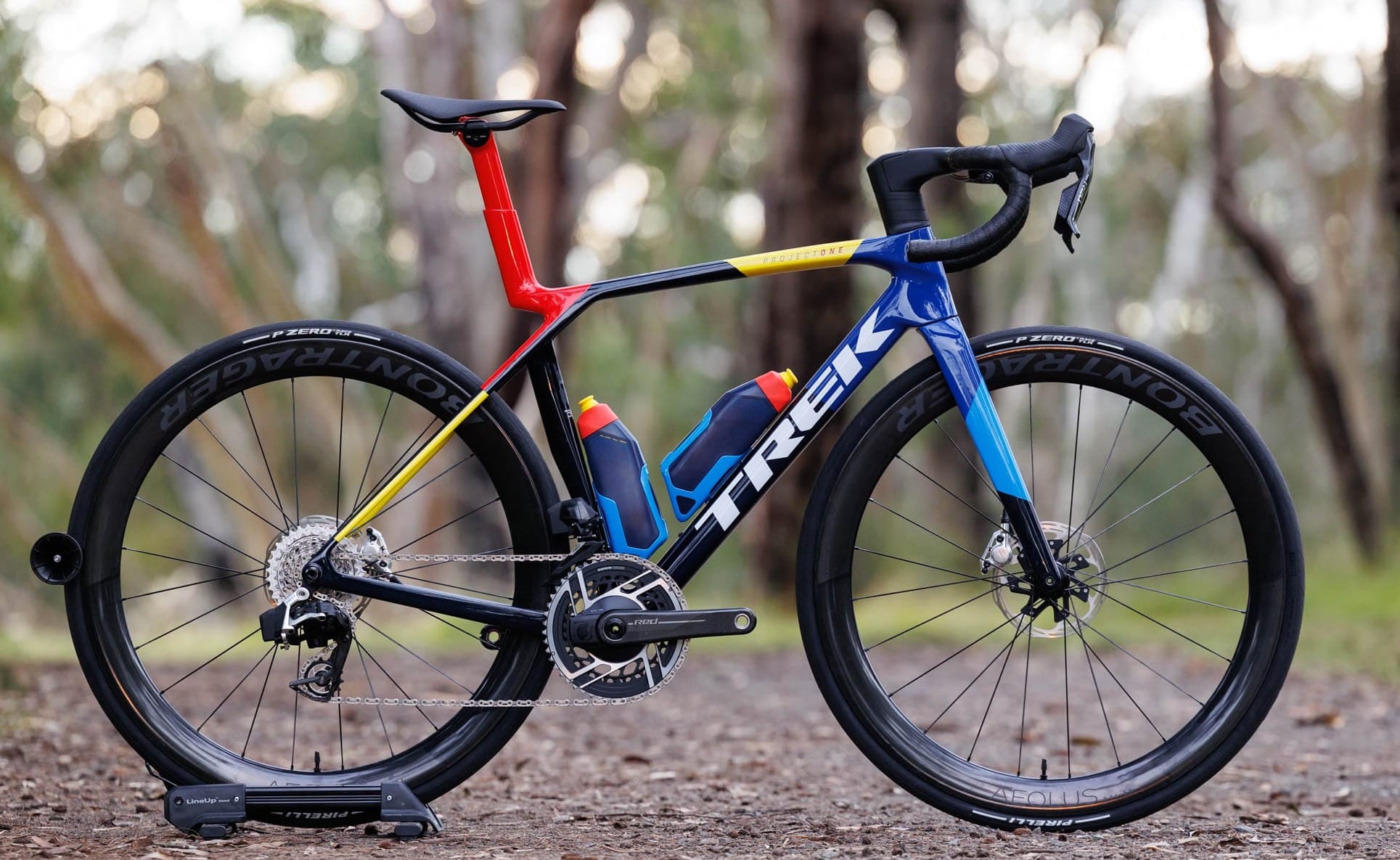
For starters, you can choose between the SL series with a lower-level OCLV Carbon, or the SLR with new top-tier 900 Series OCLV Carbon. The SLR brings less material and with that less weight to the table, with Trek claiming that it’s up to 20% stronger than the 800 series. But of course, it comes with a heftier price tag. If you are still unsure about a carbon or aluminium frame, read our dedicated article.
Trek Madone Gen 8: Build options and pricing
For each carbon layup, there are four complete builds which mainly differ in terms of components affecting quality, weight, and price. The Trek Madone Gen 8 range starts with the SL 5 at $3,499, featuring a mechanical Shimano 105 groupset, and goes up to the top-tier SLR 9 starting at $13,499, equipped with a Shimano Dura-Ace Di2.
SRAM option and premium paint scheme
For you SRAM fans, the Top Tier SLR 9 is also available with the latest RED AXS drivetrain. It'll cost you an additional $500 but will save you about 80 grams and gives you a top-notch drivetrain. Not bad, huh? And if you're looking to really max out your credit card, you can snag the P1 ICON Interstellar paint scheme for a whopping $16,399.
New sizing and geometry
Lastly, they changed the sizing which in turn slightly impacts the geometry in terms of stack and reach. The sizes are now in alphabetic format which allows Trek to cover a wider size range with only six instead of eight size models. Trek mentions the Madone features their H1.5 geometry which is a mix between their “professional” H1 race fit and more all-round H2 geometry. For example, the stack-to-reach ratio for a size M is 1.42 compared to 1.4 of the previous generation. So a slightly less aggressive position. Read our article about road bike size to know which size suits you best.
Review of the new Trek Madone: what about comfort?
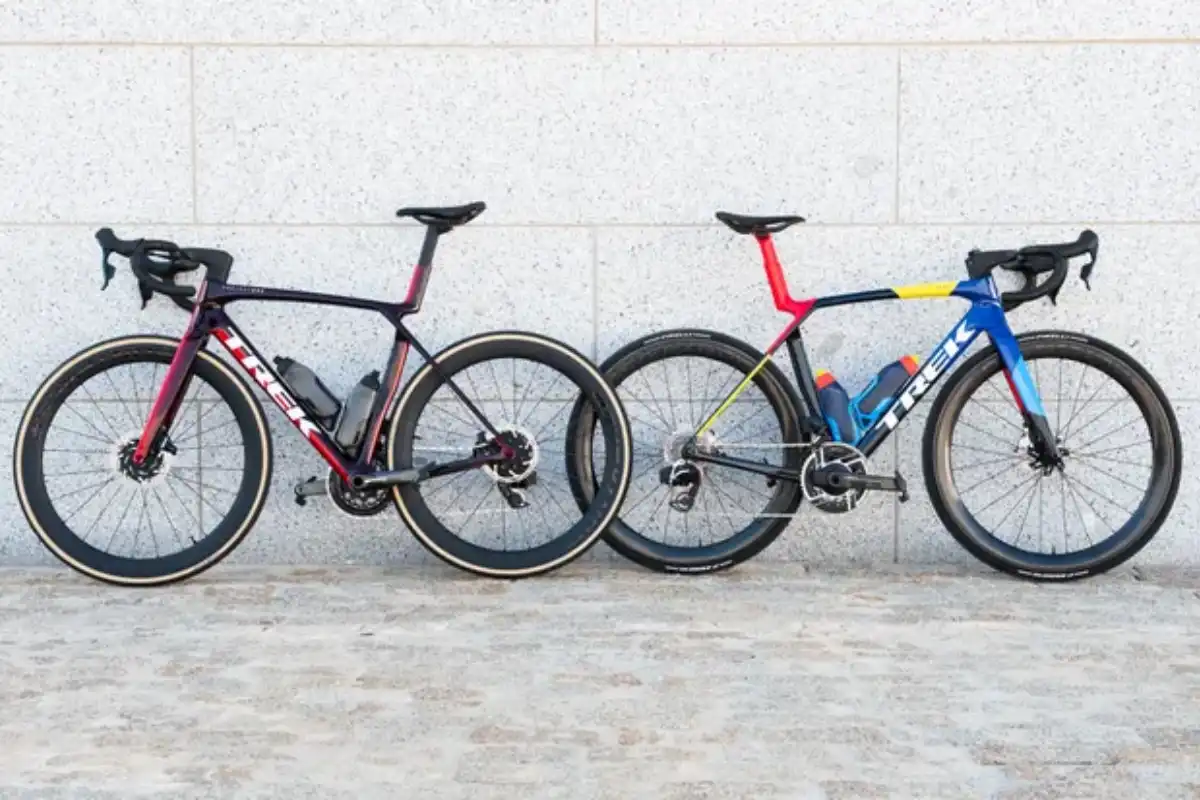
Trek's design approach was not only focused on weight or aerodynamics, but also keeping the whole rider system in mind to provide comfort improvements in places where aerodynamics would have little to no effect.
One standout feature is the IsoFlow technology, which was already introduced in the previous Gen 7. Trek revamped it and claims that the Gen 8 IsoFlow is not only lighter but provides an 80% increase in vertical compliance compared to the previous Trek Madone. This would mean significantly higher micro-vibration absorption when riding on rougher roads and therefore more comfort.
Trek also introduced the new Trek Aero RSL one-piece cockpit for the SLR models. Aero shapes normally aren't that comfortable, but for the handlebar, Trek came up with a shape that gives the rider a comfortable grip while still providing the best possible aerodynamics.
Trek Madone Gen 8's weight
Weight-wise, thanks to the now thinner tube shapes and manufacturing process, the Gen 8 frame is 320g lighter than the previous generation, now matching the Émonda's frameset weight. But here's the funny part - despite these improvements, the complete bike is still a little bit heavier than the actual Emonda. A Medium/Large Madone SLR 9 Gen 8 comes in at around 7.08kg, while the 56cm Émonda SLR 9 weighs only 6.60kg. This is mainly due to the deeper Bontrager Aeolus RSL wheels.
Trek Madone Gen 8's aerodynamics
Now, let's talk about shapes and aerodynamics, which is obviously a challenge when slimming down tube shapes to reduce weight. To combat this challenge, not only did they test frame shapes in the wind tunnel with pedaling mannequin "Manny" for real-world race conditions but Trek also introduced their new "Full System Foil" technology, improving on their previous Kammtail Virtual Foil shapes. Trek's engineers got creative with their computer simulations and came up with a new way to generate a ton of different aero shapes digitally. This allows them to test various tubes without years of physical prototyping. The result is a more adaptable, efficient, and aerodynamic frame design that pushes beyond the limitations of the previous Kammtail Foil shapes.
But here's where it gets really smart: They didn't just put these shapes everywhere. On parts of the bike where aerodynamics matter most, they used the aero shapes, and in areas where aero isn't as crucial, they focused on improving overall stability and stiffness which ended up in a big aero front and slim seat stays in the back.
Trek Madone Gen 8's handlebar
Trek also redesigned and introduced the new one-piece Aero RSL handlebar, making it thicker and rounder. Counter-intuitive, right? But here's the cool part - this design creates a wake that slightly reduces drag on the pedaling legs. It's all about that rider system-level approach to aerodynamics. Note that the Aero RSL one-piece handlebar is only offered with the SLR models of the Gen 8. The top bar is also bent backwards which promotes a more tucked-in position in the elbows, which Trek claims to be more aero. The flare in the drops is also very welcome for downhill descents.
Bottles and cages
To further improve aerodynamics, Trek even developed aero water bottles and cages designed to work seamlessly with the down tube and seat tube, saving an additional 1.8 watts compared to standard 620 ml bottles. Trek also mentions that it is better to leave them on even when empty. And if you get yourself the SL or SLR 9 version, these $100 bottles are included in the price. But if you are not a fan of the aero bottles, you can also use standard round bottles.
The results? The Trek Madone Gen 8 outperforms both its predecessor and the Émonda in various conditions. Compared to the Émonda, Trek claims that the Trek Madone Gen 8 saves 11.3 watts at 35 km/h. In real-world terms, that's a whopping 77.8 seconds saved per hour at 200 watts of rider output. Even when the Émonda is pimped out with the RSL Aero Bar and RSL 51s, the Trek Madone Gen 8 still maintains a 6.8-watt advantage. That's 46.1 seconds saved per hour. But remember, at the end of the day, it's not just about the bike - it's about the rider producing the watts!
Trek Madone Gen 8 vs Trek Madone Émonda: Overview
Who is the Trek Madone Gen 8 for?
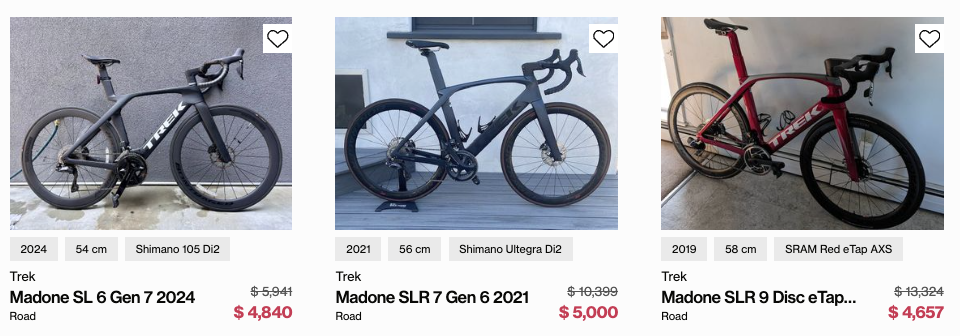
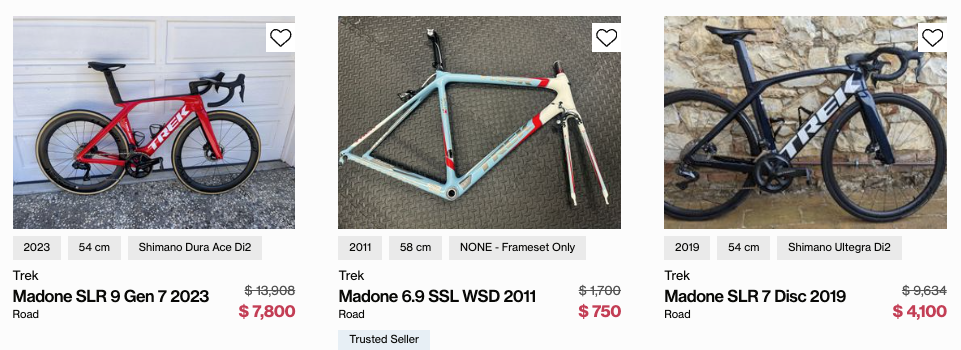
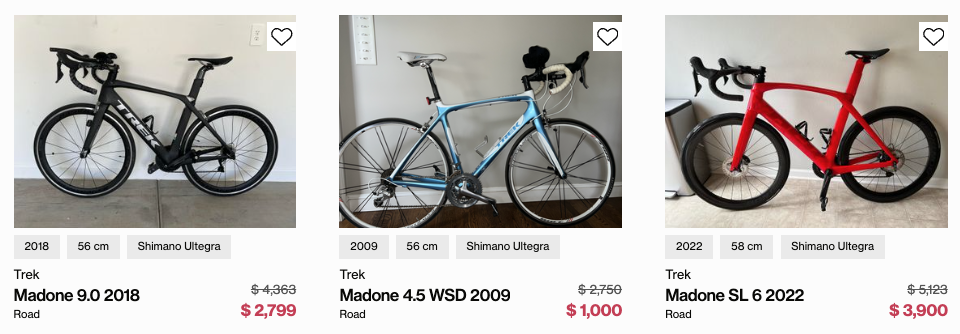
But let's circle back to our original question: Is the new Trek Madone a bike for you? Well, if you're after a versatile race machine that is equally at home on flats and hills, and you're willing to invest in top-tier technology, then yeah, it might just be your perfect ride. But now that the new generation is out, the previous models will experience a decent price drop. Maybe you can find your dream Trek Madone on buycycle.com?
- The buycycle road bike guide
- Best road bike brands
- Aluminum VS Carbon
- Road bike size chart: find the perfect fit
- Are Craigslist bikes or Pinkbike good options to buy a road bike?
Not sure about a road bike yet?
- Mountain bike vs road bike
Our selection of top...
- Best road bikes under 2.000 dollars in 2024
- Top 5 aluminium road bikes
- Top 5 Aero road bikes
Our road bike tests and reviews:
- Cube Agree C:62 Race Review
- Focus Izalco Max 9.8 Review
- Focus Izalco Max 2024 Review
- Specialized Tarmac SL 8 vs. SL 7 comparison
- Specialized Roubaix SL8 Review
- Cube Cross Race VS Cube Nuroad
- BMC Roadmachine Review
- Trek road bike comparison
- Giant road bike comparison
- Canyon Endurace, Ultimate & Aeroad comparison
- Which endurance bike is the best?
Our road bike accessories guides:
- Best road bike saddle: the seats that can’t be beat
- Safe on the bike: All things road bike helmets
- All things (road) bike locks
- All information about clipless pedals
- The buycycle bike computer test
- The bicycle power meter
- Everything about road bike gears
- All about road bike handlebar