
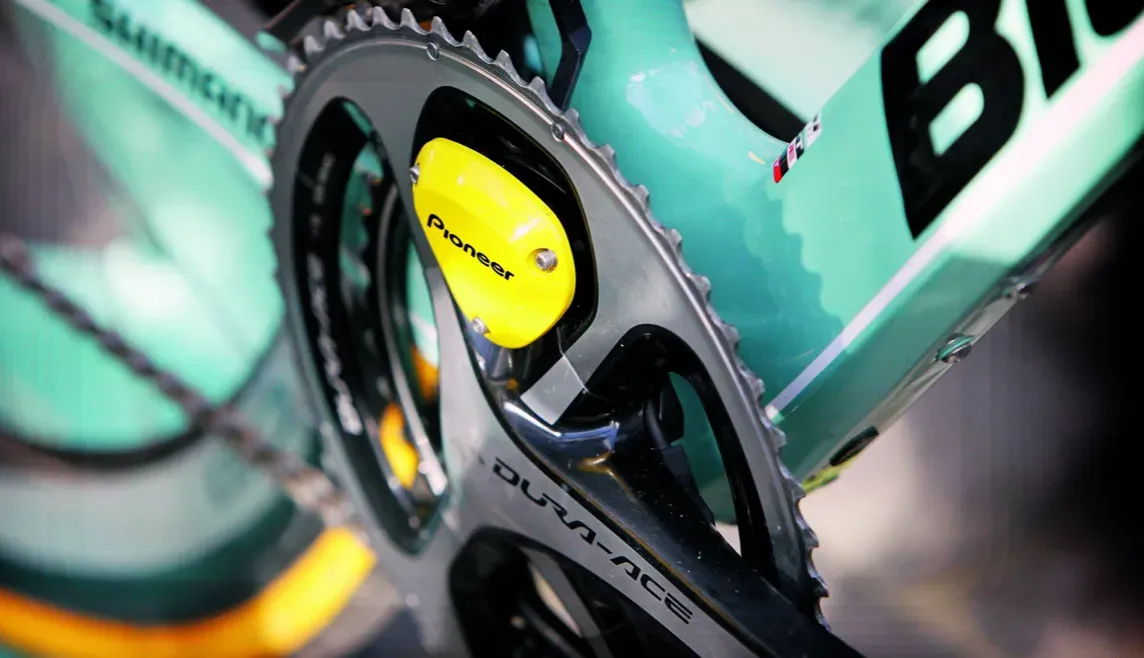
How to perfect your training
Trust is good; control is better. This also applies to cycling when it comes to checking your performance. Fortunately, there are power meters for this purpose.
These modern gadgets not only measure speed, altitude or time, but also cadence or your balance. If you know more about your training, you can increase and improve it more easily, but how exactly? We'll answer all your power meter questions in today's blog post!
1. What is a power meter?
While cycling, a power meter measures in real time the force generated while pedaling and the cadence (the revolutions of the pedals per minute) and calculates the power output in watts based on this data. The compelling part? Factors such as the incline or decline of the route and any headwind are completely irrelevant to the measurement, which makes the power meter a very accurate power meter....
2. When is a power meter worthwhile?
A bike computer is used for data collection. Heart rate monitors and your Strava app. But insights into your average speed, heart rate, or elevation gain are limited because they all depend on the type of training, the route, your riding style, your (mental) health, your (physical) health, headwind and many other factors. If you want to measure your rides precisely and objectively to evaluate, compare or improve them accordingly, then you need a power meter.
Meanwhile, this now relatively affordable purchase is not only for experienced road bike riders. Also, MTB riders can benefit from it; beginners of all disciplines can use the power meter to find out more easily which training is best suited to them, as well as during indoor training.
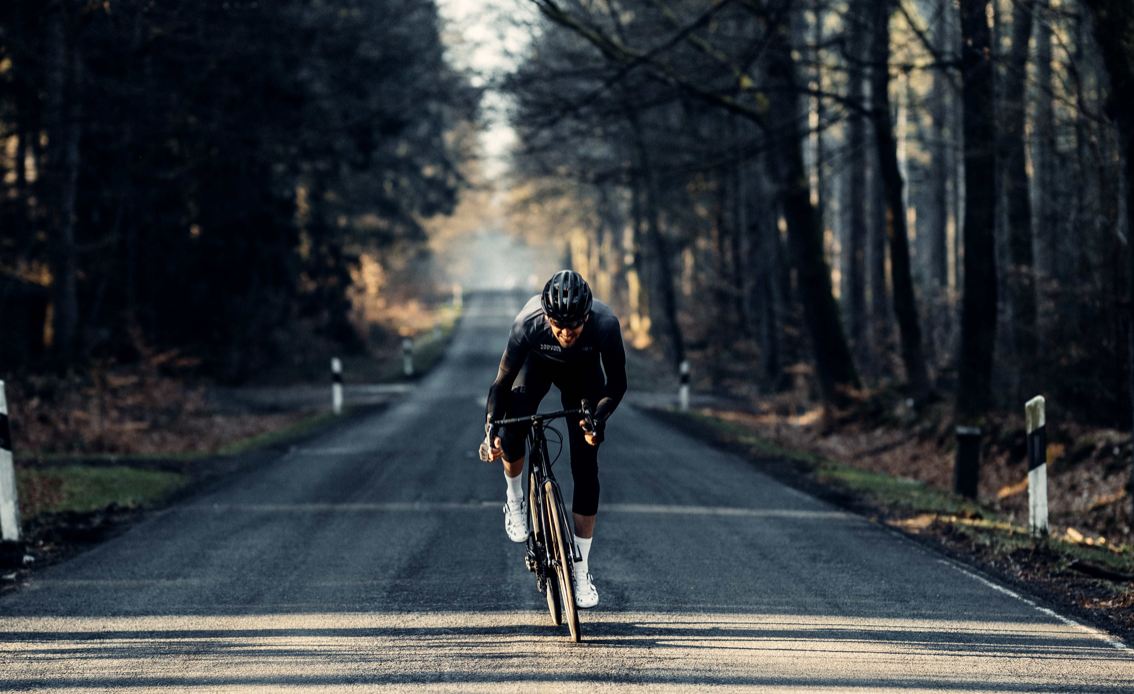
3. How does a power meter work?
There are different types of power meters. Cadence can be measured either by a magnet on the pedal crank and a sensor on the chain stay, or electronically by determining the length of the sine wave generated. Power is usually determined by so-called strain gauges, which have an electrical resistance that changes depending on how hard or weakly you pedal while cycling. The power meter collects the power data and then forwards it to the cycling computer. Here they are, then calculated and digitally displayed.
4. What does a power meter show?
First and foremost, a power meter tells you your current power in watts. The pedaling time and index are also determined from the calculated cadence. The former is the total riding time minus the rolling phases, and the latter represents the correlation between total riding time and rolling phases as a percentage. In addition to the maximum and average power displayed after a completed training session, the so-called FTP value is exciting.
This functional threshold of power (FTP) describes the highest power that could be maintained during a one-hour ride, thus offering the possibility to derive training zones. So in which part of the ride did you actively regenerate, when did you train your basic endurance, where was your lactate threshold and when did you train anaerobically? The power meter helps you answer such questions, and you can then use this data to design a more targeted training program. - Alice Huot @ buycycle
Other values can be measured for power meters that measure both sides. The TE, torque effectiveness, considers both positive and negative torque (positive torque means the force that pushes the pedal down, negative torque means the counterforce of the rear leg). The pedal smoothness indicates how smoothly pedaling is done, and the balance value, again separately,
5. What are the power meters?
Power meters can measure on one or both sides. Single-sided measurement is measured by a left pedal or crank arm sensor, and two independent sensors measure double-sided. Double-sided measurement is suitable for identifying which leg is more powerful, but at the same time, it is more prone to measurement errors. Power meters with single-sided measurement are usually more affordable. But power meters also differ in the way they are attached and in a few other factors:
Power meter pedals
These specially designed pedals measure the power generated when pedaling after installation. The installation is simple but adds a few dozen grams to your bike's weight. Regarding price, power meter pedals with one sensor start at about 400€; for a double-sided measurement, the price may be twice as high.
Power meter on the crank
Sensors can also be attached to the crank arms, which provide the exact power measurement at a much lower weight. The question of compatibility with frames, crank arms, cranksets, and bottom brackets is somewhat more complicated here and should be clarified exactly before a purchase. This is a little cheaper; entry-level models are already available from 200€.
Spider-Power meter
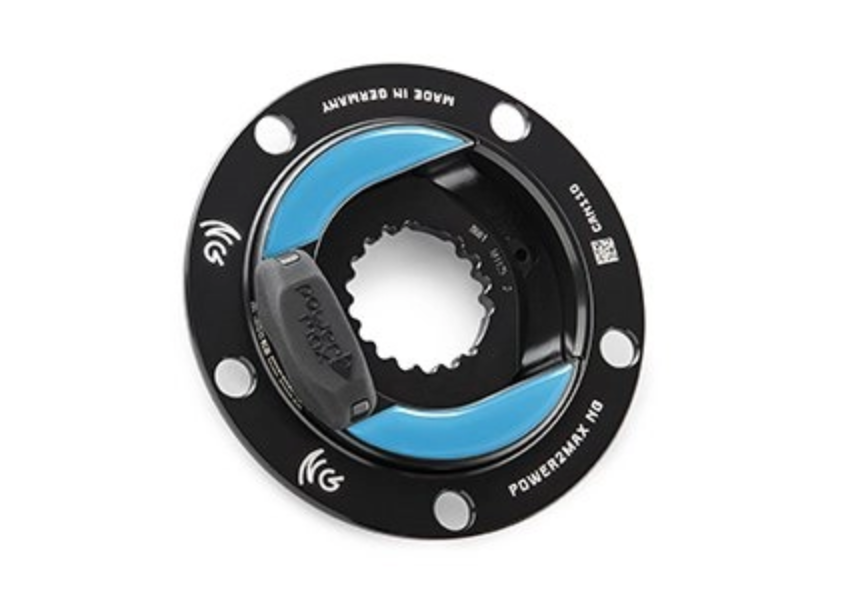
This type of power meter is probably the most common one, partly because it is remarkably accurate and durable. With them, the strain gauges that measure the power are located in the crankshaft. However, spider power meters have minimal compatibility, so they can't be mounted back and forth between wheels and must be adjusted fairly accurately to the individual bike. In terms of price, you can expect about 400€ to 600€.
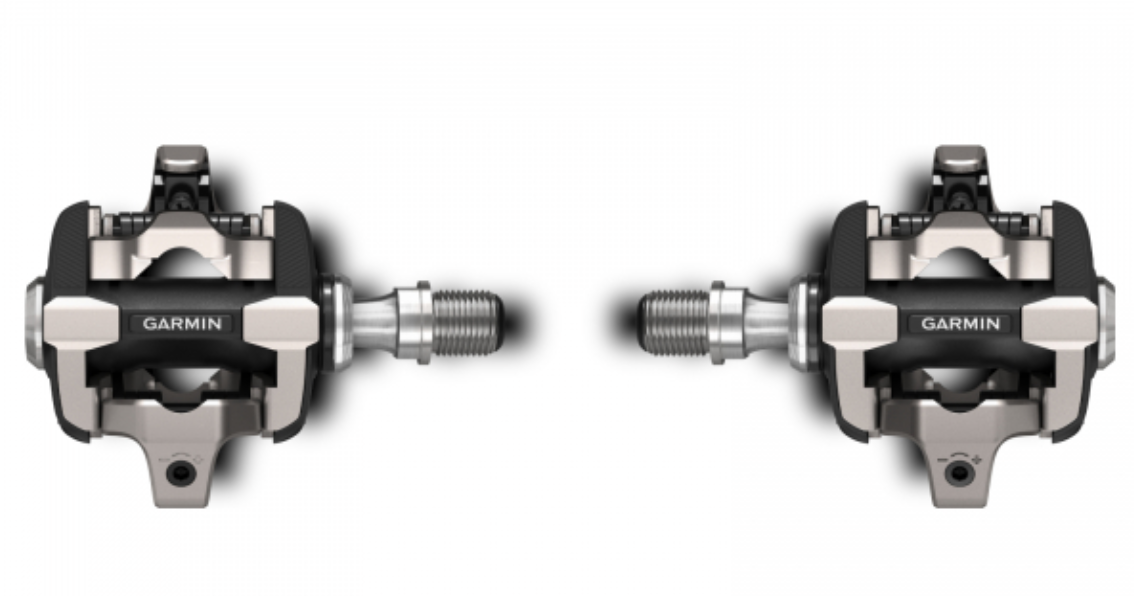
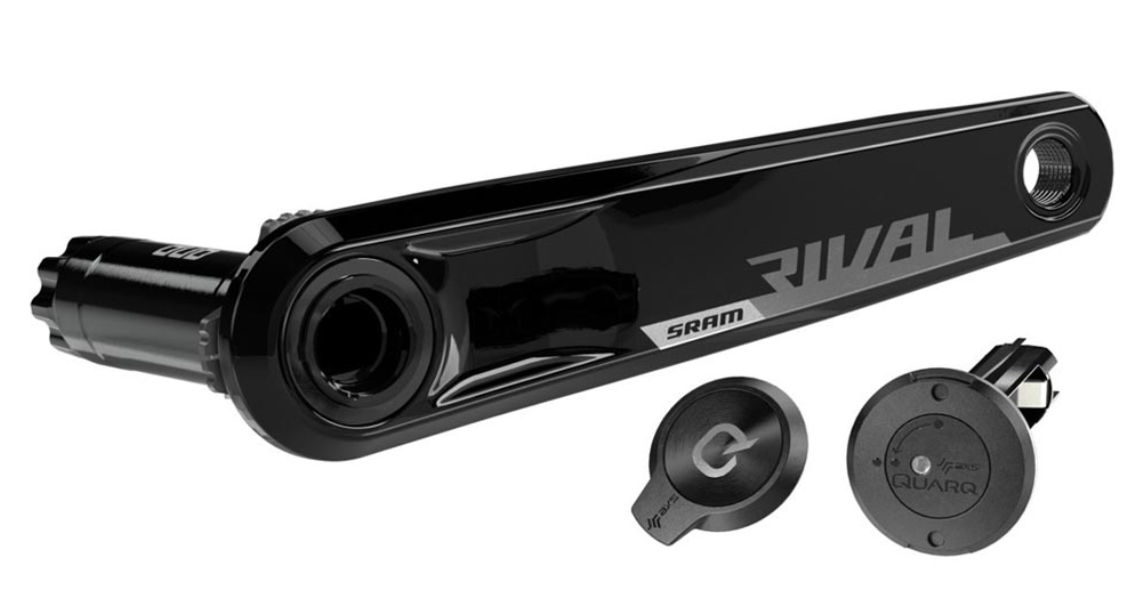
from left to right: powermeter pedals, powermeter in crank arm, spider powermeter
6. What do I have to consider when buying a power meter?
First, your power meter should be compatible with your bike computer and your bike itself. You should also ask yourself how much money you want to spend, how important weight savings are to you, and whether you prefer one- or two-sided measurement.
7. What are the popular models of power meters?
As with all bike components and gadgets, they crystallize after some time on the market. Excellent products and some manufacturers stand out for their high quality. You can find a few of them in the toggle box at the end of this article.
If you still have questions about the perfect power meter or bicycles, please read more in our blog or contact our team for help. Looking at bucycyle.com is worthwhile anyway, because nowhere else is it so safe, fast and easy to buy high-quality second-hand bicycles. Buy or sell, browse around, and maybe you will find the bike of your dreams. Or maybe you can make this find possible for someone else by selling your bike. Either way, as always, we wish you happy browsing and happy cycling.
All about the power meter on the road bike | buycycle
There are various gadgets on the market for monitoring your cycling performance. Bike computers are particularly popular for targeted training. Modern devices not only measure speed, altitude or time. With the help of additional sensors, the cadence or heart rate, and thus the pulse, can also be determined.
The data collected makes it easier to monitor and improve performance during training. Athletes often attach great importance to their pulse. However, heart rate in particular is strongly influenced by external factors. It is more effective to orient oneself on the performance achieved. This can be measured with the help of a power meter.
This tool has enjoyed great popularity in road cycling for quite some time. Due to the precise measurement method and the good comparability with other road cyclists, professionals have long relied on this type of training control. A power meter can also be helpful for the MTB. Here are the most frequently asked questions about the power meter answered.
What is a power meter? A power meter measures how many watts are generated while cycling. This happens in real time. The power generated while pedaling is the force applied and the pedaling frequency. Cadence means the revolutions of the pedals per minute. So, the power meter measures force and cadence, and then a bike computer calculates the power. Different types of power meters can be mounted on road bikes.
Power measurement by a power meter is remarkably reliable because factors such as the incline or decline of the route and headwind are irrelevant for the measurement. Only the power the rider brings to the pedals at what speed counts. The watt measurement is very accurate. When is a power meter worthwhile? Anyone who likes to collect data while cycling and uses it to achieve training goals usually uses a bike computer. Bike computers measure various values such as average speed, times, altitude, etc. For example, many devices can also be retrofitted with additional sensors that can determine the cadence or heart rate.
The heart rate should not be seen as a benchmark for monitoring training. After all, our pulse depends on various external influences such as temperature conditions, or individual factors such as food intake or state of mind. For example, we are particularly nervous during a competition, which is visible in our heart rate. In addition, there is a temporal difference between the load and the pulse. Especially during interval training, it is noticeable that the pulse peaks only after the high load. So, heart rate is not a reliable data source for designing your training. Instead, it tells how the body reacts to a load.
Also, repeatedly reaching a certain average speed is not a mature training strategy. Likewise, speed is closely interwoven with other factors such as the incline, the course gradient, or headwinds. The power meter shows how much power is produced without any time offset. Idle times are also measured. If you stop pedaling downhill, there is no training effect. If you monitor your heart rate or average speed, however, this is not noticeable. The power meter, on the other hand, reveals the truth.
Riding can thus be controlled very precisely and objectively, whether during training or a competition. The additional heart rate measurement still makes sense for cyclists to get a feeling for which training intensity feels. For example, during a triathlon, you can better rely on your body's feelings and allocate the available forces. This requires experience with the performance and the body feeling that prevails.
To increase your performance, it is advisable to support the documentation of the data with a power meter. Thanks to the ever-increasing number of power meters being purchased, they have been affordable for several years and are no longer reserved for professionals. Based on the power, comparing with other road cyclists is also feasible. Comparing one's previous workouts should also not be underestimated.
After all, a comparison of heart rate would always be very inaccurate due to the many determining factors. A power meter also helps determine what type of athlete you are. Some cyclists like sprints more, others are naturally more talented in long-distance riding. A power meter doesn't just make sense for road cyclists. Interested mountain bikers can also measure their performance with it. This is especially worthwhile because of the often high number of meters of altitude climbed.
Power meters can also be attached to a Gravel bike or E-bike. What's exciting about a power meter is not just the power measurement to track a training goal. It can also provide new motivation while riding by competing against oneself. It is much more likely to go to one's limits than pure training by gut feeling.
By the way, a power meter can also be helpful on a roller trainer. Even when training indoors, you usually want to monitor your performance values. A power meter can better determine the distance covered on the roller trainer. How does a power meter work? There are different types of power meters.
The cadence can be measured either by a magnet on the pedal crank and a sensor on the chain stay or electronically by determining the length of the generated sine wave. So-called strain gauges usually determine the force. Strain gauges have an electrical resistance; when deformed, it changes. The resistance changes depending on how strongly or weakly the pedaling is done while cycling. The power meter collects the power data and then forwards it to the cycling computer.
Here, they are calculated and displayed digitally. What does a power meter show? A power meter can display power in several ways. First and foremost, the current power in watts can be displayed constantly updated. The power display is also possible in three, ten, or 30-second intervals. Thus, it no longer fluctuates so wildly.
The power meter must determine the cadence since it is essential for determining power. Pedaling time and pedaling index can also be derived from the cadence. The pedaling time is the total riding time minus the rolling phases in which no pedaling occurred. The pedaling index represents the relationship between total riding time and rolling phases as a percentage. After a training session, the maximum and average power can also be retrieved.
It is essential for the average power to include zero values as well. This can be selected in the menu. Especially on routes with frequent altitude changes, only the power applied on the ascent would be considered, but not the idle power on the descent. Thus, the average value can be falsified. The so-called FTP value, functional threshold power value, means the highest power maintained during a one-hour ride.
This FTP value can be used to derive training zones. For example, in which area one actively regenerates during the ride, when the basic endurance is trained, where the lactate threshold lies or when one rides in the anaerobic range. This supports targeted training. After all, neither too strenuous nor too restful training is performance-enhancing. So if you follow a training plan, you get the relevant data. Efficient training can be achieved even with just a few hours a week on the bike.
The so-called Training Stress Score is also called training load on the Strava app. This refers to the rest period in which the body has to recover from the training. The measured heart rate and power are compared to the FTP value. The rest period is particularly important for achieving a training effect. During this time, the muscles regenerate and build up. The racing bike power meter allows the performance of different athletes to be compared particularly well.
This is due to the display of weight-related power, i.e. watts per kilogram. With powermeters that measure on both sides, additional values can be measured. TE stands for torque efficiency. Positive and negative torques are included in the valuation. Each leg is calculated individually. The positive torque means the force that pushes the pedal down. The negative torque means the counterforce of the rear leg. The pedal smoothness indicates how smoothly the pedaling is. The balance shows separately how the distribution of the total power of both legs varies. What power meters are available? There are different types of power meters on the market. Powermeters can measure on one or both sides.
The one-sided measurement is usually done on the left by a pedal or crank arm sensor. The bilateral measurement is done by two sensors that are independent of each other. A bilateral measurement is useful to identify which leg is more powerful. This imbalance can be attributed to various causes. Different-length legs, differently developed muscles, or a hip malposition are anatomically determined reasons. Exhaustion during cycling can also increase a dysbalance.
A one-sided measurement often doubles the values to determine the other leg, resulting in inaccurate power readings. Power meters with one-sided measurement are usually less expensive. Measurement errors and interference due to two sensors are also more likely with a two-sided measurement. The different types of power meters are presented below.
Powermeter pedals are power meters on the pedals. The force exerted on the pedals when pedaling can be measured and calculated together with the cadence in watts. The installation is quite simple. Thus, the powermeter pedals can also be quickly exchanged between different bikes. Powermeter pedals usually fit modern cranks, so there should be no problems during installation.
However, this type of power meter makes pedals heavier. This is due to the strain gauges, which are necessary to determine the force and the battery. Before buying such a pedal system, you should inform yourself, as a driver of click shoes, whether the pedals are compatible with the cleats. Price-wise, power meter pedals with a sensor start at about 400€. For a double-sided measurement, the price can be twice as high. Powermeter on the crank.
Powermeters can measure the power on one or both crank arms. The power is also measured here via strain gauges. Power meters on the crank are very light. This power meter is beautiful since cycling is about every gram that can keep you from your best time. In addition, they are considered not particularly expensive compared to other power meters. Unfortunately, some power meters on the crank are incompatible with the frames of older bikes. So, before buying, you should pay attention to this.
With the one-sided variant of the power meter on the crank, it should be ensured that the crank arm fits the crankset. Thus, the crank arm needs to be the same length as the crank arm of the other side, without a Powermeter. For the double-sided variant, the crankset, including the power meter, must fit the bike's bottom bracket. On the other hand, the price of the power meter on the crank varies between 200€ and 800€.
Thus, they are usually somewhat cheaper than the power meter pedals. This type of power meter is probably the most commonly seen. The strain gauges that measure power are located in the crank spider, which is also called a spider. Spider power meters come in a variety of sizes and shapes. Thus, a model can be found for every bottom bracket and all chainrings.
Professional athletes have long relied on this method of power measurement. This is due to the accuracy guaranteed by Spider Powermeters. In addition, they are considered to be particularly durable. However, spider powermeters are not as easy to change as, for example, powermeter pedals. Thus, they can also not necessarily be used on different bikes for training. This is also due to the limited compatibility of spider powermeters. They must be relatively precisely matched to your bike.
Therefore, before buying, pay special attention to whether the respective Spider-Powermeter also fit the crank and the bolt circle diameter. In terms of price, you can expect about 400 € to 600 €. Thus, Spider-Powermeter moves in the midfield. What do I need to consider when buying a power meter? Before buying a power meter, consider whether you prefer a one-sided or two-sided measurement. This impacts the measurement variant that one should look at the devices. Also, how much one is willing to pay can be considered in advance.
The power meter should also be compatible with your bike computer. In cycling, every gram of weight counts to achieve the best performance. Therefore, looking at the weight of the power meter before buying is also important so as not to be annoyed afterwards. What are the popular power meter models? As with all components and gadgets for the bike, particularly good products crystallize after some time on the market. Some manufacturers stand for high quality. A few of them are mentioned below. However, there is no claim to completeness.
Powermeter pedals. Favero Electronics is an Italian manufacturer. It has the Assioma Uno or Assioma due power meter pedal on the market, which stands out mainly due to its low weight. Assioma uno measures on one side, Assioma due on both sides. Garmin also offers good power meter pedals. The Garmin Rally, as well as the Garmin Vector pedals, are popular. Also, Wahoo or Powertap build popular powermeter pedals. Wahoo offers models such as the Powrlink Zero. In the vernacular, the brand Look is relatively unknown.
The Look Keo pedals rely on SRM electronics and offer high quality. Powermeter on the crankStages Cycling is an American company considered one of the most famous in manufacturing crank systems. They are compatible with cranksets from the most prominent component manufacturers, whether Shimano, Campagnolo, SRAM, or Cannondale. There are power meters, both one-sided and two-sided.
The power meters from States Cycling have a long battery life. Other manufacturers of power meters on the crank are Shimano itself, 4iiii Innovations, Pioneer, and Rotor. 4iiii offers, for example, the Precision Powermeter. The SRAM Dub series is also a well-known power meter series for the crank. Power2max manufactures double-sided power meters for the crank. The Shimano Dura-Ace is probably one of the most common double-sided cranksets with a power meter.
Also, for the Shimano 105 or Shimano Ultegra, crank arms include a power meter. The Sram Rival AXS can be supplemented by a suitable power meter and the Sram Red. As a power meter on the crank, the Rotor is in Power or 2inPower.Spider-PowermeterSRM stands for Schoberer Rad Messtechnik. They mainly produce spider power meters. The SRM Origin is particularly interesting because it offers a lot of scope for your configuration.
The spindle, crank, and chainrings can be adapted to your needs. Thus, the appropriate model can be selected for the own bicycle frame, including bottom brackets. Rotor, FSA and Quarq also produce outstanding spider power meters. Not to be confused with SRM, which is the brand SRAM. It also produces good spider power meters like the SRAM AXS. The company Rotor, for example, has the INspider powermeter on the market.
Components guide
- Bike components guide: what are the parts of a bike?
- What bike parts to upgrade first?
- How much do bike parts cost?
- Where to buy bike parts?
- What are the main gravel bike parts? Check out our guide to gravel bike components!
- What are the main mountain bike parts? Check out our guide to mountain bike components!
- What are the main road bike parts? Check out our guide to road bike components!
- How to convert a road bike to a gravel bike? Is that even a good idea?
- All things suspension travel
Gearing system
- Everything you need to know about the Shimano Di2
- Shimano Claris review: lifting the lid on the Shimano’s most accessible road bike groupset
- All about the Chinese L-TWOO eRX shifting group
Wheels and tires
- Tubeless tires - What are the advantages?
- Going Tubeless
- Gravel tires on road bike: A genius move or a misguided choice?
- Schwalbe tires recycling
- Everything about the tire size of your bike
Breaks
Pedals
Saddles
- Best MTB saddles: saddle up for the trails
- Best road bike saddle: the seats that can’t be beat
- How to calculate your ideal saddle height
Bags
Electronics
- The best bike gadgets 2024
- The buycycle bike computer test
- Everything about road bike gears
- The bicycle power meter
Bike Maintenance
Others