Trek Madone vs Domane – which performance road bike is right for you?

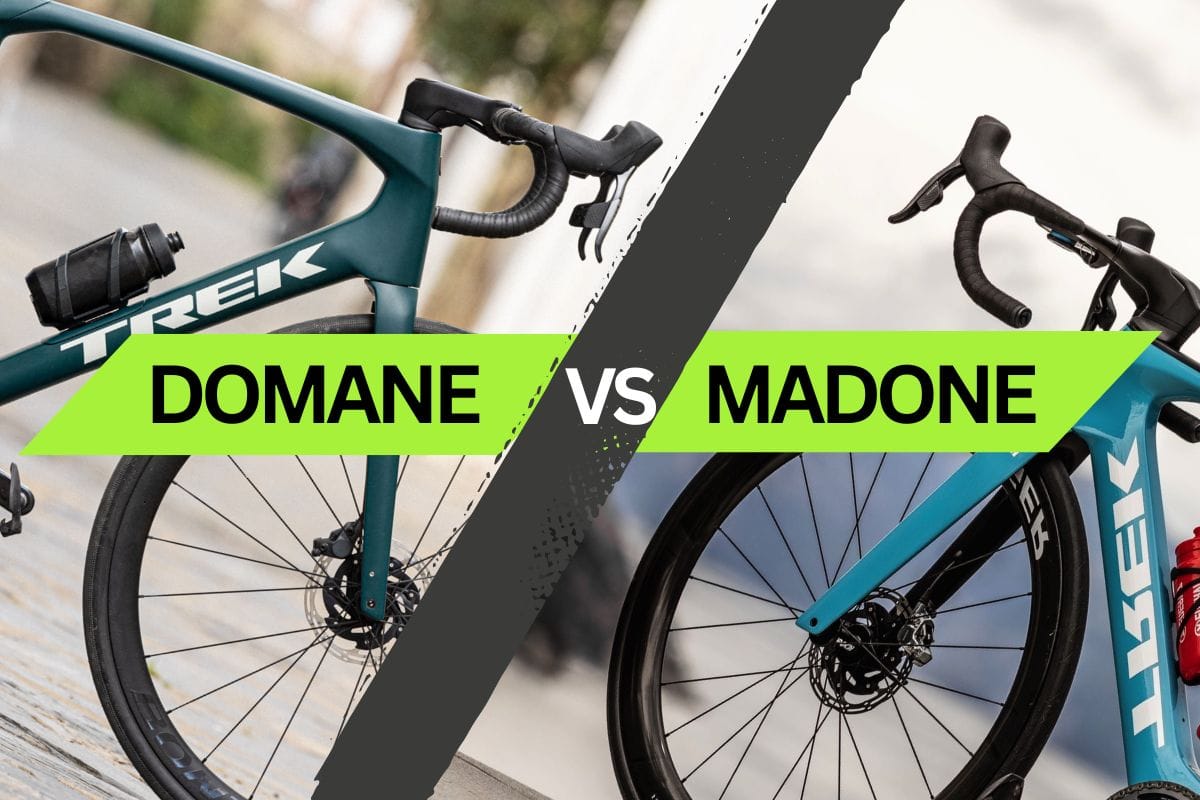
Trek has been a big name in both road bikes and professional cycling for almost two decades, since they released the first Trek Madone in 2003. You may be familiar with some of their road bike line-up already, especially if you’re from North America, or if you were watching the Paris-Roubaix Femmes in 2021 or 2022.
Up until recently, Trek had three main models of road bike: the Madone, the Domane and the Emonda. This guide will walk you through the Madone and the Domane, including their history, what the bikes excel at and what makes them stand out.
The goal is to help you decide which model family is best suited to your riding style. Whether you’re a racer, a casual rider, or somewhere in between.
And what of the Emonda? Well, the Emonda was originally split off from the Madone model family and, as of 2024, is no more, as it has been reabsorbed into the Madone model family.
Trek Madone overview: aero road icon
The Trek Madone is a racing road bike with a long history. First released in 2003 as a lightweight and aerodynamic racing road bike, the Madone has undergone several transformations and won many races since it was first introduced, including the 2007 and 2009 Tour de France. You could make a strong case to say it's the fundamental reason for Trek's position as one of the most popular road bike brands in the USA.
While the Madone was originally intended to be an all-round racing bike, made to excel as a lightweight climbing bike and an aerodynamic sprinter, in 2014 the Madone was split into two models: the Madone and the Emonda. The Madone would continue on as an aerodynamic race bike while the Emonda took over as Trek’s lightest road bike. However, Madone’s newest iteration, the Madone Gen 8, returns to its roots, taking back the mantle of Trek’s lightest and most aerodynamic road bike – which is why the title of this article is not Trek Emonda vs Madone vs Domane.
 Alice Huot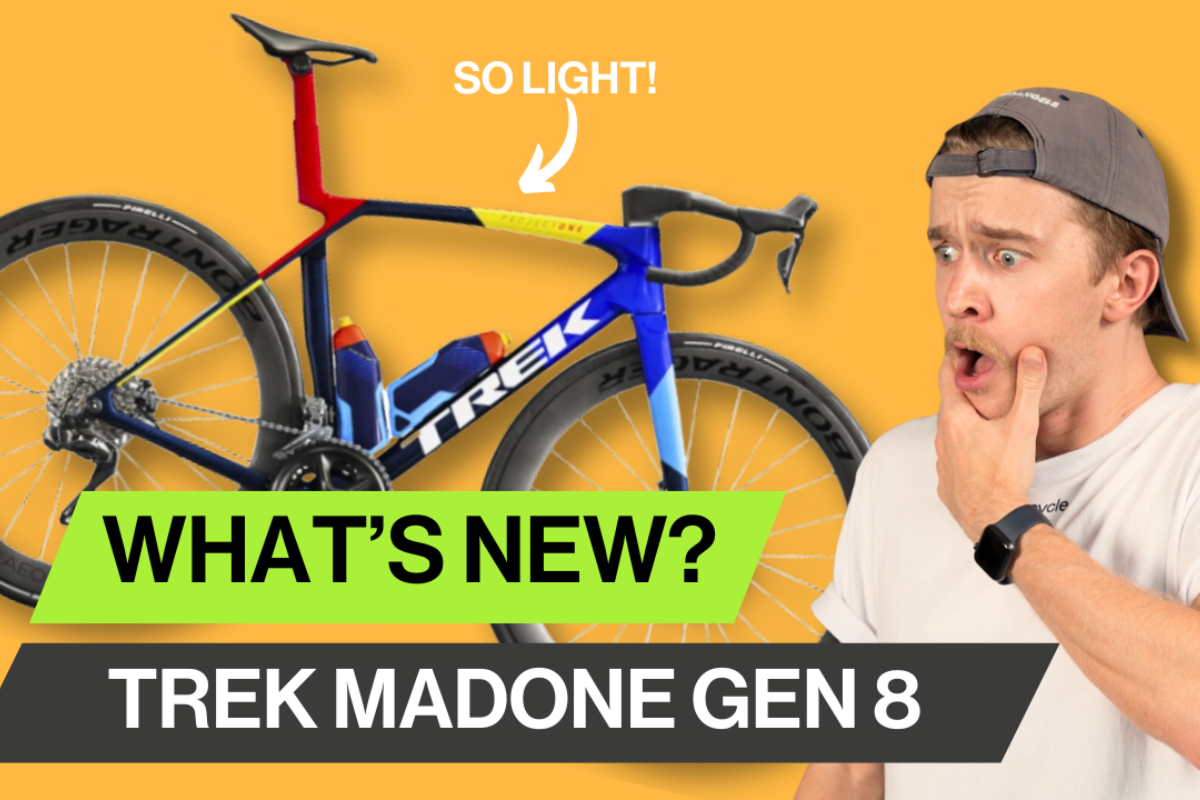
Trek Madone: built for speed
If you’re a road cyclist who likes to go fast, then the Trek Madone may just be your dream bike. No matter what generation of Madone you choose, you’re getting a road bike that is designed for speed and aerodynamics. From 2014 to 2023 (that’s Madone Gen 5 to Gen 7), the Madone wasn’t designed to be the lightest bike out there, so it likely won’t be your top choice for an ultra-light climbing bike.
Being a racing bike first and foremost, the Madone has a more aggressive geometry to make you faster in quick sprints and short efforts, or to simply beat your friends on your weekly group ride. Though built for racing, the Madone, especially in its newer generations, is designed to be comfortable enough to ride for long distances.
Pros & Cons of the Trek Madone
So what are the pros and cons of the Trek Madone?
Pros:
- Whether you’re a racer or a casual rider who likes to go fast, the Madone is built for speed, especially on the flats, though the lighter weight generations will excel on hills as well.
- With such a long history, there are plenty of generations of the Madone for you to choose from.
- If you’re a fan of rim brakes, the Madone was available in a rim brake version until 2018 and the rim versions are still relatively easy to find. If you prefer disc brakes, then the newer generations will be best for you.
Cons:
- The Madone is only offered in carbon frame models, which does make it lighter than aluminum models and increases compliance but does tend to increase the price.
- Older generations of the Madone are limited when it comes to tire clearance, so be mindful of what your preferred tire width is when looking at older Madones.
- With its race geometry, the Madone isn’t ideal for longer distance rides and wouldn’t be the first choice for an endurance rider.
Trek Domane: the monument winner
The Trek Domane was first introduced to Trek’s road bike line-up in 2012 as an endurance road bike, designed to help smooth out the rough cobbles of the spring classics. That original intention has lasted until the present day, when the Domane won back-to-back editions of the Paris-Roubaix Femmes in 2021 and 2022.
Part of what makes the Domane perfect for racing on the cobbles is the Isospeed technology that was introduced with its first generation in 2021. Isospeed is Trek’s decoupling technology, designed to increase compliance and smooth out road vibrations for a more comfortable ride. All Domane generations have an Isospeed decoupler in the seat tube, while several of the newer generations also have a decoupler in the headset for added comfort.
Alice Huot
Trek Domane endurance capability: made for distance
If you’re less concerned with going fast and more focused on being able to ride for long distances without getting too uncomfortable, then the Trek Domane may be the right bike for you. The endurance geometry, as well as the Isospeed technology, makes the Domane perfect for longer rides and even some off-road adventures. That doesn’t stop the Domane from being fast, however. While not as light or aerodynamic as the Madone, the Domane isn’t slow by any means, and is a great choice for road cyclists looking to try out racing or to beat their friends in the local KOM segment.
Learn more about endurance bikes in our guide: Which endurance bike is best?
The Domane can easily be made into an all-road bike, if riding off of the beaten path is more your thing. Trek’s first gravel bike was based on the geometry of the Domane, a good indicator that the Domane can handle the occasional gravel adventure. Newer generations have clearance for tires up to 38mm wide, plenty of space for gravel tires.
Pros & Cons of the Trek Domane
So, what are the pros and cons of the Trek Domane?
Pros:
- If you’re looking for a bike that can do just about everything, the Domane is an excellent choice, with its road smoothing decoupler and clearance for up to 38mm tires.
- The Domane comes in both aluminum and carbon models across all generations, creating a wider range of models to choose from. It also means that the Domane has more accessible pricing in some models.
- With its endurance geometry, the Domane is well-suited to many kinds of riding and will keep you comfortable over long distances.
Cons:
- Though it has several race wins under its belt, the Domane isn’t the fastest bike in Trek’s line-up and may not be your first choice for a race bike.
- As an endurance road bike, the Domane’s main focus is comfort, rather than weight, making it a heavier bike than Trek’s other road bike options.
Key differences of Trek Domane vs Madone
Now that you have a basic overview of both bike models, what are the key differences between the two model families?
The primary difference is what the bikes are designed for. Though both model families are used as race bikes, the Madone is designed for speed and aerodynamics, while the Domane is designed for comfort over long distances. This difference is reflected in each bike’s geometry: the Madone has a race geometry for efficiency and the Domane has an endurance geometry to help you go faster for longer. All generations of the Domane also feature Trek’s Isospeed technology, a decoupler designed to help smooth out bumps in the road. Madone Generation 5 and 6 models feature Isospeed as well, to help make the bike more comfortable, while the newer Gen 7 and 8 models have Isoflow, a gap in the seat tube designed to increase frame compliance.
Another difference between the model families is their versatility. The Madone is a pure road bike, and while newer generations have clearance for up to 32mm tires, you wouldn’t want to take it off road. The Domane, on the other hand, was the inspiration for Trek’s gravel line-up and can be converted to an all-road bike with ease. The newest Domane has clearance for up to 38mm tires and could take gravel tires for adventures beyond the pavement.
Trek Domane vs Madone: comparison chart
See the chart below for a simple guide to the main differences between the two model families. As there are many generations and trim variations available for each model family, this will serve as a general guide to both model families, to help you decide which one would be your next ideal riding companion.
|
|
Frame
Material |
Geometry |
Tire
clearance |
Isospeed
technology |
|
Trek Madone |
Carbon only |
Race |
Up to 32mm on
newer models |
On Gen 5 and
6 models, Isoflow technology on Gen 7 and 8 models |
|
Trek Domane |
Carbon and
aluminum options |
Endurance |
Up to 38mm on
newer models |
Yes |
Which bike is right for you? Trek Madone or Domane?
Still unsure of which bike will suit you best?
If your priority is speed, whether that’s to win races or just to beat your personal best, then you’ll want to take a closer look at the Madone line-up. With many generations and trim levels to choose from, the Madone can be anything from your everyday race bike to a dream build.
On the other hand, if you’re looking to take on long distances in comfort and maintain the ability to go fast when necessary, the Domane will be more up your alley. With its wider tire clearance, many of the newer generations can be fitted with gravel tires to make the Domane an all-road bike. If endurance and adventure are more your thing, then the Domane will be the way to go for you.
Now that you know which bike will suit you best, be sure to check out our selection of Trek road bikes on buycycle, where you can find a selection of both the Madone and the Domane second-hand for a reasonable price.
Road bike buying guides
- Which road bike is right for me?
- Which endurance bike is the best?
- Best aluminium road bikes in 2024
- Best road bikes under $2.000 in 2024
- Best carbon road bikes in 2024: Our top 5 ultimate picks!
- Carbon road bikes: What are they?
- Trek road bike comparison
- The buycycle road bike guide
- Mountain bike vs road bike: Which one is best for you?
Road bikes reviews
- Cube Agree C:62 Race Review
- Focus Izalco Max 2024 Review
- Focus Izalco Max 9.8 Review
- BMC Roadmachine 01 TWO Review
- Trek Domane AL 2 Review: The ultimate affordable road bike for beginners and beyond
- Trek Madone vs Domane: which is for you?
- Specialized Aethos vs Tarmac: What is the model for you?
- Canyon Ultimate vs. Aeroad: find the best Canyon road bike for your ride
- Trek Domane vs Specialized Roubaix: Which bike is best?
- Specialized Tarmac vs Roubaix: how to decide between the two?
Top road bikes
- Best beginner road bike: Our top 5 best road bikes for beginners
- Best road bikes for women: Our Top 5 picks for 2024
- Best steel road bike in 2024: our top 5
- Best steel road bikes: Get to know which are the top steel road bikes for 2024?
- Best titanium road bike in 2024: our top 5
- Best titanium road bikes: Our top 5 picks to discover the power of titanium
- Top 5 aero road bikes
- Best carbon road bikes in 2024: Our top 5 ultimate picks!
Road bike sizing guides
History & brands
Road bike gear guides
- Bike helmet size chart and how to measure for a bike helmet
- Best road bike saddle: the seats that can’t be beat
- Everything about road bike gears
- Gravel tires on road bike: A genius move or a misguided choice?
- How to convert a road bike to a gravel bike? Is that even a good idea?
- All things (road) bike locks
- The most important info about the road bike handlebar
- Wrap handlebar tape correctly
Road bike selling guide
Road bike winter cycling
- Winter road bike shoes - are they necessary?
- Winter road bike tires: The best tires for cold-weather rides
- Top 3 Spanish winter cycling destinations: Mallorca, Calpe, and Tenerife compared
Buying guide
- Should I buy a new or used bike?
- What is better: buying or leasing a bike?
- How much does a bike cost?
- How to choose a gravel bike?
- How to choose a mountain bike? Discover our mountain bike buying guide
- How to choose a triathlon bike?
Brands guide
- What are the best bike brands in the USA?
- Scott vs. Cube: What makes these top bike brands unique?
- Trek vs. Specialized: which brand really suits your style?
- Cannondale vs Trek: battle of the biggest
Where to buy a bike?
- What are the best bike outlets in the US?
- How to buy a bike at Rose Outlet
- Buy a bike at Canyon Outlet
- How to buy a bike at the Cube factory outlet?
- Bicycle blue book: the right choice for evaluating, selling, or buying a bike?
- Buy a bike on Ebay
- Craigslist bikes vs buycycle: what is the best place to sell or buy a used bike in 2024?
- Facebook marketplace vs buycycle: where to buy or sell your bike?
- Pinkbike: The best place to buy and sell a used bike?
Sizing guide
- Everything about the tire size of your bike
- Bike helmet size chart and how to measure for a bike helmet
- Bike size chart: What size bike do I need?
- Bike wheel size chart: what wheel size bike do I need?
- How to make sure you buy the right-sized second-hand bike
- All about frame height for a road bike
- All about frame height on a mountain bike
- Road bike size chart: Your guide to the perfect fit