1x or 2x circuit for gravel bikes?

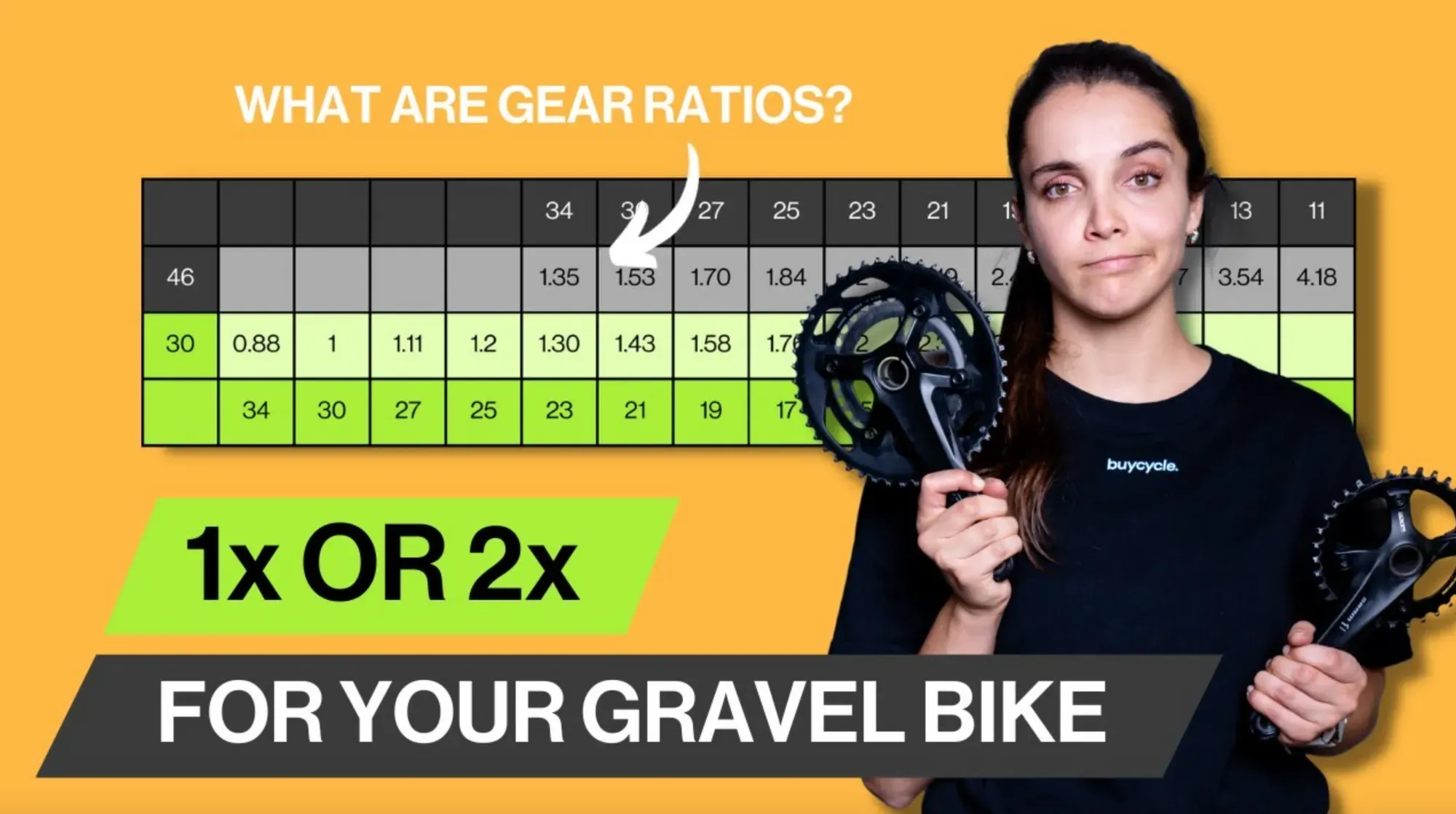
What setup is best for you?
Finally, here's another gravel bike post—and a quite techy one, too. This article is for you if the phrase "gear ratio" does not ring a bell.
And if you are already an absolute expert but want to see the pros and cons of single and double shifting systems on gravel bikes presented at a glance, then you are also in the right place.
Shirin has examined the two possible setups for gravel bikes and helped you determine which one best suits you and your riding style. We will do the same today and start directly with the question: What is a 1x or 2x circuit?
1. What is a 1x or 2x circuit anyway?
A 1x shifting system combines a single, front chainring with a rear cassette of 11, 12, or even 13 sprockets. Sprockets here are nothing more than the "rear chainrings".
A 2x setup, on the other hand, has two front chainrings, each with a specific number of teeth, such as 46/30t - meaning nothing more than that the large, outer chainring has 46 teeth and the small, inner one has 30 teeth.
1x setups offer a relatively wide gear range and are popular for their simplicity. The large chainring on a 2x allows for higher speeds on flat or downhill trails. On the small chainring, you'll ride at a higher, lighter cadence, which is ideal for climbing or demanding terrain.
Remember that the primary difference between the two setups is the number of gears they offer. 2x gears allow for more gears. It's a bit more complex than that, so we'll look at the gear ratio next.
2. What is the gear ratio?
The gear ratio indicates the ratio of the teeth on the front chainring to the teeth on the rear sprocket and refers to the number of revolutions the sprocket makes per full revolution of the chainring.
Gear ratio = teeth chainring : teeth sprocket
e.g. A chainring with 30 teeth and a sprocket with 11 teeth gives you a gear ratio of 30:11 = 2.73
The gear ratio is critical to understanding how a bike's gears affect performance. It doesn't seem easy initially, but not all that much.
The different combinations of chainrings and sprockets (see table) create a variety of possible gear ratios, which in turn determine your gear range. The wider this gear range, the more gradients and driving conditions.
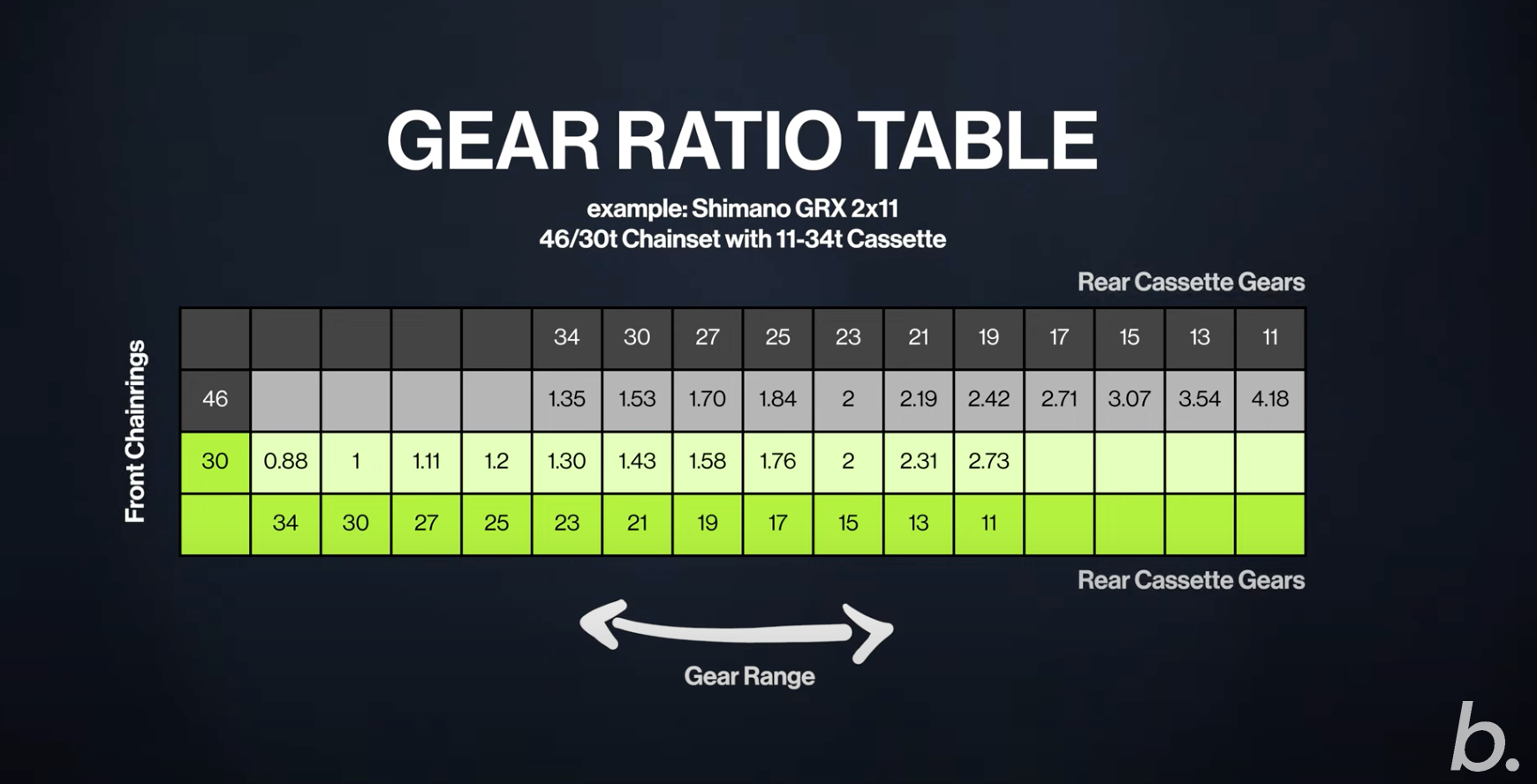
A high gear ratio (e.g. 4.18) offers more speed but requires more pedal power - perfect for flat stretches and descents. Conversely, a low gear ratio (e.g. 1.5) allows for easy pedaling but results in slower speed, making it ideal for climbs and rough terrain. The greater the intervals between gear ratios, the greater the increments between gears will be.
"This will be especially relevant to you if, when choosing your next bike, you want to know how precisely you can shift and to what extent the possible gears will give you the adaptability you want." - Anja Benson @buycycle
But if we look at the different combinations, we find that certain gears are identical or similar. Now, we did claim that 2x setups offer more gears... well, almost. However, due to gear overlap, a 2x11 setup, for example, doesn't offer the full 22 gears but 14 or 15 gears.
3. Advantages and disadvantages of the 1x circuit
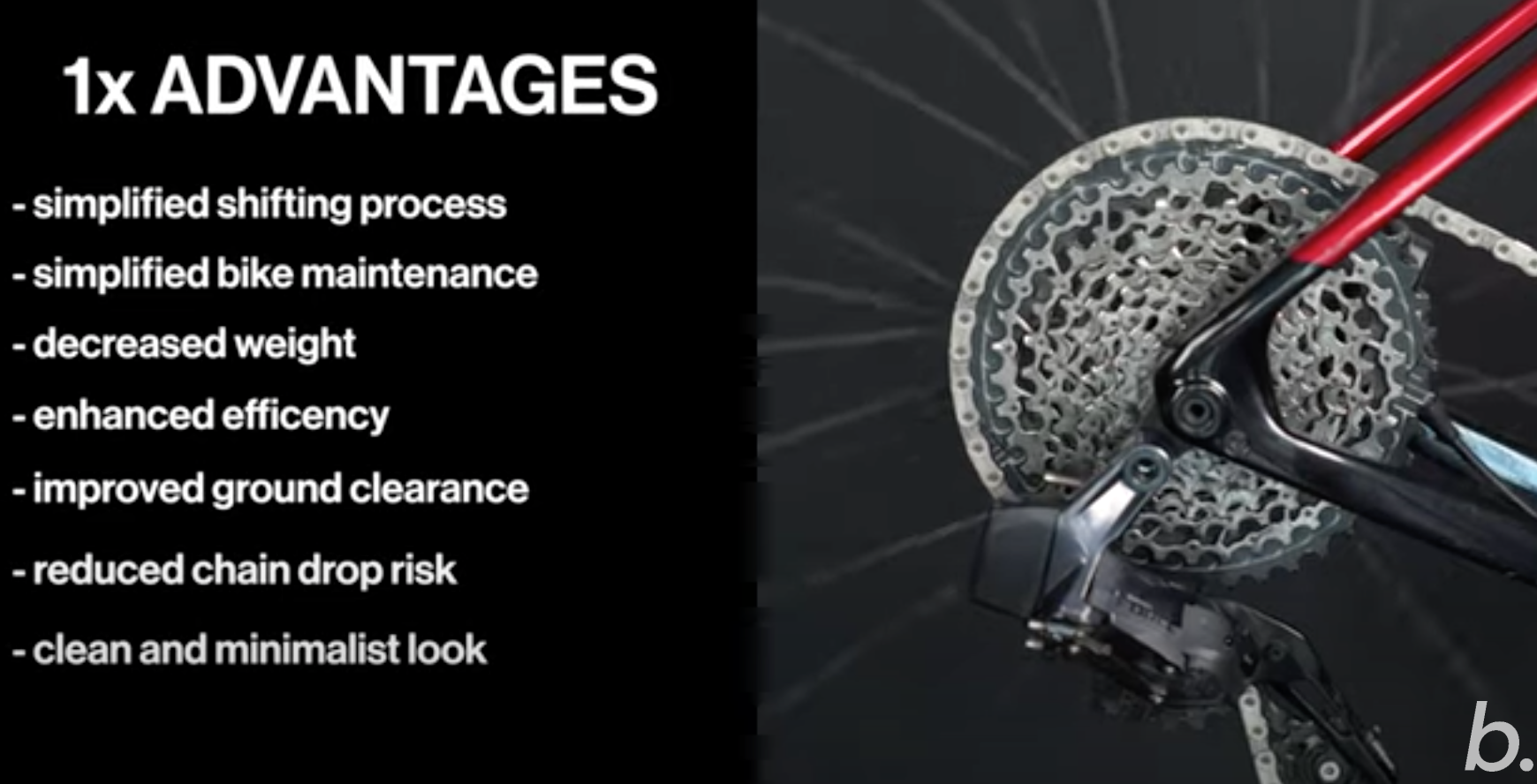
Now that you know the technical basics, we can compare the two shifting systems. What can a 1x shifting system do for you, and how do you benefit from a 2x shifting system? The 1x setups offer the following advantages:
They simplify the shifting process. Because individual gears can't overlap, you don't have to worry about potential cross-shifts and can entirely focus on shifting the rear gears.
"Fewer components also mean less maintenance and fewer services required, as the complexity of the drivetrain is reduced." - Alice Huot @buycycle
A 1x shifter reduces the bike's weight and increases efficiency when riding on gravel, so it's ideal for gravel bikes. Also, a single chainring improves ground clearance and reduces the risk of the chain falling off, thanks to the narrow, wide teeth. Thus, the chain can not slip sideways or fall off the chainring during the ride. Last but not least, a 1x setup gives you a cleaner look.
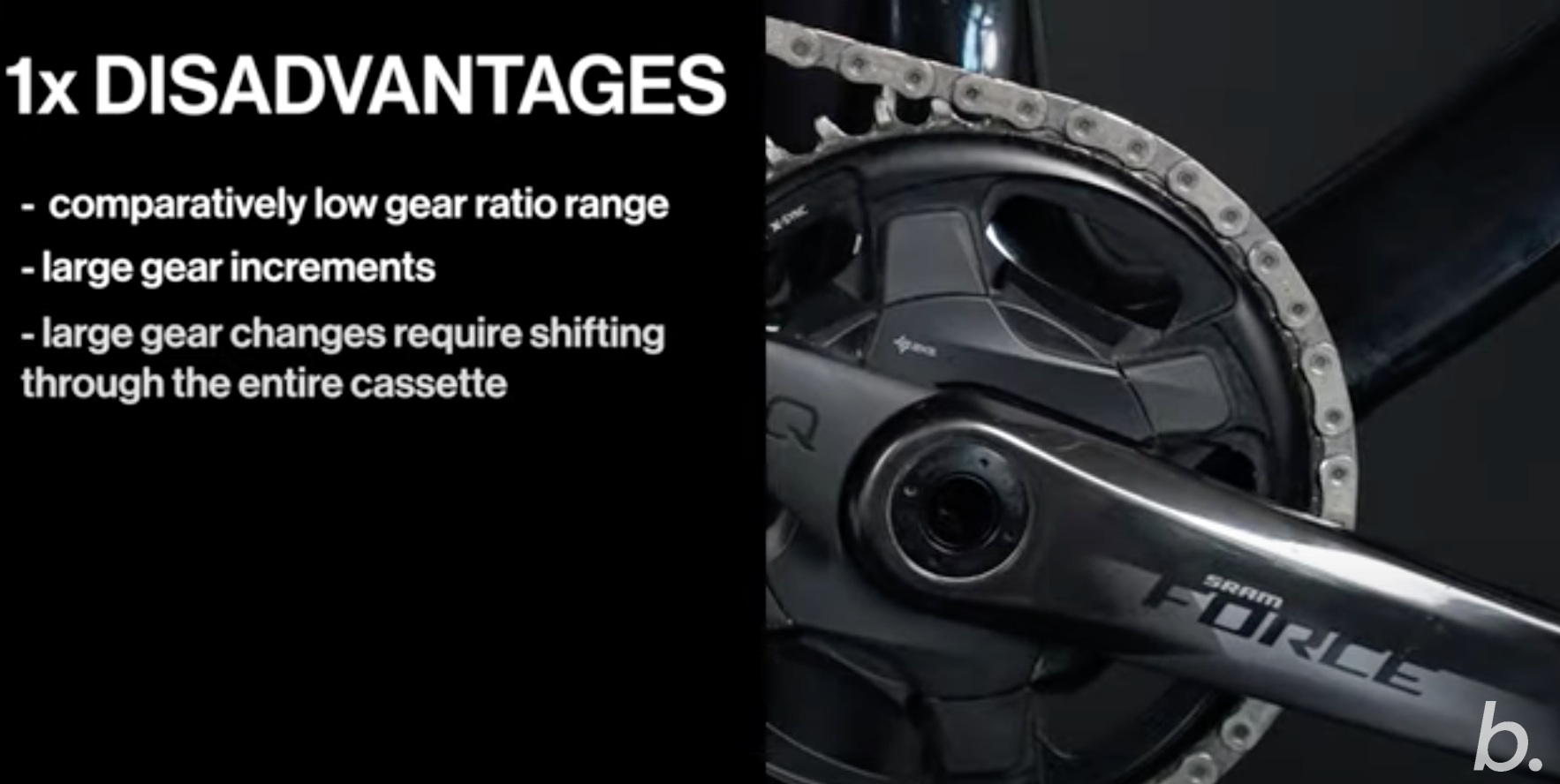
A 1x-shifting also brings some disadvantages:
You have a comparatively narrow gear range and a small transmission bandwidth, so it may well be that you do not have a sufficiently high gear available on flat stretches. Or that you don't have a low enough gear on steep climbs.
Especially if you want to ride fast or control your cadence precisely, it can be annoying that the gear increments are so large that you cannot shift in acceptable intervals. However, you can solve the problem relatively quickly by choosing a 1x12 or even a 1x13 shifting system, where the increments are smaller.
Especially if you spend a lot of time in hilly terrain and are fast on your clean look gears, a 1x setup is the right choice.
4. Advantages and disadvantages of 2x circuit
With 2x11 or 2x12 gears, you have a wider gear range, which allows you to shift more precisely and adapt to different terrain conditions. With so many gears, 2x setups are especially worthwhile for riders of lengthy tours and for all those who value fast and generous gear changes. So, it is no surprise that 2x gears have been the standard setup on most gravel bikes for years.
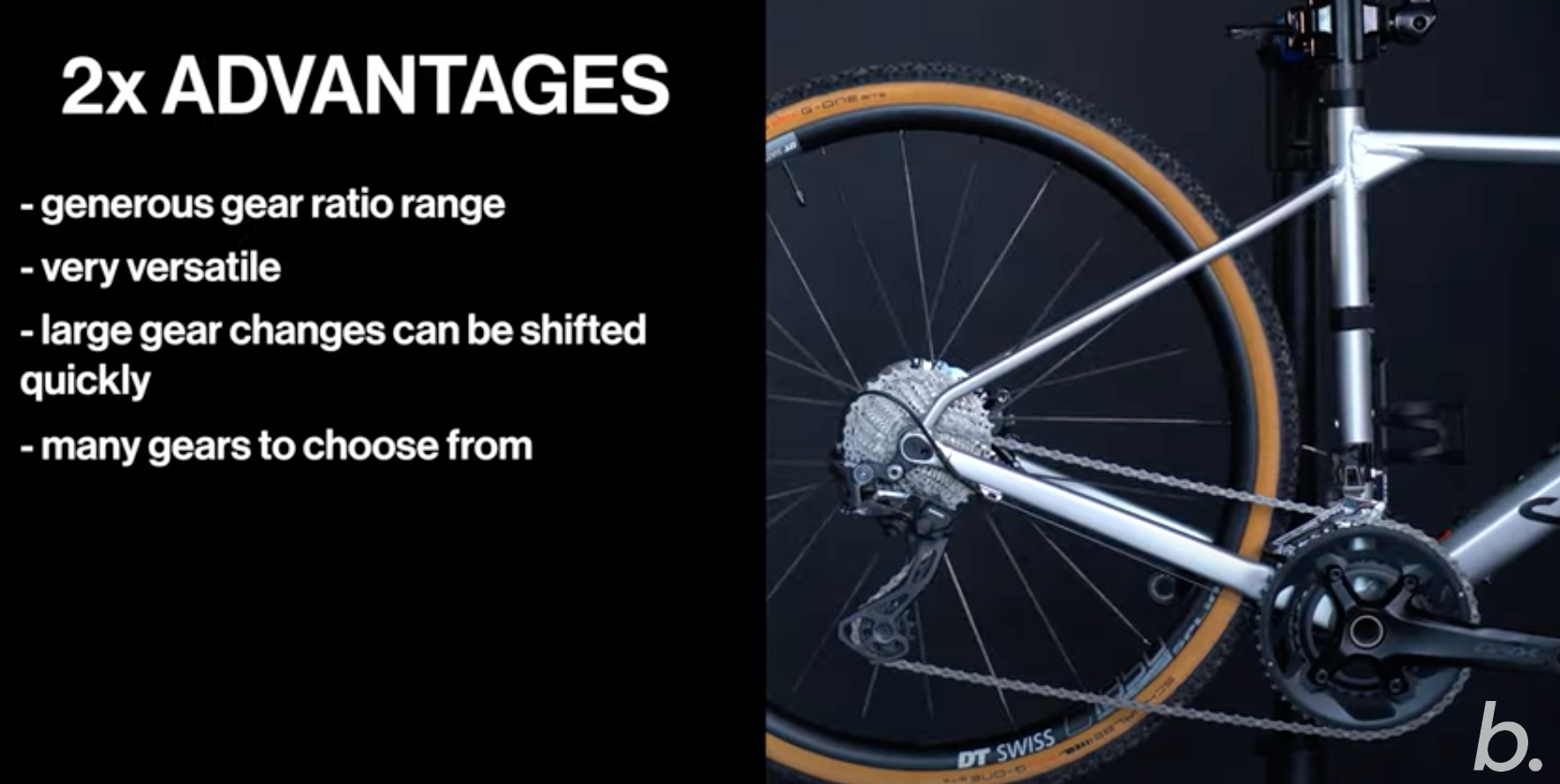
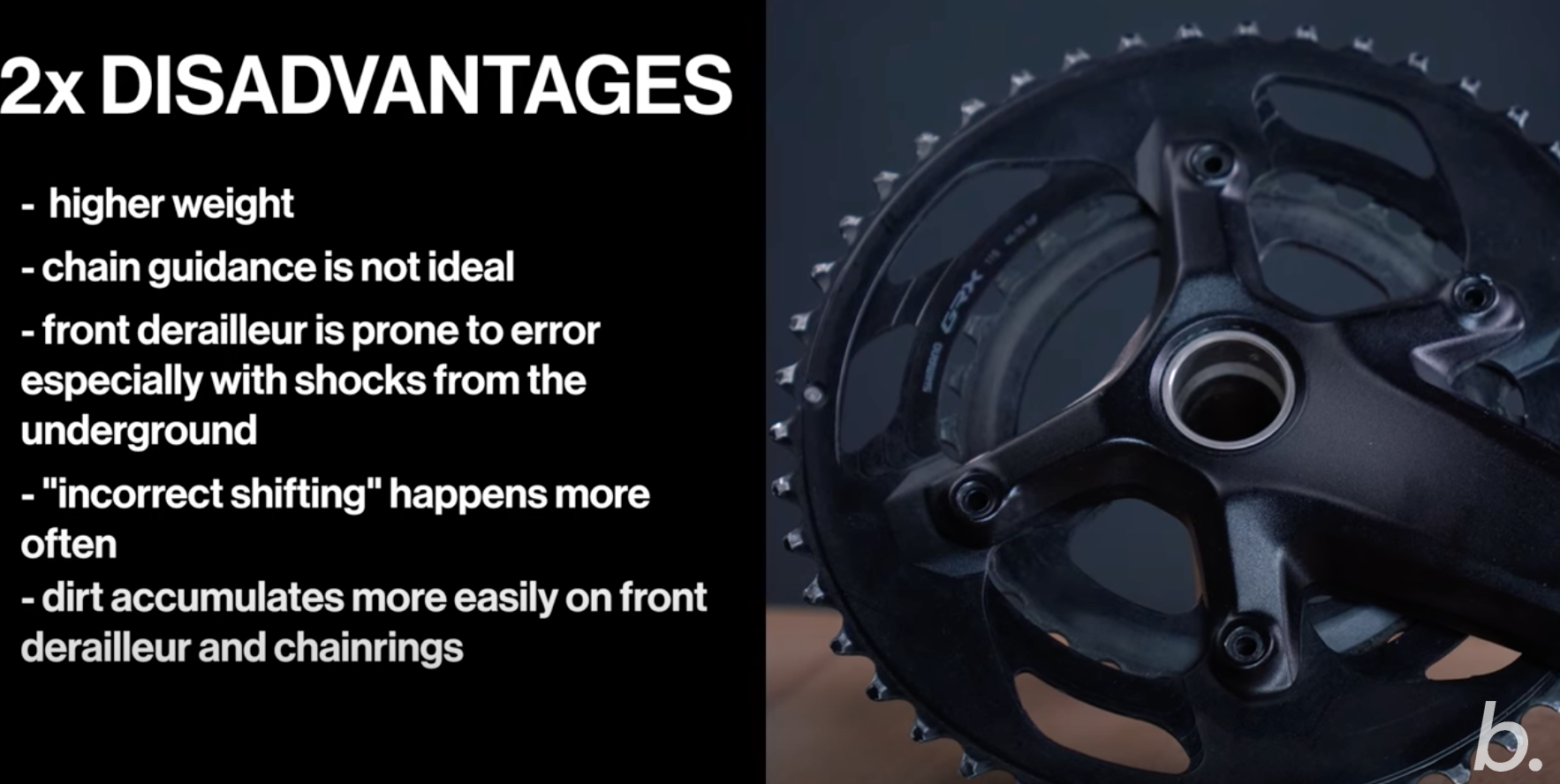
The disadvantage, however, is that you also carry additional weight, thanks to the additional components. Unfortunately, faulty shifting (even if you're an experienced driver) and the chain slipping due to incorrect guidance over one of the chain rings can happen more often.
The derailleur is also quite susceptible to errors. Especially if you fall, it is often the first damaged component.
If you want versatility and a somewhat more extensive selection of gears, want to shift precisely in a wide variety of terrain, and master everything from steep climbs to fast descents, a 2x shifting system will be excellent for you.
2-speed shifting is the right choice for drivers who want to adjust their cadence and power according to the respective driving conditions.
"Switching from a 2x to a 1x setup always works, and booting is relatively uncomplicated. The other way around, though, is difficult." - Anja Benson @buycycle
5. Summary
Let's be more specific: For slightly hilly terrain, quieter roads or cruising through the city a 1x11 setup is a great choice. For trails or for all those who are racing through bike parks at full throttle, a 1x12 shifting fits perfectly with the spirit of adventure.
Whoever wants to be fast on flats and effective on climbs, almost channeling road rather than gravel riding styles, is best equipped with the 2x setup.
Going forward
The perfect bike with the perfect shifting group is waiting for you on buycycle.com.
Among the over 17,000 available bikes, there is certainly one for you: pre-owned, in top condition, and for up to 60% less. Browse offers, set filters for your favorite groupsets, and find your next dream bike.
For questions about groupsets or gravel bikes, our team can also find information about all things bikes on the buycycle blog. For now, we wish you, as always, Happy browsing and cycling!
Gravel bike buying guide
- How to choose a gravel bike?
- What is better: buying or leasing a bike?
- 1x or 2x circuit for gravel bikes?
- Best steel gravel bikes 2024: why your next gravel bike might be steel
- Best titanium gravel bikes: See which titanium gravel bikes you should consider in 2024
- How to choose a gravel bike?
- Hybrid vs gravel bikes: which is right for you?
- What to look for when buying a used bike?
- The Gravel Bike Test
- Should I buy a new or used bike?
- How much does a bike cost?
Which bike is for you
Gravel bike brands
- Best gravel bike brands: What are the best gravel bike brands to consider in 2024?
- What are the best bike brands in the USA?
- Scott vs. Cube: What makes these top bike brands unique?
- Trek vs. Specialized: which brand really suits your style?
- Cannondale vs Trek: battle of the biggest
- Cannondale vs. Specialized: discover which bike brand leads the pack
- Giant vs Speiclalized
- Canyon vs. Specialized
Gravel bike reviews
- Cannondale Topstone Carbon Review
- Canyon Grizl Review
- Nakamura Allroad 250 Review: Is this gravel bike a budget-friendly find?
- Ridley Kanzo Fast Review
- Rose Backroad FF review: what is behind the new Backroad?
- Rose Backroad Review
- 2024 Specialized Crux review
Bike vs Bike
- Cube Cross Race VS Cube Nuroad
- Cyclocross vs gravel bike: What's different?
- Endurance Vs Gravel Bike
- Specialized Crux vs. Diverge: which adventure bike suits you best?
Where to buy a bike?
- What are the best bike outlets in the US?
- How to buy a bike at Rose Outlet
- Buy a bike at Canyon Outlet
- How to buy a bike at the Cube factory outlet?
- Bicycle blue book: the right choice for evaluating, selling, or buying a bike?
- Buy a bike on Ebay
- Craigslist bikes vs buycycle: what is the best place to sell or buy a used bike in 2024?
- Facebook marketplace vs buycycle: where to buy or sell your bike?
- Pinkbike: The best place to buy and sell a used bike?
Components
Sizing guide
- Everything about the tire size of your bike
- Bike helmet size chart and how to measure for a bike helmet
- Bike size chart: What size bike do I need?
- Bike wheel size chart: what wheel size bike do I need?
- How to make sure you buy the right-sized second-hand bike
- All about frame height for a road bike
- All about frame height on a mountain bike
- Road bike size chart: Your guide to the perfect fit