Giant Propel 2026 vs the Previous Propel: What Changed, and Should You Buy New or Used?

The 2026 (fourth-generation) Giant Propel is about 350 g lighter, more comfortable and takes 32 mm tyres. Giant claims 18.4 W less resistance at 40 km/h, but about 5.6 W of that is tyre rolling resistance, and German magazine TOUR's wind tunnel measured the same 209 W at 45 km/h as for the old bike. A used 2023–25 Propel typically sells for about €2,750 on buycycle, less than the cheapest new 2026 Propel (€2,999), and the first used 2026 bikes are already listed.
As of 3 November 2026. Used prices: based on more than 5,600 Giant Propel listings on buycycle, Europe's largest marketplace for used bikes. New prices are German list prices at launch.
Verdict: Propel 2026 or a used 2023–25 Propel?
For most riders, a used 2023–25 Propel (Gen 3) is the better deal: it is the same bike in shape and geometry, and the real gains of the new one are small on the road. Which one fits you:
• You want the most for your money: a used 2023–25 Advanced Pro. It typically sells for €3,200, and it has a normal seatpost.
• You ride rough roads or long days: the 2026 frame is the more comfortable one (Giant: up to 25 % at the rear, TOUR agrees it is clearly better). A used 2023–25 Propel with 28–30 mm tyres closes part of the gap.
• You are tall: avoid used SL frames with a cut seatmast unless the seller confirms mast length and saddle height. Advanced Pro and Advanced have a conventional seatpost.
• You already ride a 2023–25 Propel: keep it. Fit good tyres, not a new frame.
Which model year is which Propel generation?
Gen 3 was shown in July 2022 and sold as model years 2023–25; Gen 4 launched on 6 March 2026 as model year 2026. Giant already lists the next colours as "2027", and so do many sellers, so a "2027" Propel is still Gen 4.
| Generation | Launched | Model years | How to recognise it |
|---|---|---|---|
| Earlier Propels | before 2022 | up to 2022 | rim and early disc versions, different tube shapes (several generations in one bucket) |
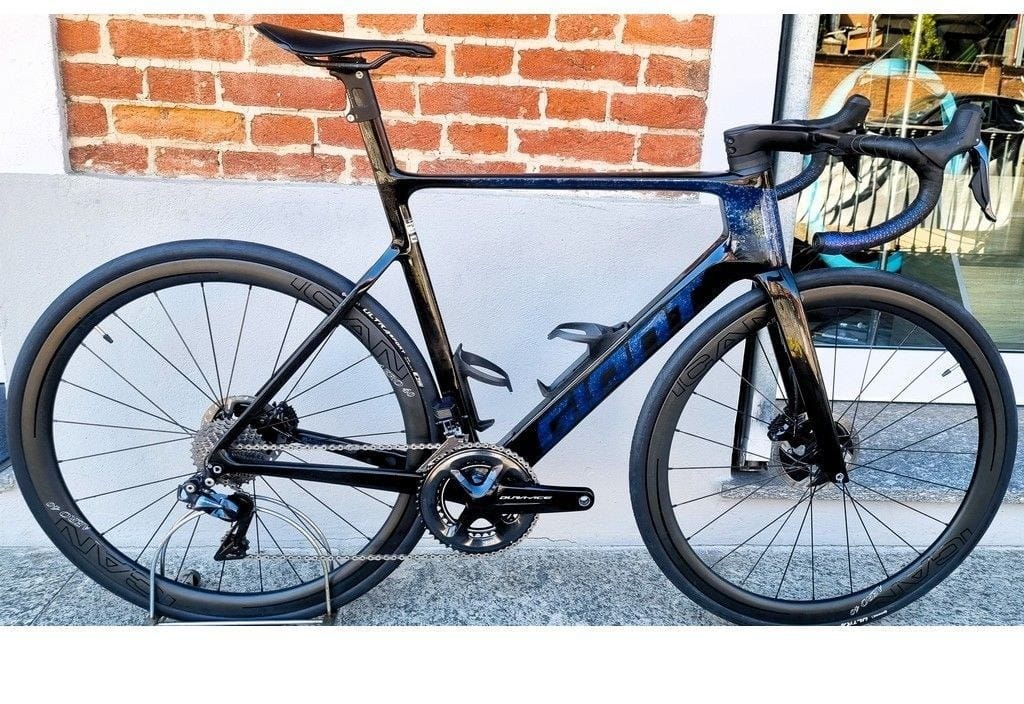
| Gen 3 | July 2022 (sales in Germany from November 2022) | 2023–25, some bikes labelled 2022 | separate bar and stem (Contact SLR Aero) on all trims, seatmast on the Advanced SL, 25 mm stock tyres |
| Gen 4 | 6 March 2026 | 2026 (colours called "2027") | one-piece, flat-topped bar-stem on SL and Pro, narrower bar, 28 mm stock tyres, UDH derailleur hanger |
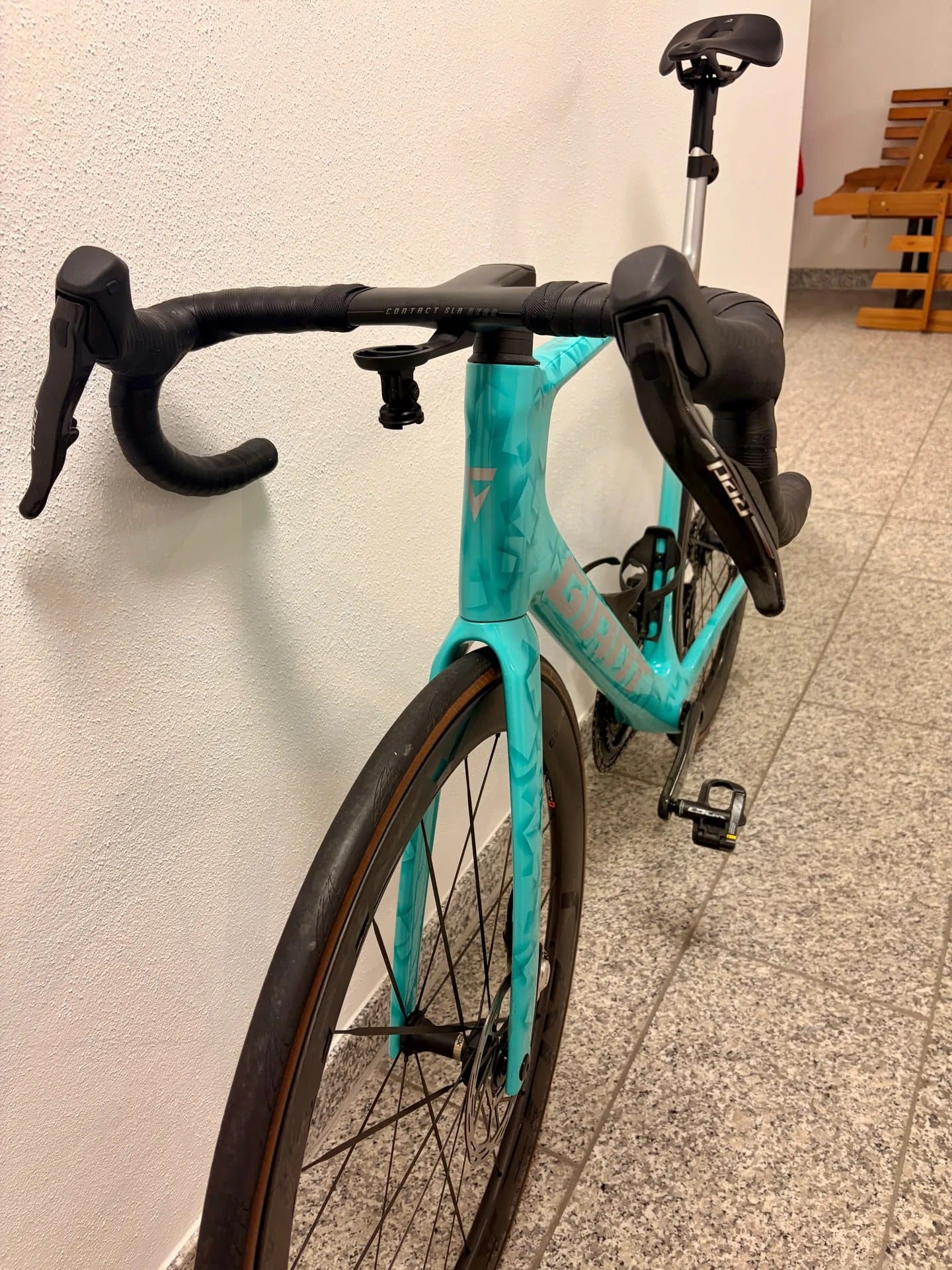
The model year in a listing is the seller's entry. When in doubt, look at the cockpit and ask for the frame number.
What changed on the 2026 Giant Propel?
Giant took 40–45 g out of the SL frame, 355 g out of the complete top bike, widened the tyre clearance to 32 mm and changed the cockpit. The geometry did not change. Most of the weight saving sits in the parts, not the frame.
| Propel Gen 3 (2023–25) | Propel Gen 4 (2026) | |
|---|---|---|
| SL frame | Advanced SL with seatmast | layup refined, 40 g lighter (BikeRadar) or 45 g (Giant) |
| Complete bike, top spec | 6.81 kg (rennrad-news, weighed, Dura-Ace Di2) | 6.43 kg (TOUR), 6.56 kg (BikeRadar, size M with cages); Giant: 355 g lighter than Gen 3 |
| Cockpit | separate bar and stem | one-piece Contact SLR/SL Aero Integrated (SL bar 286 g, 77 g lighter than the old two-piece); 400 mm at the drops, was 420 mm |
| Tyres | 25 mm stock, clearance 30 mm (BikeRadar) | 28 mm stock, clearance 32 mm |
| Rims | hookless carbon | hookless/tubeless-only carbon |
| Rear comfort | reference | Giant: up to 25 % more vertical compliance; front +12.8 % |
| Stiffness | reference | Giant: torsion +3.4 %, pedalling +2.4 % |
| Geometry | reference | unchanged (M/L: stack 565 mm, reach 392 mm; Cyclist) |
| Dropout | not stated | UDH |
| Aero (TOUR, 45 km/h) | 209 W | 209 W |
Sources disagree on the old tyre clearance (30 mm at BikeRadar, 28 mm at TOUR and BIKE). Either way, 28 mm tyres fit both generations.
Is the 2026 Propel really 18.4 W faster?
Giant says yes (18.4 W at 40 km/h), TOUR measured no difference (209 W at 45 km/h, 8 May 2026 test). Both can be right, because they measure different things.
Giant's own table, published by BikeRadar on 6 March 2026, splits the 18.4 W like this:
| Part | Gen 3 | Gen 4 | Change |
|---|---|---|---|
| Aerodynamic drag of the bike (±20° yaw) | 234.9 W | 222.5 W | −12.4 W |
| Rotating wheel drag | 5.5 W | 5.0 W | −0.4 W |
| Tyre rolling resistance | 27.4 W | 21.8 W | −5.6 W |
| Total | 267.8 W | 249.3 W | −18.4 W |
Giant's figures from BikeRadar, measured with a full-body dummy at 40 km/h. Giant converts the gain to 72 seconds over 40 km.
Three things matter here:
- A third of the claim is tyres, not aerodynamics. The 5.6 W comes from the new Cadex Aero tyres.
- The frame is a small part. The 12.4 W of drag includes the narrower cockpit, which makes the rider narrower, plus wheels and tyres. TOUR cites about 12 W from Giant's wind tunnel as well, and a Weightweenies forum comment says the same: the gain comes mostly from bar, wheels and tyres.
- TOUR tests differently. It measures the complete bike with a standard dummy at 45 km/h. Reports on TOUR's setup describe a dummy without a torso, with moving legs, which cannot show the benefit of narrower bars. TOUR measured 209 W (210 W with Zipp reference wheels), "exactly at the level of its predecessor", and its 2022 test of the Gen 3 gave 209 W as well.
You may also see "6.2 W" quoted for the Propel, including in AI answers. That is a different claim: Giant's figure for the Gen 3 against Gen 2 in 2022 (6.21 W, 27 seconds over 40 km).
What a Gen 3 owner can copy: tyres. If your wheels are approved for them, a 28 mm aero tyre is the cheap part of the gain. The one-piece bar is made for the Gen 4 head tube and Giant gives no word on fitting it to a Gen 3, so don't plan on it.
For context, TOUR measured the Propel Advanced SL (209 W) behind the Specialized S-Works Tarmac SL9 (205 W). Our Tarmac SL9 vs SL8 comparison has the details.
What does a Propel cost: new 2026 vs used 2023–25?
New, the 2026 Propel costs €2,999 to €11,999. A used 2023–25 Propel typically sells for about €2,750 (all trims), a used Advanced Pro for €3,200.
New prices (Germany, launch lists)
| Trim | Gen 3 (2022) | Gen 4 (March 2026) |
|---|---|---|
| Advanced SL 0 (SRAM Red AXS) | €11,999 | €11,999 |
| Advanced Pro (Dura-Ace) | n/a | €7,999 |
| Advanced Pro (Force or Ultegra Di2) | n/a | €6,499 |
| Advanced Pro 1 | €5,699 | €4,999 (BikeRadar) |
| Advanced 0 / 1 (Ultegra Di2 / 105 Di2) | €4,799 (Advanced 1) | €4,799 / €4,399 |
| Advanced 2 (105 mechanical, alloy wheels) | €2,999 | €2,999 |
| Advanced SL frameset | n/a | €3,899 |
Sources: TOUR (22 Aug 2022 and 6 Mar 2026), BIKE (6 Mar 2026), BikeRadar (6 Mar 2026). The trim ladder was reshuffled in 2026, so rows are not always like for like.
Used Propel prices (buycycle, 3 November 2026)
| Group | Listings (ever) | Sold | Typical selling price | Value retained | Sold after |
|---|---|---|---|---|---|
| Propel up to 2022 (several generations) | 3,323 | 812 | €1,650 | 42 % | 11 days |
| Propel Gen 3 (2023–25), all trims | 2,094 | 377 | €2,750 | 52 % | 11 days |
| Gen 3 Advanced | 811 | 184 | €2,550 | 53 % | 10 days |
| Gen 3 Advanced Pro | 724 | 119 | €3,200 | 51 % | 11 days |
| Gen 3 Advanced SL | 351 | 33 | €2,850 | 44 % | 27 days |
| Propel Gen 4 (2026+), asking price | 184 | 21 | about €4,000 (asking) | n/a | about 30 days |
Typical selling price = median price of bikes actually sold. Value retained = selling price divided by the new price stated in the listings. Generation and trim come from the listing title and model year, so a few bikes are in the wrong bucket. Figures mix sizes, conditions and upgrades. The Gen 3 Advanced SL row (33 sales) is a guide only. For the 2026 bikes there are too few sales per trim for a selling price, so the table shows the median asking price of 184 listings.
Three things stand out:
- Used Gen 3 loses about half its value. A typical sale is at 52 % of the stated new price. The 2026 bikes are asked at around 72 % so far.
- The 2026 bikes sell slowly so far. The 21 sold 2026 Propels took about 30 days, the 2023–25 bikes about 11. That is an observation of the market, not advice.
- There is plenty of choice. Currently 165 Gen 3 and 79 Gen 4 bikes are listed.
Current asking prices (active listings, typical):
| Trim | Gen 3 (2023–25) | Gen 4 (2026+) |
|---|---|---|
| Advanced | €3,000 (66 listings) | €3,625 (38) |
| Advanced Pro | €4,121 (58) | €5,549 (30) |
| Advanced SL | €4,924 (41) | €6,700 (11) |
Same budget: which Propel?
• New: Propel Advanced 2 (€2,999): Shimano 105 mechanical, alloy wheels, 8.73 kg (BikeRadar).
• Used: a Gen 3 Advanced (typically €2,550) or Advanced Pro with carbon wheels, from about €2,500.
Around €4,500–5,000
• New: Propel Advanced 1 (€4,399) to Advanced Pro 1 (€4,999), Shimano 105 Di2 or SRAM Rival.
• Used: a Gen 3 Advanced Pro (typically €3,200, with electronic shifting), or an early used Gen 4 Pro (typically asked €5,500).
Around €6,500–8,000
• New: Propel Advanced Pro with Force or Ultegra Di2 (€6,499) or Dura-Ace (€7,999).
• Used: a Gen 3 Advanced SL with the lighter frame (typically €2,850 sold, €4,900 asked), or a first Gen 4 SL (typically €6,700 asked).
So the price of a new entry Propel buys a used Gen 3 Advanced Pro with a better groupset, and the price of a new Pro buys a used SL. Used Gen 3 SL bikes are the surprise: they sell for less than Advanced Pro bikes, possibly because of the seatmast (see below).
Propel vs Canyon Aeroad vs Merida Reacto
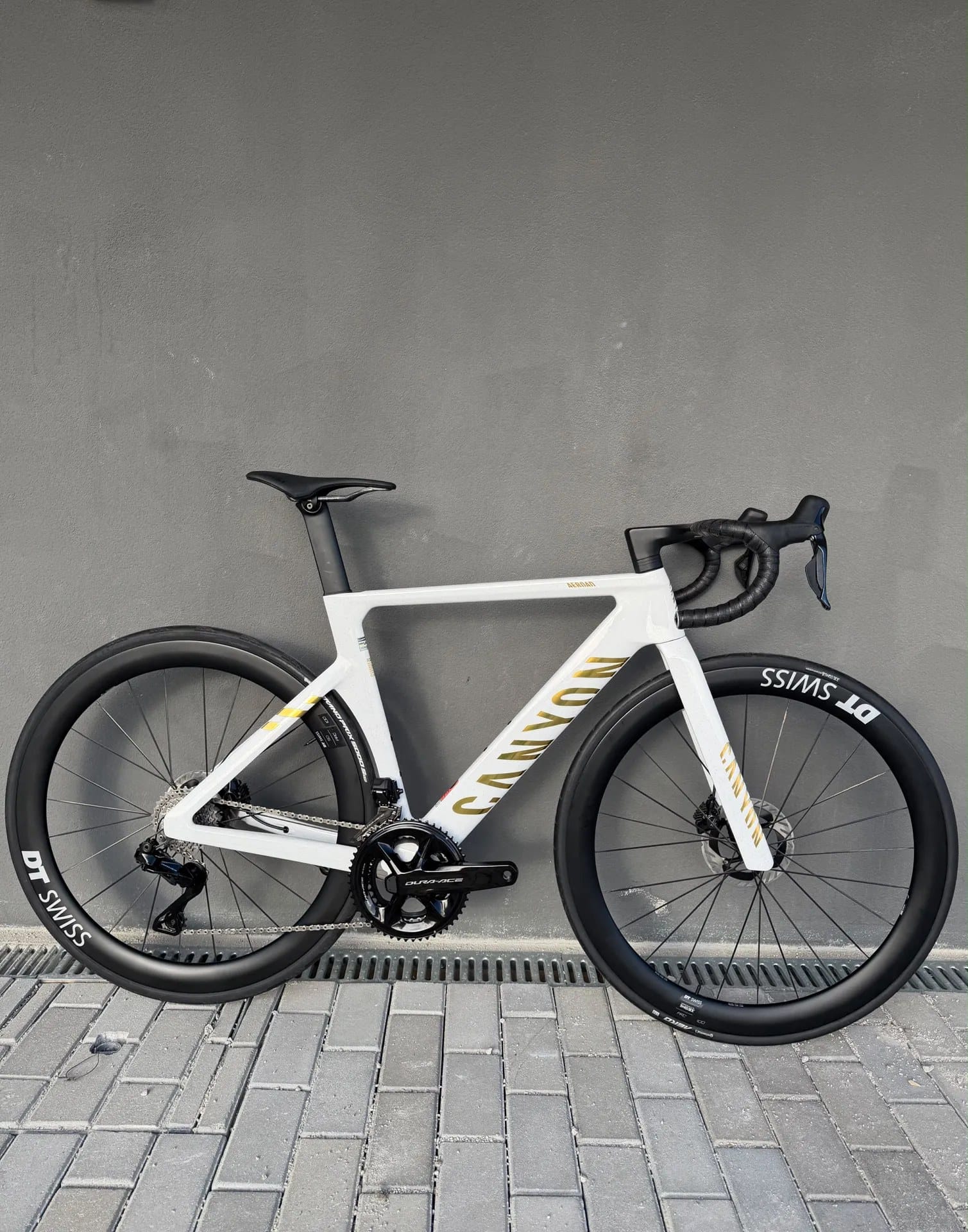
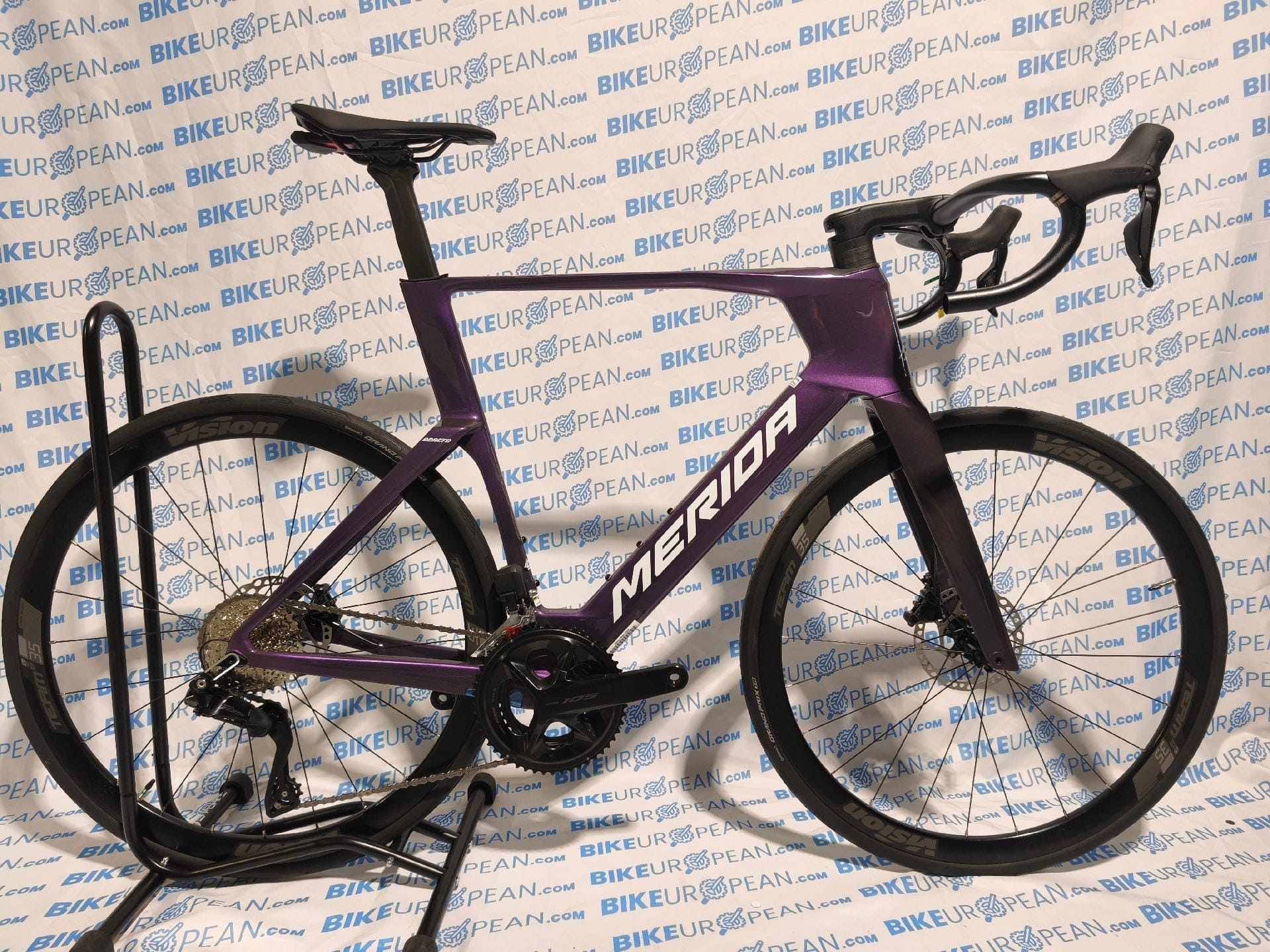
In TOUR's wind tunnel the Propel (209 W) is the slowest of the three current aero bikes, but it is the lightest, and used the Reacto is the cheapest. All three take 32 mm tyres.
| Giant Propel (Gen 4) | Canyon Aeroad (2024 gen., CFR update 2026) | Merida Reacto V (March 2026) | |
|---|---|---|---|
| Aero, TOUR, 45 km/h | 209 W | CFR 204 W (Canyon cites 198 W for the 2026 CFR in TOUR's tunnel) | One 196 W, 10K 202 W, Team 203 W, 4000 217 W (Reacto IV Team: 211 W) |
| Weight | 6.43 kg (SL, TOUR) to 8.73 kg | CFR AXS 6.9 kg (Canyon, M); CF SLX frame 1,050 g | Team 7.1 kg, One 7.4 kg, 4000 9.1 kg (TOUR, M) |
| New price (Germany) | €2,999–11,999 | €4,799–9,500 (canyon.com, 3 Nov 2026) | €2,599–10,999 (TOUR, March 2026) |
| Used, typical selling price | Gen 3: €2,750 (377 sales) | 2021–24: €3,500 (905 sales); 2025+: €4,200 (222 sales) | 2022–25: €2,150 (204 sales); 2026+: €3,400 (69 sales) |
| Sold after | 11 days | 6–7 days | 11 days (2022–25) |
| Quirk | seatmast on the SL | sold direct by Canyon | CF5 vs CF3 frame grades |
Used prices: buycycle, 3 November 2026. Generations are approximated from model year and title. Aeroad 2025+ is the current generation; 2021–24 is mostly the previous one. Reacto 2026+ may include some late Reacto IV bikes.
- Lightest and most comfortable: Propel.
- Fastest in the wind tunnel and sold quickly used: Aeroad CFR. Used Aeroads sell in under a week, so move quickly.
- Cheapest way into a modern aero bike: a used Reacto (2022–25) at about €2,150, or a Gen 3 Propel at €2,750.
For Aeroad against other bikes, see our Canyon Ultimate vs Aeroad guide. Browse the used Canyon Aeroad and Merida Reacto listings.
What to check when buying a used Propel
- Seatmast (Advanced SL only). The mast is cut to the first owner's height and cannot be made longer. The adjustable topper gives only a little room (about 25 mm at Bikerumor, 45 mm at Cyclist, 20 mm for the Gen 3 in TOUR's 2022 report). Ask for the saddle height and mast length, and compare with your own. Advanced Pro and Advanced have a normal, adjustable seatpost.
- Hookless rims. Giant's carbon rims are tubeless-only, and not every tyre is approved for them. Ask which tyres are fitted, and check Giant's approved list before you buy new ones.
- Cockpit size. On Gen 4 the one-piece bar-stem comes in widths of 360–440 mm and stems of 80–140 mm (BikeRadar). You cannot swap the stem alone. On Gen 3 bar and stem are separate and easy to change.
- Warranty. Giant's frame warranty is written for the original owner. Whether a second owner is covered depends on country and on whether the first owner registered the bike, so ask the seller for the invoice and ask a Giant dealer.
- Power meter and spec. The top Gen 4 SL with SRAM Red comes with a power meter (TOUR). Check the crank on any bike against its original spec.
- Frame and fork. Look for cracks and chips around head tube, seat tube junction and mast, and ask about crashes.
FAQ
Is the Giant Propel a good bike?
Yes. TOUR gave the 2026 Propel Advanced SL a 1.4, its top mark, and the bike is light for an aero bike (6.43 kg). The old generation was also tested by TOUR and measured the same in the wind tunnel.
Giant TCR or Propel?
The Propel is the more aero and more comfortable of the two, the TCR is a little lighter and has a classic frame. Our guide to Giant road bikes has the comparison, and you can browse used TCRs.
Is the 2026 Propel worth upgrading from a 2023–25?
For most riders, no. TOUR measured the same wind-tunnel value, and the gains are 350 g, a more comfortable rear end and wider tyre clearance. Better tyres give you part of it for much less.
What does a used Giant Propel cost?
A used 2023–25 Propel typically sells for €2,750 on buycycle: Advanced €2,550, Advanced Pro €3,200 (3 November 2026).
Propel 2026 vs 2027: any difference?
We found no change to the frame. Giant calls the current colours "2027", and listings often do too. Treat a 2027 Propel as a Gen 4.
What is the Propel's real aero gain?
Giant claims 18.4 W at 40 km/h, of which 5.6 W is tyre rolling resistance. TOUR measured 209 W at 45 km/h for both generations.
Sources: Giant (giant-bicycles.com, Propel range page); BikeRadar, "The new Giant Propel is the lightest aero bike we've ever seen" (6 March 2026) and Giant Propel Advanced SL 0 review (2023); TOUR, Propel Advanced SL test (8 May 2026), Propel 4th generation (6 March 2026), Propel 2022 launch (22 Aug 2022), Propel Advanced SL vs S-Works Tarmac SL9 (7 July 2026), Merida Reacto V (6 March 2026); BIKE (6 March 2026); Cyclist, Propel vs TCR vs Defy (2026); Bikerumor, Propel Advanced SL first ride (March 2026); rennrad-news, Superbikes test (October 2024); canyon.com (3 November 2026). Used prices: based on more than 5,600 Giant Propel listings on buycycle, 3 November 2026.
- The buycycle road bike guide
- Best road bike brands
- Aluminum VS Carbon
- Road bike size chart: find the perfect fit
- Are Craigslist bikes or Pinkbike good options to buy a road bike?
Not sure about a road bike yet?
- Mountain bike vs road bike
Our selection of top...
- Best road bikes under 2.000 dollars in 2024
- Top 5 aluminium road bikes
- Top 5 Aero road bikes
Our road bike tests and reviews:
- Cube Agree C:62 Race Review
- Focus Izalco Max 9.8 Review
- Focus Izalco Max 2024 Review
- Specialized Tarmac SL 8 vs. SL 7 comparison
- Specialized Roubaix SL8 Review
- Cube Cross Race VS Cube Nuroad
- BMC Roadmachine Review
- Trek road bike comparison
- Giant road bike comparison
- Canyon Endurace, Ultimate & Aeroad comparison
- Which endurance bike is the best?
Our road bike accessories guides:
- Best road bike saddle: the seats that can’t be beat
- Safe on the bike: All things road bike helmets
- All things (road) bike locks
- All information about clipless pedals
- The buycycle bike computer test
- The bicycle power meter
- Everything about road bike gears
- All about road bike handlebar