

The buycycle frame comparison
Aluminium or carbon? An old favorite or the latest craze? Which should be the ideal frame material is hotly debated in the bicycle world, and there is no golden formula, as so often.
So to bring a little light into the thicket of carbon VS aluminum myths and thus facilitate the decision-making process for the next bike purchase, Nic made you a fantastic YouTube video and I suitably conjured this blog article.
Aluminum or carbon? An old favorite or the latest craze?
1. The materials 1x1
Before we dive into the comparison, let's first do a little material science and tick off the basic properties of the two raw materials.
Carbon is a plastic reinforced with extremely resilient carbon fibers and was initially developed for the aerospace industry. Because the individual fiber strands can be finely manipulated and machined, carbon is a very flexible and adaptable material. Although it weighs very little, it has a relatively low density and is quite resistant and strong.
However, depending on the budget and purpose of production, the manufacturing process varies greatly. The fibers are heated to different degrees, bonded with other resins, layered and straightened differently, and all these variations of the final carbon product have a significant impact on its characteristics - this also applies to carbon bike frames and their riding characteristics.
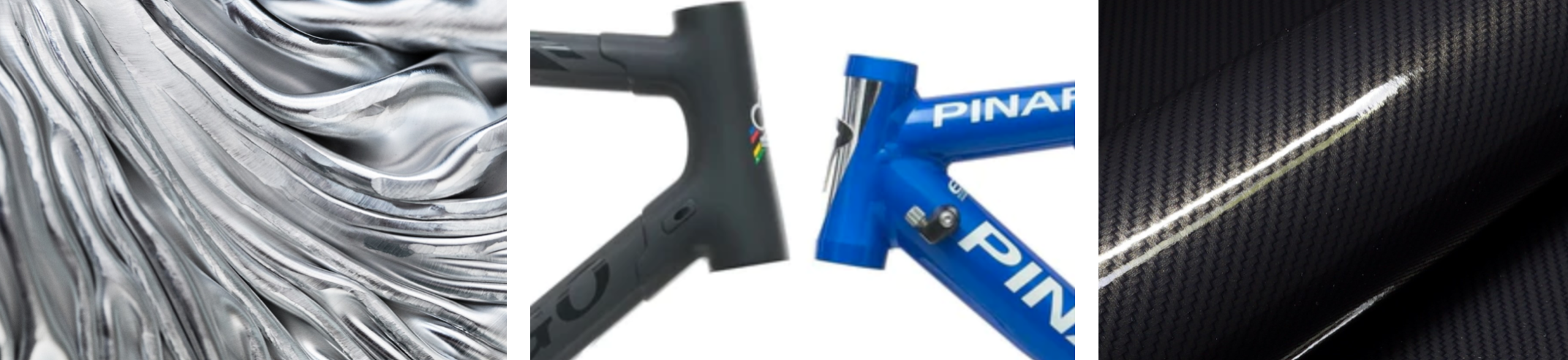
Aluminium is not quite as foreign to us as a material as carbon. As a light and highly cheap metal, it has long been a popular raw material for the bicycle industry. Until today, aluminium has been mixed with other metals such as magnesium, zinc, or silicone for sufficient stability and durability.
2. Weight
Because carbon is less dense than aluminium, a carbon frame weighs 200 to 500 grams less than an aluminium frame. A lighter bike is more straightforward to climb, faster to accelerate, and easier to control and turn. But before we declare 1:0 for carbon at this point, very few will be able to notice a real difference when riding.
In addition, the individual fibers and layers of cheaper carbon frames are bonded with more resin. So, it may well happen that a high-end aluminium bike is lighter than a lower-end carbon bike. Last but not least, the choice of components always plays a role in the weight of the wheels.
3. Comfort, stiffness and handling characteristics
Even if comfort is intensely subjective, carbon usually scores better here. Since the material absorbs shocks and vibrations better, carbon bikes offer a smoother riding experience. The fact that the fibres' layering and direction can also be finely tuned makes it easy for manufacturers to make laterally stiff and vertically compliant carbon bikes - perfect for bumpier terrain without sacrificing speed and light handling, especially in tight corners.

Aluminium bikes are still considered quite stiff and unyielding even today. This is because, 30 years ago, the frames still had to be built highly thick, stiff and dense to be sufficiently stable. Nowadays, the engineer inside can vary the thickness of the frame at individual points and thus achieve similar properties as carbon frames have. Hydroforming or butting influences the frame thickness and shape, and aluminium is catching up again somewhat in the comfort competition.
Again, it ultimately boils down to the choice of components - the type of suspension, the shape of the saddle, the width of the tires, and the geometry of the frame - because they determine the riding experience significantly. - Alice Huot
4. Durability and repair possibilities
Despite being so light and low density, carbon is durable and can withstand much stress. Also, layering the fibers can make some frame areas even more shock-resistant in manufacturing, so carbon bikes can be ridden virtually forever under suitable conditions and won't wear out. Nevertheless, they are far from indestructible, and aluminium is primarily considered a more durable and break-resistant material. Many off-road riders and tricksters, therefore, prefer to use aluminium bikes to avoid worrying about the frame after an accident and to be able to concentrate fully on the maneuvers.
After all, if you take a spectacular fall, you can continue riding your aluminium bike for years. The bike may suffer scratches and dents, and its handling characteristics may also be affected by such deformations, but the frame rarely breaks. The same fall survives a carbon bike less well. It can break apart unexpectedly once it suffers a small crack, becoming a danger for the rider(s).
These cracks after a fall are sometimes not immediately apparent, so an owner of a carbon bike needs to take a close look at the frame after every collision or accident. Carbon frames can also tear when components are attached, for example, if something is screwed on too tightly. Once cracked, a carbon bike is no longer rideable. - Alice Huot

Fortunately, it can be repaired relatively quickly and, after a suitable repair service, will not differ in its properties from a new bike. In the case of broken aluminium frames, it is wiser to replace them entirely immediately, as repair is quite expensive and time-consuming - a new frame is cheaper. Plus point: unlike carbon, aluminium is recyclable.
5. Price
Finally, consider the price tags: Carbon bikes are generally more expensive. The materials used cost more; manufacturing is more complex, time-consuming, and requires special equipment and expertise. Of course, all of this is reflected in the price.
Aluminium frames often cost half as much, so the material is one of the cheapest on the market. Even more, they can be mass-produced in highly automated manufacturing processes.
These differences in manufacturing costs and prices lead to the fact that the price-performance ratio of aluminum beats that of carbon: If you compare an aluminum and a carbon bike from the same price range, the aluminum bike will have better components installed.
So you need to find a balance between the quality of the frame and that of the components - exactly how this should be designed is ultimately up to you. But perhaps keep one thing in mind: Refinishing components is always easier than retrofitting a new frame.
6. Which is better now? Carbon or aluminum?
You have already guessed: There is no universal answer to this question. What's more important is: What's your budget? Are you off-road tricksters or asphalt racers? How much do you value weight? How much do you want to worry about the consequences of potential crashes? Are you a beginner, or have you been a hardcore cyclist for years?
But this is certain: aluminium is cheaper, less complicated and causes fewer worries. Ride it, crash it, and it is going to be okay. Carbon offers more options regarding unique demands on handling characteristics and is lighter and more maneuverable.
But if you have to choose between two high-quality frames made of aluminium and carbon these days, you can't go wrong with the decision. The last noticeable differences when riding have been so minimized by technological advances in manufacturing that they would only be noticed by absolute professionals and veteran cyclists.
The important thing is and always will be to buy a bike you feel comfortable on, giving you complete riding pleasure and making you happy. And we at buycycle may have just the perfect used bike for you. So take a look at our website! If you are unsure about your new bike choice, our team is always there for you. Until then, as always, we wish you Happy browsing and cycling!
Which bike is for you?
- What type of bike should I get?
- What is a gravel bike?
- What is a triathlon bike?
- What is a hybrid bike?
- Cyclocross vs gravel bike: What's different?
- Endurance Vs Gravel Bike
- Hybrid vs gravel bikes: which is right for you?
- Mountain bike vs road bike: Which one is best for you?
- The great buycycle mountain bike test
Buying guide
- Should I buy a new or used bike?
- What is better: buying or leasing a bike?
- How much does a bike cost?
- How to choose a gravel bike?
- How to choose a mountain bike?
- How to choose a triathlon bike?
- Which road bike is right for me?
- How to test ride a used bike?
Brands guide
- What are the best bike brands in the USA?
- Scott vs. Cube: What makes these top bike brands unique?
- Trek vs. Specialized: which brand really suits your style?
- Cannondale vs Trek: battle of the biggest
- Cannondale vs. Specialized: discover which bike brand leads the pack
- Giant vs Speiclalized
- Canyon vs. Specialized
- What are the best road bike brands in the US?
- Best gravel bike brands: What are the best gravel bike brands to consider in 2024?
Where to buy a bike?
- What are the best bike outlets in the US?
- How to buy a bike at Rose Outlet
- Buy a bike at Canyon Outlet
- How to buy a bike at the Cube factory outlet?
- Bicycle blue book: the right choice for evaluating, selling, or buying a bike?
- Buy a bike on Ebay
- Craigslist bikes vs buycycle: what is the best place to sell or buy a used bike in 2024?
- Facebook marketplace vs buycycle: where to buy or sell your bike?
- Pinkbike: The best place to buy and sell a used bike?
Sizing guide
- Everything about the tire size of your bike
- Bike helmet size chart and how to measure for a bike helmet
- Bike size chart: What size bike do I need?
- Bike wheel size chart: what wheel size bike do I need?
- How to make sure you buy the right-sized second-hand bike
- All about frame height for a road bike
- All about frame height on a mountain bike
- Road bike size chart: Your guide to the perfect fit