

Did you know?
Oh, you think you're a bike expert? Do you know about suspension travel, frame geometries, and gear ratios? Tour de France (femmes) winners and those of the UCI. Hats off! But we bet you don't know these 10 fun facts about cycling yet.
1. Leonardo da Vinci was NOT the inventor of the bicycle
In the sketchbook "Codex Atlanticus," which the artist made between 1480 and 1510, a drawing looks similar to today's bicycle... However, this prototype was never actually built - which may also have something to do with the fact that historians have since discovered that the drawing in question was not made until around 1960 by an Italian monk. Probably based on the original. Only that this has been lost...
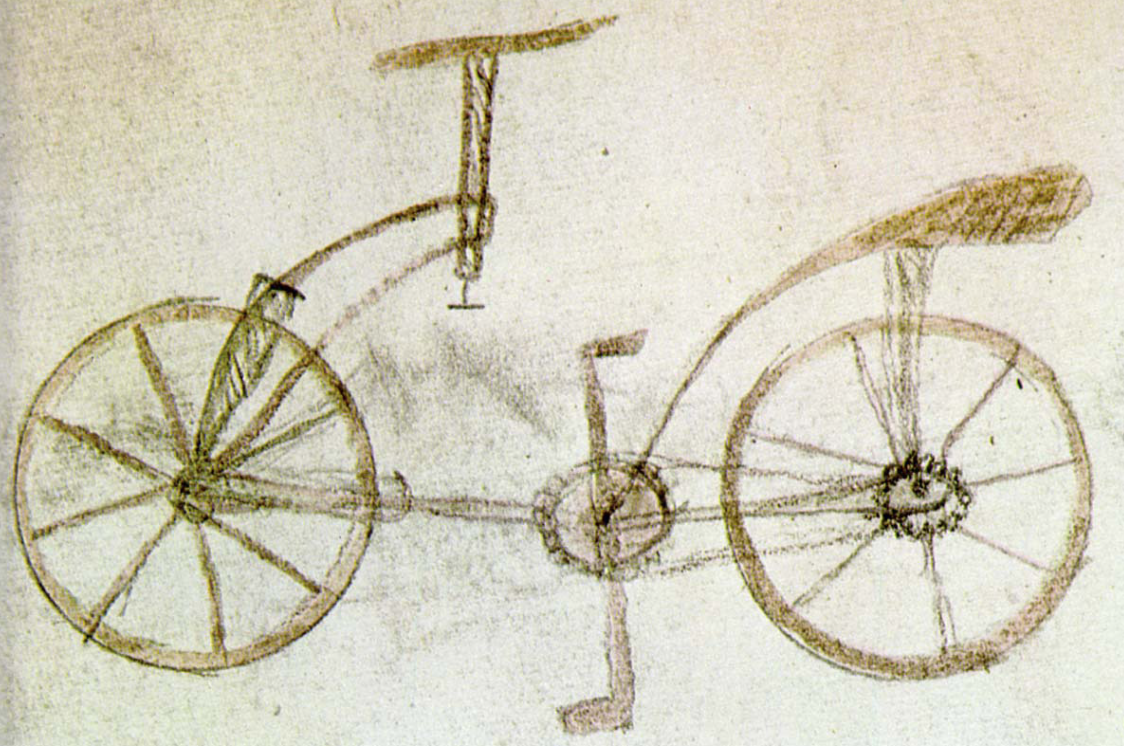
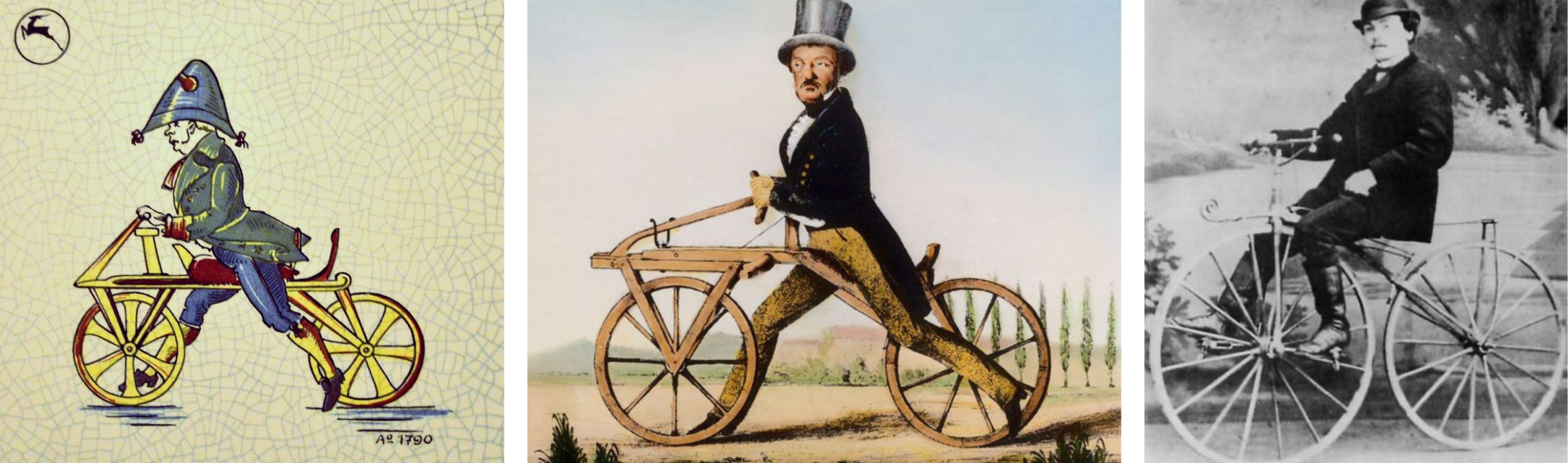
But who exactly is the pioneer of our favorite means of transport? Well, it is a matter of debate. This is mainly due to the question of which of the numerous prototypes and patents, which have been accumulating since 1791 at the latest, were a "bicycle" or just a two-wheeled construction that was halfway similar to one.
Comte de Sivrac presented a scooter-like bicycle in Paris in 1791, but it could not be steered. Baron Karl Drais added a saddle and (functioning) handlebars to his model in 1817, and from 1960 at the latest with Pierre Lallement's bike, we can speak of the first "bicycle" in today's sense. It is not clear who exactly was the first. It certainly wasn't Da Vinci.
- used bikes Portland
- used bikes Denver
- used bikes Chicago
- used bikes Seattle
- used bikes New York
- used bikes Austin
- used bikes Philadelphia
- used bikes Houston
- used bikes Boston
- used bikes Portland
- used bikes Denver
- used bikes Chicago
- used bikes Seattle
- used bikes New York
- used bikes Austin
- used bikes Philadelphia
- used bikes Houston
- used bikes Boston
2. The first mountain bike weighed 35 kg
Ok, so the Italians didn't invent the bike as a whole. But they DID invent the mountain bike: we have the Italian bicycle manufacturer Bianchi to thank for bicycle suspension. At the beginning of the First World War, Bianchi was already doing well - almost 45,000 bicycles left the Milanese factory yearly. The Italian military decided to rely on this expertise and commissioned the company to manufacture military vehicles in 1912.
The result? A full-suspension bicycle with mounting options for rifles and other weapons for the Bersaglieri, the bicycle infantry. It may have weighed 35 kg, but it was the first mountain bike.
3. The longest bike in the world steals the show from many a swimming lane
It measures 47.5 m and entered the Guinness Book of Records in 2020. The requirement was that the bike only has two wheels (obviously) and could be ridden for at least 100 m without the riders having to dismount or their feet touching the ground. The last record went to Australia's Bernie Ryan and was a true family endeavor. Bernie designed and built the bike, his wife Ruth steered it, and his son Trent took on the mammoth task of pedaling it over the 100 m line.
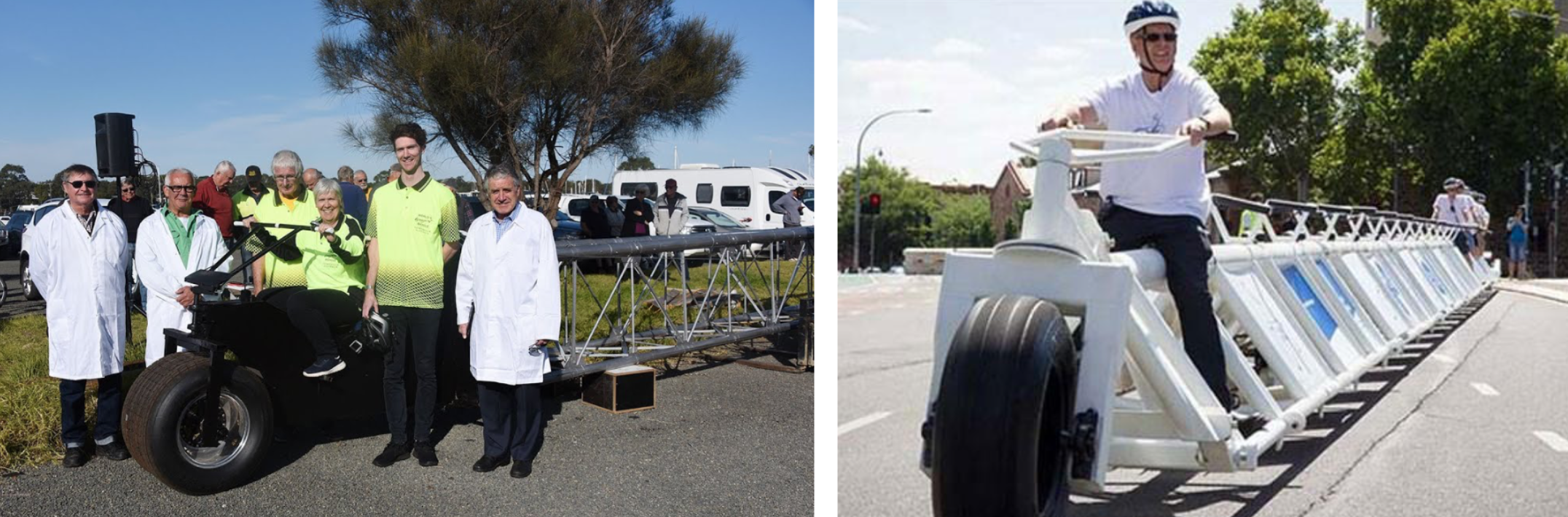
Props to whom props are due. A minor criticism from our side, though: from a design perspective, the 47.5 m long bike could have done better - it looks a lot like a lattice girder clamped between two wheels. The last record carrier (41.4 m) from the University of South Australia was a little more creative.
4. The most expensive bike in the world narrowly avoids being cruel to animals
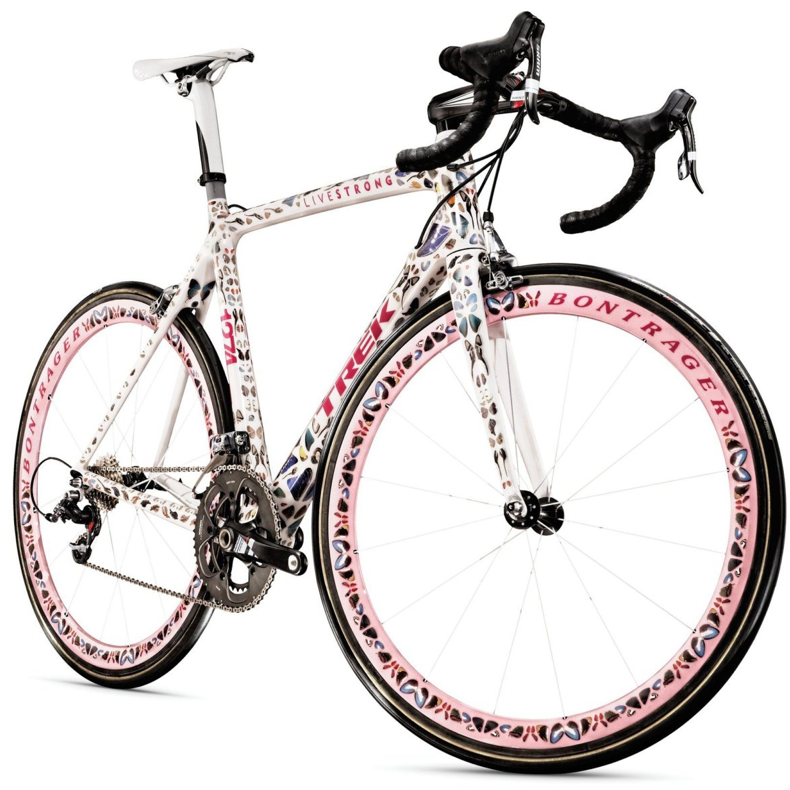
Exceptional British artist Damien Hirst is known for his work with animals. For his work The Physical Impossibility of Death in the Mind of Someone, an entire shark ended up in a glass box filled with formaldehyde; for Away from the Flock, stuffed sheep were exhibited in the same setup in museums worldwide. Butterfly bike, the artist attached countless wings from real butterflies to a Trek Madone on which the American cycling icon rode the last stage of the 2009 Tour de France and flew across the finish line - pun intended. The bike was auctioned off by Sotheby's for a massive 500,000 dollars.

Whether butterflies were killed for this remains unclear. However, it is not as if Hirst had no dark past: for the 1991 exhibition In and Out of Love, the artist filled an entire room with white canvases to which real butterfly cocoons were attached. For the duration of the exhibition, thousands of the animals hatched, fluttered through the room, fed on rotten fruit, mated, laid new eggs - and died in droves due to the adverse conditions of the small room.
5. Tour de France winners ride at an average 40 km/h speed
Double Tour de France Winner Jonas Vingegaard had an incredible average speed of 42.03 kilometers per hour during the 2022 Tour, over 3,344 kilometers. The impressive thing about this is not only that he broke the previous record of Lance Armstrong, who was even under the strong influence of performance-enhancing doping drugs at the time, but also that the average speed at the Tour de France has almost doubled in the last 100 years. In the 1920s, it was only 25.5 kilometers per hour.
6. Cycling costs 16 times less than driving a car
Calculating how much individual modes of transportation cost us at a societal level is a rather complicated task, but not one that the German Federal Environment Agency is not up to. In 2017, it concluded that every kilometer driven by a car costs society 5.66 cents. However, every kilometer traveled by bike only costs 0.39 cents.
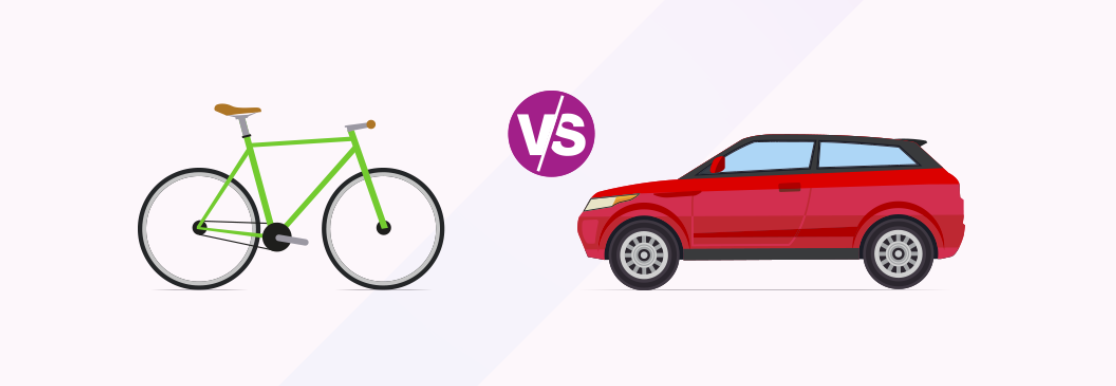
This includes not only the costs of acquisition, maintenance, and repair but also external costs, such as the environmental consequences of driving and cycling (smog, noise, and the resulting damage to health, such as stress or tinnitus), costs for damage to buildings and materials, crop failures and loss of biodiversity (all caused by excessive emissions), but also more mundane costs such as road construction and the production, transportation, and disposal of road signs. And then it becomes clear: the bicycle saves us society. And worry, too.
7. Some luxury bikes are cheaper than the new S-Works
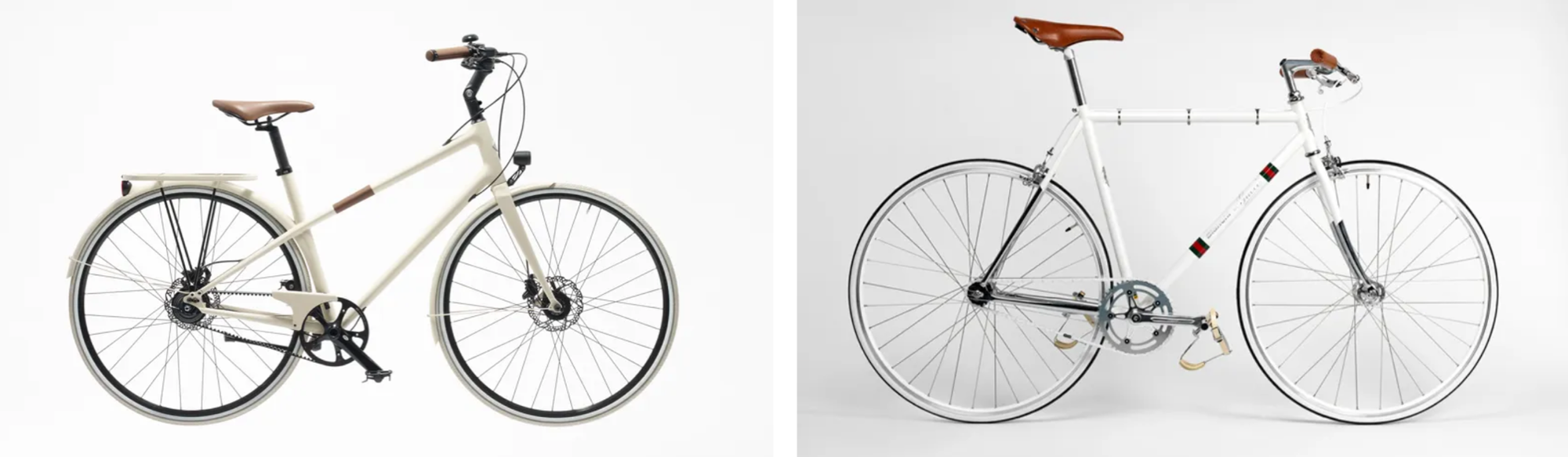
Haute couture and bicycles don't have much in common per se. Nevertheless, the big fashion houses have been looking increasingly enthusiastically into the world of bicycles in recent years and want to get involved. To this curiosity and fascination with the design of "bicycle," we owe couture bikes from Chanel, Dolce Gabbana, and Louis Vuitton, as well as the collaboration between Van Moof and Loewe. The ironic thing about it?
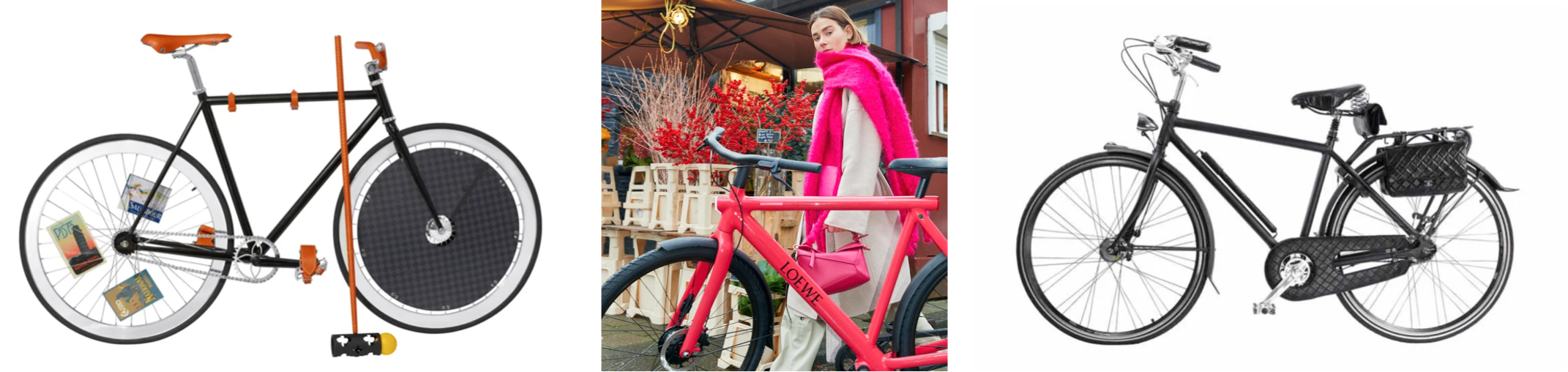
Although these brands are known for their boundless luxury, extravagance, and wealth, many cycling enthusiasts will be pleasantly surprised by the prices of these bicycles: The Gucci x Bianchi bike was available for 8,500 euros at the time. - Alice Huot
In comparison, a bike from Birkin inventor Hermès cost just 8,100 euros. That's a lot of money, of course. Depending on the model, a Specialized S-Works SL 8 costs twice as much.
8. The fastest cyclist in the world beats any average car
Since September 2018, the American cyclist Denise Mueller-Korenek has held the world record for the fastest speed ever achieved on a bicycle. She rode at an incredible 296 km/h in the slipstream. That's how fast a Boeing is just before take-off.

How does that work? A specially designed bicycle is produced for such extreme speeds, whose gears are so complex that it must be brought up to 150 km/h before riders can release the traction cable and then accelerate on their own. To provide the necessary slipstream at such speeds, a pace car drives in front of the bike, which professional racers must drive - and is always just a few centimeters ahead of the athletes. It should be clear that it is life-threatening to race so close behind a car at just under 300 km/h on a bike. So Mueller-Korenek's record is all the crazier.
9. One bicycle alone is a cult object. Take 3,144 of them, and you'll go down in art history
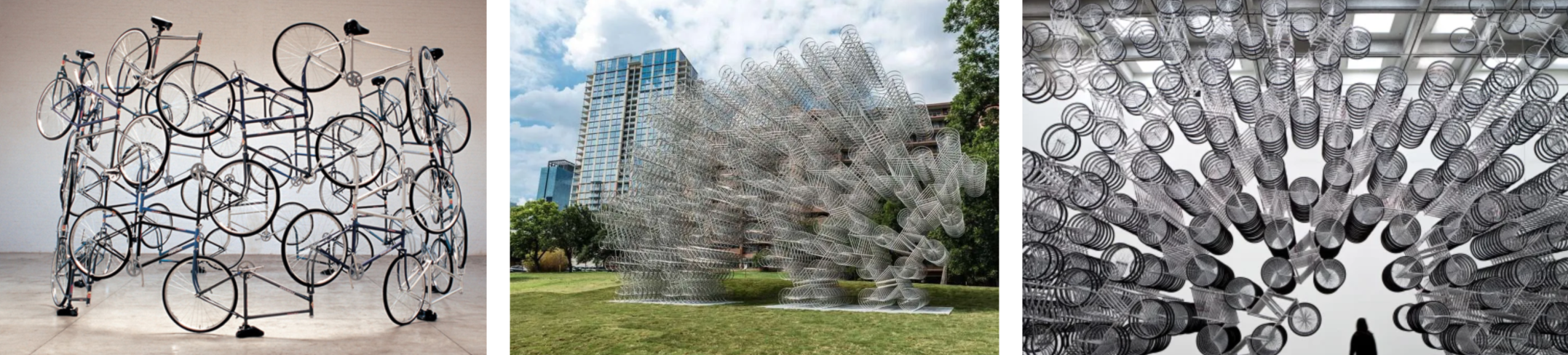
The Chinese conceptual artist and human rights activist Ai Wei Wei has repeatedly used bicycles for his installation artworks ever since 2008. The first time was for his work Very Yao, where he stacked 760 bikes on each other and turned them into a gigantic sculpture. Forever Bicycle uses bikes again. He uses bikes again to open up new forms of interpretation of Chinese social society.
10. There are more than 1 billion bicycles in the world
And that's with more than 8 billion people on the planet. There are fewer bikes than you might think at first, right? Mainly because a few of you own five of them.
China actually has the most bicycles, with more than 450 million, closely followed by the USA and Japan with 100 and 75 million respectively.
On buycycle.com there are just over 17,000 roads, and there are gravel or mountain bikes. You are sure to find the right bike in our selection - pre-owned, in top condition, and for up to 60% cheaper on our website. It is always worthwhile, and if you want to sell one of the five bikes you own, with buycycle, it's just as easy, quick, and secure as buying a bike. If you have any questions about our top 10 cycling fun facts or our platform in general, the buycycle team is always here for you on our blog. For now, we wish you, as always, Happy browsing and cycling!
- Where to buy a bike: what are the options?
- Are Craigslist bikes, Ebay or Pinkbike good options to sell/buy a bike?
- Buying a bike at Canyon Outlet, Cube factory or Rose Outlet
- When to buy a bike?
- How much does a bike cost?
- Should I buy a new or used bike?
- What to look for when buying a used bike?
- Which type of bike should I get?
- A guide to bike size chart and wheel bike size chart
- How to sell your bike?
- Where to sell a bike?
- How to sell your old road bike?
- Sell your mountain bike the right way
- How much is my bike worth?
- Are Craigslist bikes or Pinkbike good options to sell/buy a bike?
- How to pack your bike for shipping
- How to ship your bike?
- 5 photo tips to quickly sell your bike
- Ultimate guide: how to sell your bike and maximize your profit