Cross-Country Ski Length: How to Find the Right Size for Classic and Skating
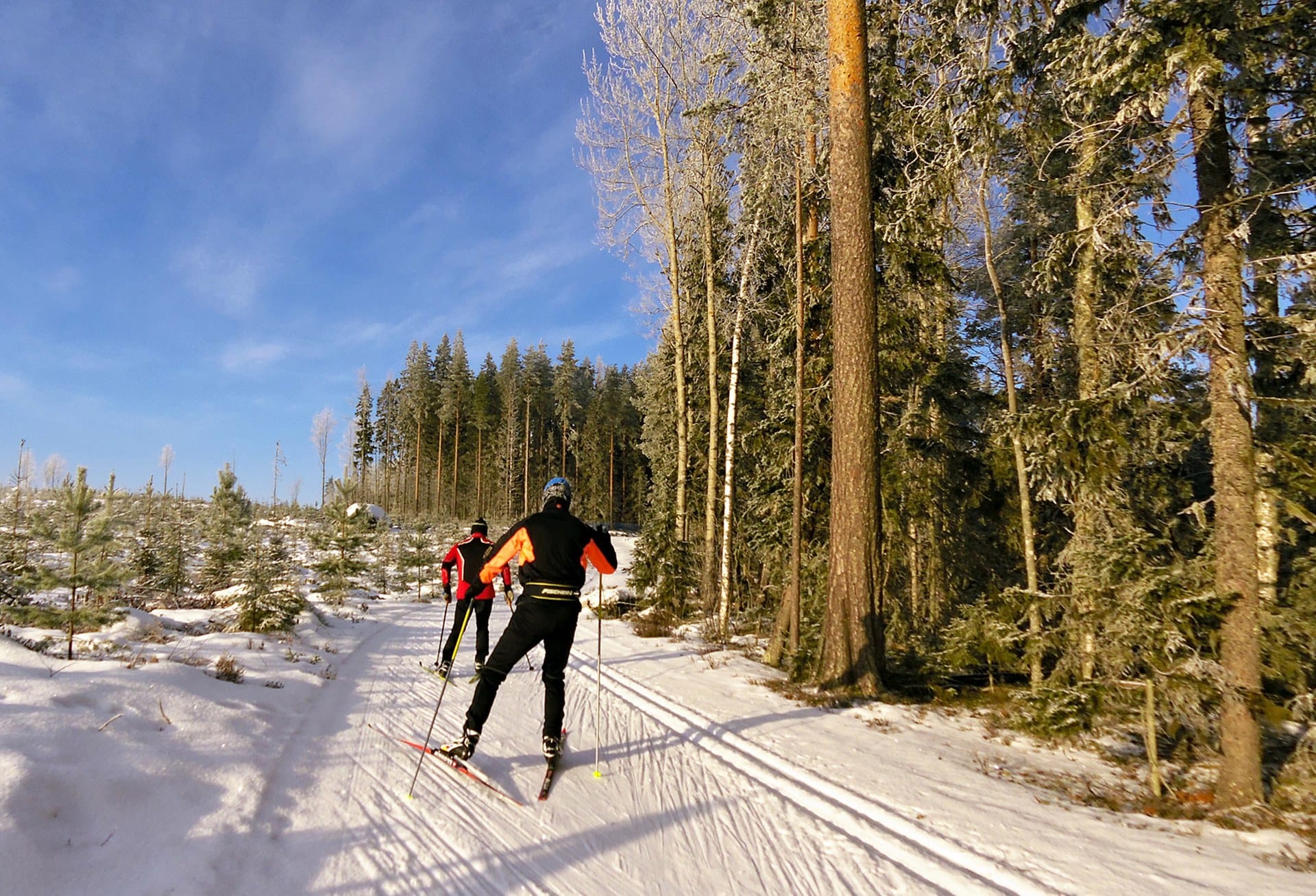
Classic cross-country skis are about 20–25 cm longer than your height (manufacturers say 20–30 cm), skating skis about 10–15 cm. Lighter skiers choose roughly 5 cm shorter, heavier skiers roughly 5 cm longer. Even more important than length is that the stiffness (the "flex") matches your body weight. Not sure which style to pick? For beginners, classic is usually the easier start, and used classic cross-country skis cost a median of about €150 on buycycle.
Cross-country skiing is skiing on groomed trails, either in the set double track (classic) or on the wide, smooth surface (skating, also called skate skiing).
As of: 2026/27 season. Our own figures: analysis of 223 cross-country ski listings on buycycle (private and commercial sellers), as of 3 November 2026.
How do you calculate cross-country ski length? The formula in three steps
Style first, then height, then weight and ability. That gives you a range in centimetres, which you then check against the manufacturer's chart.
- Choose your style: classic or skating (more on this below).
- Height plus allowance: classic +20 to +25 cm, skating +10 to +15 cm.
- Adjust: lighter than average: 5 cm shorter. Heavier: 5 cm longer. Beginners take the lower value, advanced skiers the upper one. If you race, INTERSPORT Rent (Germany) recommends going another 5 cm longer.
Manufacturers don't agree on the allowances. That is normal, because they all give guide values, not a fixed rule:
| Source | Classic | Skating |
|---|---|---|
| INTERSPORT Rent | +20 to +30 cm | +10 to +15 cm (beginners +8 cm) |
| Fischer (product blog) | +20 cm | +5 to +10 cm |
| Fischer (Langlauf-Urlaub guide) | +20 to +30 cm | +5 to +15 cm |
| Madshus (text at SkatePro) | +20 to +25 cm | +10 to +15 cm |
| Madshus (size chart at SkatePro) | +15 to +30 cm depending on height | mostly +5 to +10 cm |
As of October/November 2026, in each case the statements on the pages named. They all agree on this: classic about +20 to +25 cm, skating skis about 10 cm shorter. Our recommendation: classic +20 to +25, skating +10 to +15 cm; beginners and lighter skiers go to the lower end.
Important: length is only half the calculation. Fischer's nordic expert Andi Graubner says (translated from German): "Body weight always has top priority over the formula based on height." More on this in the section on weight.
Cross-country ski length by height: chart
At 170 cm, that means about 190–197 cm for classic and about 175–180 cm for skating. The chart shows the values for heights from 150 to 195 cm.
| Height | Classic (skin, fishscale, wax) | Skating | Poles classic | Poles skating |
|---|---|---|---|---|
| 150 cm | 170 cm | 155–160 cm | approx. 125 cm | approx. 135 cm |
| 155 cm | 175 cm | 160–165 cm | approx. 130 cm | approx. 140 cm |
| 160 cm | 180–187 cm | 165–170 cm | approx. 135 cm | approx. 140 cm |
| 165 cm | 182–192 cm | 170–175 cm | approx. 135 cm | approx. 145 cm |
| 170 cm | 190–197 cm | 175–180 cm | approx. 140 cm | approx. 150 cm |
| 175 cm | 192–200 cm | 180–185 cm | approx. 145 cm | approx. 155 cm |
| 180 cm | 202–210 cm | 185–190 cm | approx. 150 cm | approx. 160 cm |
| 185 cm | 202–210 cm | 190–195 cm | approx. 155 cm | approx. 165 cm |
| 190 cm | 207–210 cm | 192–195 cm | approx. 160 cm | approx. 170 cm |
| 195 cm | 207–210 cm | 192–195 cm | approx. 160 cm | approx. 175 cm |
Skis: Madshus size chart for adults (SkatePro, updated 8 May 2026); it is capped at 210 cm (classic) and 195 cm (skating). The skating values sit toward the lower end of the range (+5 to +10 cm); if you are strong or advanced, go to the upper end. The chart only takes height into account, not weight: adjust by ±5 cm and check the weight range of the model. Poles: rules of thumb 0.83 × height (classic) and 0.89 × height (skating), rounded to 5 cm (among others Decathlon, Bergzeit). Beginners tend to take slightly shorter poles.


Which ski length at 165, 170 and 180 cm?
- 165 cm: classic approx. 182–192 cm (beginners more like 185), skating approx. 170–175 cm.
- 170 cm: classic approx. 190–197 cm, skating approx. 175–180 cm.
- 180 cm: classic approx. 202–210 cm, skating approx. 185–190 cm.
Lighter or heavier than average? Then ±5 cm, but always with an eye on the weight range of the ski.
Why does weight matter more than height?
Because the ski needs the right tension under your weight: when you stand on both feet, the kick zone must not touch the snow; when you push off on one leg, it must grip firmly. That is controlled by the flex, meaning the stiffness of the ski, and not by length alone.
Every cross-country ski has a camber: unloaded, it arches away from the ground. The longer a ski, the stiffer it is and the heavier the skier can be. If the stiffness doesn't fit, there are two typical problems:
- Ski too stiff: the kick zone doesn't grip when you push off, and you slip on the climb.
- Ski too soft: the kick zone drags in the snow while you glide and slows you down.
Fischer says its rule of thumb (+20 to +30 cm) is right in only about 80% of cases; after that, weight counts. That is why many manufacturers give a weight range for each model, often instead of a size chart for skin skis. Check the manufacturer's page to see which range you fall into.
The paper test for classic skis
With a sheet of paper, you can check on level ground (for example in a shop or at the handover) whether the flex matches your weight:
- Stand on the skis with both feet and your weight evenly distributed, in skiing position.
- Slide a sheet of paper under the middle of the ski (kick zone). It should still move freely: the kick zone doesn't touch the snow while gliding.
- Shift all your weight onto one ski. Now the paper should be clamped: the kick zone presses into the snow when you push off.
If the paper is already clamped when you stand on both skis, the ski is too soft for you. If it can still be moved easily on one ski, it is too stiff.
Note: sources don't describe the test in the same way, and the kick zone is a different length depending on the model. If in doubt, a nordic ski shop can help.
The paper test does not apply to skating skis in this form, because they have no kick zone. Here too there are weight ranges per model; if in doubt, use the manufacturer's chart.
Classic or skating: which suits you?
Beginners usually start with classic: the movement is more natural, the set track guides the skis, and the equipment is cheaper. Skating is faster and demands balance and strength, but needs a wide groomed surface.


| Classic | Skating | |
|---|---|---|
| Movement | Diagonal stride in the track, skis run parallel | Skating stride, skis in a V position |
| Trail | Set double track | Wide, smooth surface |
| Ski length | Height +20 to +25 cm | Height +10 to +15 cm |
| Grip | Kick zone under the foot (skin, fishscale or wax) | No kick zone, smooth base |
| Poles | approx. 0.83 × height | approx. 10 cm longer, approx. 0.89 × height |
| Boot | More flexible, low cuff | Higher cuff, supports the ankle |
| Getting started | Usually easier | Needs more balance and practice |
| Used skis on buycycle (median asking price) | approx. €150 (64 listings) | approx. €230 (103 listings) |
Prices: median of the asking prices of cross-country ski listings on buycycle (skis only), as of 3 November 2026. There are still too few sold skis (2 classic, 7 skating) for a typical sale price.
Which style for beginners?
Classic. You can ski in the track after an hour, and skin skis grip reliably uphill too. Skating is learned faster with a lesson. Both styles work the whole body; if you have any health concerns, get them checked by a doctor first.
Can you ski both styles on one pair?
With combi skis yes, but it remains a compromise. Pure skating skis have no kick zone and don't grip in classic. Combi skis and combi boots exist, but the choice is small: on buycycle only 6 of 223 listings are marked as combi. If you want to ski both styles later, the best approach is to buy two used pairs.
Skin, fishscale or wax?
For classic, skin is the most convenient solution today, fishscale the low-maintenance one, wax the one for advanced skiers.
- Skin: grips uphill and on ice too, hardly any maintenance. When buying used, check that the skins are still firmly attached and not worn.
- Fishscale (crown): simple, but less grip on ice (INTERSPORT Rent). When buying used, check that the scales are still complete.
- Wax: glides well if you know how to wax. Usually impractical for beginners.
All three are measured to the same length. With many skin models, however, you choose by weight range, not by size.
Which cross-country poles go with your ski length?
Classic poles reach about to your armpit, skating poles to your chin or nose and are around 10 cm longer. As a formula: 0.83 × height for classic and 0.89 × height for skating (at 175 cm: approx. 145 cm classic, approx. 156 cm skating). Beginners take the smaller factor, advanced skiers the larger one. The values in the chart above are rounded to 5 cm.
Do boots and bindings match?
According to retailers and Salomon, boots with an NNN, Prolink or Turnamic sole fit bindings of these three systems. SNS Pilot and Profil are a separate system and don't fit. Always check the sole profile on the actual boot before you buy.
| System | Manufacturer | Boots fit on | Note |
|---|---|---|---|
| NNN | Rottefella | NNN, Prolink, Turnamic | Widely used |
| Prolink | Salomon, Atomic | NNN, Prolink, Turnamic | Based on NNN; with newer boots, check the compatibility of the model |
| Turnamic | Fischer | NNN, Prolink, Turnamic | Binding only on an IFP plate according to retailers, not on NIS |
| SNS Pilot / Profil | Salomon | SNS only | No longer sold by Salomon; can't be combined with NNN, Prolink or Turnamic |
Sources: Salomon (compatibility note), retailer information (GearWest, FFSkis, Bergzeit), as of November 2026. Manufacturer information can differ by model.
On top of that comes the mounting plate (NIS or IFP) on the ski. Always have bindings mounted or moved by a nordic ski shop; don't drill yourself.
Buying used cross-country skis: checking length and stiffness without trying them on
With used skis, the right weight range matters more than ±5 cm of length, followed by length, style and condition. buycycle currently has 223 cross-country ski listings: 103 skating, 64 classic, 6 combi and 4 backcountry (the rest without a type). Supply is densest for tall skiers: of the skating skis with a length listed, 82 of 99 are at least 180 cm long, and of the classic ones 44 of 58 are at least 180 cm. If you are under 170 cm tall, you have less choice and should act early. The biggest brands are Fischer (80), Salomon (46), Rossignol (34), Madshus (13) and Atomic (11).
What to ask the seller:
- Height and weight of the previous skier, plus style and ability.
- Weight range and length: both are usually printed on the ski (length in cm, with many brands also a kg range).
- Grip type: skin, fishscale or wax; with skin, the condition of the skins.
- Binding system and mounting plate: NNN, Prolink, Turnamic or SNS; NIS or IFP.
- Last base grind and last wax treatment.
Ask for these photos: base (underside, in full), edges and sidewalls, both skis side by side from the side (shows the camber), kick zone, binding plate. You do the paper test at the handover or, if the skis are shipped, straight after they arrive.
You will find matching boots among the used cross-country ski boots. Popular brands are Fischer and Salomon.
Cross-country skis for kids
Kids take shorter skis than adults. Fischer gives classic as height +10 to +20 cm (beginners +10 cm) and for skating height +0 to +10 cm (beginners 5 to 10 cm less than height). Children grow fast, which makes used especially worthwhile.
FAQ
How long should cross-country skis be?
Classic about height plus 20–25 cm, skating plus 10–15 cm. On top of that comes a correction of ±5 cm for weight and ability, and the stiffness has to match your weight.
Which ski length at a height of 165 cm?
Classic about 182–192 cm, skating about 170–175 cm (Madshus chart).
Which ski length at a height of 170 cm?
Classic about 190–197 cm, skating about 175–180 cm.
How do I calculate the right length for cross-country skis?
Height plus the allowance for your style, then ±5 cm for weight and ability. Finally, check the weight range of the model and, for classic skis, do the paper test.
How long should classic cross-country skis be?
Height plus 20 to 25 cm. Fischer gives +20 to +30 cm, INTERSPORT Rent also +20 to +30 cm. Beginners take the lower value.
Which is better, classic or skating?
Neither. Classic is easier to learn and runs in the track, skating is faster and needs a wide surface. For beginners, classic is usually the better start.
Which cross-country style for beginners?
Classic, ideally with skin skis and a slightly shorter length.
Skis for both skating and classic: is that possible?
Combi skis exist, but they are a compromise. For both styles you need two pairs in practice.
What happens if cross-country skis are too long?
They are harder to control, grip less well in classic and are more difficult in turns (Fischer). Skis that are too short are less stable and glide worse.
What should I look for in used cross-country skis?
Length and weight range, the condition of base, edges and kick zone, the binding system (NNN, Prolink, Turnamic) and the mounting plate. Ask for photos of the skis from the side and do the paper test after you receive them.
Sources: INTERSPORT Rent (Germany), "Langlaufski in der richtigen Länge auswählen" (updated 12 Oct 2026); Fischer Sports, "Welche Skilänge brauche ich für Langlaufski" and guide on the Langlauf-Urlaub blog (16 Dec 2025, with Andi Graubner, Fischer); SkatePro, Madshus size guide (8 May 2026); Salomon (boot/binding compatibility); Decathlon and Bergzeit (pole lengths); Cross Country BC (paper test). Our own figures: listings on buycycle, as of 3 November 2026.