
The short version
- The fast selling window runs from November to February.
- Gear listed in November sold in a median of 17 days, in January 16. In May it took 59 days.
- Listing now still pays off: it gives you time to prepare, and your listing is already live and visible once buyers start searching in November.
- A second, barely used window opens in March.
"Sell your skis before the season" is one of those pieces of advice that is everywhere and that nobody has checked. We were able to check it, against every winter sports sale on buycycle over the 2025/26 season.
The result contradicts the intuition.
The numbers
The right question matters. Not: in which month is the most sold? But: if I list in month X, how long does it then take?
So we assigned every item sold to the month it was listed in, and measured how long it stood online until it sold.
| Listed in | Days to sell (median) |
|---|---|
| October | 32 |
| November | 17 |
| December | 29 |
| January | 16 |
| February | 21 |
| March | 24 |
| April | 33 |
| May | 59 |
| June | 57 |
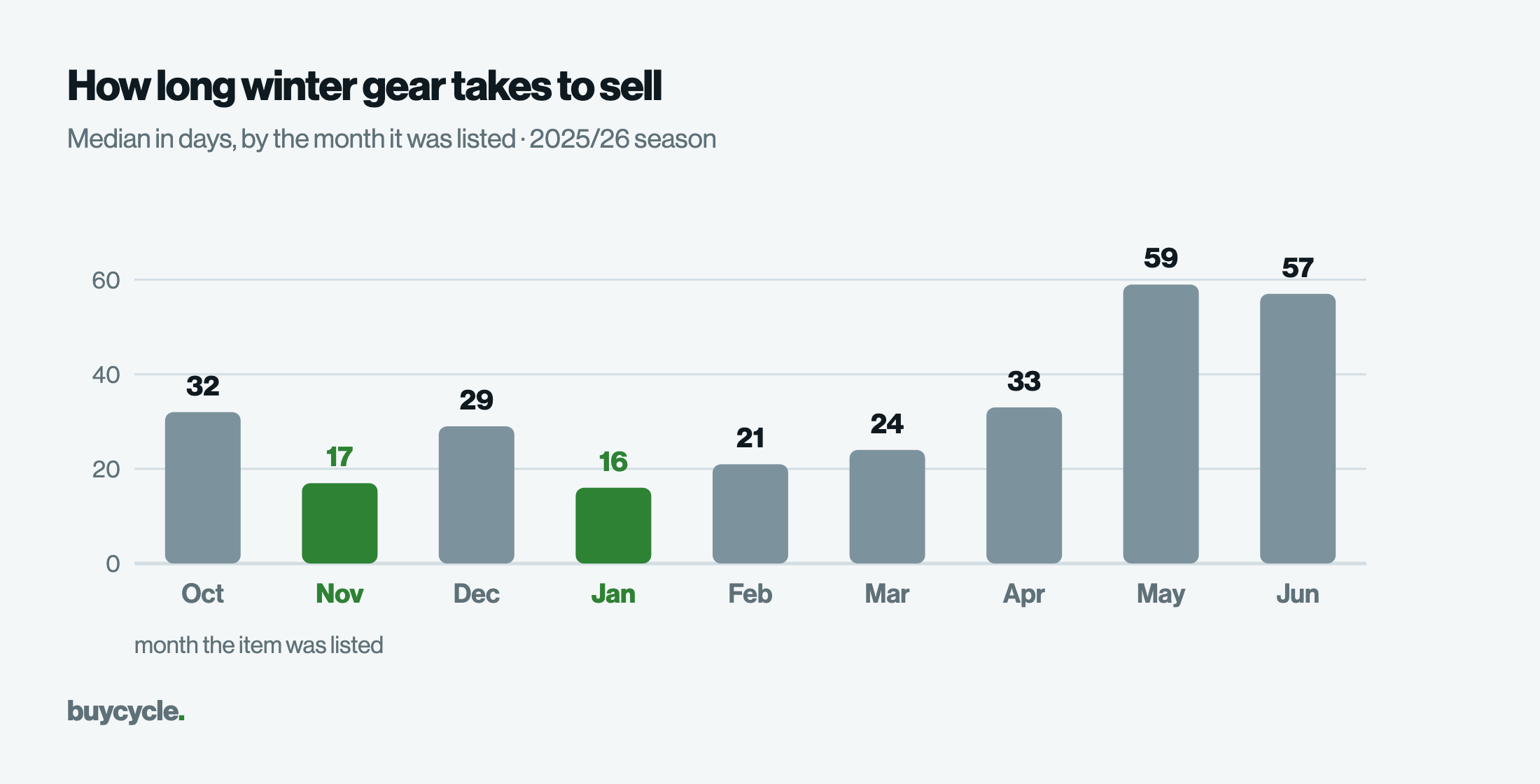
Between the best and the worst month there is a factor of three and a half. List in January and you sell in a good two weeks at the median. List in May and you wait two months.
Why buyers take a little longer to show up — and why that's fine
The logic makes sense: everyone needs new gear before the season starts, so that's when to sell it.
The catch is that the same logic applies to other sellers too. In late summer and early autumn, everyone clears out the basement at once, so supply rises before demand does. Almost nobody buys skis in August — buyers show up once the first snow falls, the ski trip is booked, or the weekend forecast looks right.
Supply and demand simply don't land in the same month in winter sports: supply builds in late summer and autumn, demand from November. That means a listing posted now takes a bit longer to sell than one posted in November — not because it's a worse listing, but because most buyers haven't started looking yet. Which is exactly the argument for listing now: your gear is already found, saved, and ready to go the moment they do.
The fast window: November to February
November — the best month to list
17 days at the median. The first resorts open, trips get booked, gear comes out of the basement — and anyone who then discovers the boots pinch or the skis are too short buys immediately. If you get your gear ready in autumn, November is the month it should go online.
December — good, with a Christmas dip
29 days. Demand is high, but the second half of the month belongs to the holidays. Listing in early December works better than just before Christmas.
January — the second peak
16 days, the fastest figure of the whole year. The season is running, equipment is in use, defects and bad purchases reveal themselves. Anyone searching in January is searching with urgency.
February — still strong
21 days. Demand stays high for as long as the school holidays run.
The second window: March
From March it gets slower — 24 days at the median, after which the curve climbs steeply. March is still interesting, though, because almost nobody uses it: far fewer items are listed in March than in midwinter. Less competition, with demand still present.
March suits you above all if you are moving to new gear and want to pass the old on at the end of the season rather than storing it for another summer.
What to keep in mind in spring and summer
From April to June, time on the market lengthens noticeably — to 59 days in May. That is not a reason not to sell. It is a reason to plan for patience and not to cut the price after two weeks because nobody has been in touch. In summer, absent demand is normal and says nothing about your listing.
Differences by category
Not everything follows the same rhythm:
- Snowboards are the fastest category at a median of 17 days.
- Skis and ski boots sit at 23 days.
- Clothing takes noticeably longer at 36 days — jackets and trousers should go online correspondingly earlier.
How long to wait before cutting the price
The median is a midpoint — half of all sales take longer. From that you can derive a workable rule of thumb:
- In the main season (November to February): if not a single enquiry has come in after three or four weeks, it is usually the price or the photos. A cut of 10 to 15% brings the listing back into view.
- In spring (March and April): allow four to six weeks before you react.
- In summer: do not cut at all. Two months without an enquiry is entirely normal in July and says nothing about your listing. Drop the price in summer and you sell below value in November.
The most common mistake is mistaking summer silence for a price problem and giving way — just before demand arrives.
Why waiting rarely helps
An obvious thought: if nobody buys in summer anyway, I will just wait until November. The arithmetic usually does not work out.
Gear loses value with every model year, and the gap between "three years old" and "four years old" is visible in a listing. List in May and wait two months and you sell in July — at a price that still reflects the current model year. Leave the skis in the basement for a year instead and you are selling skis that are a year older.
The exception is late summer. If only a few weeks remain until November, waiting does pay — not because of the price, but because of the speed.
And if I want to sell right now?
List today — it's a smart move, not a compromise. Two things make the most of the head start:
Use the extra weeks to prepare properly. Take the rust off the edges, clean the base, take proper photos in daylight, give complete details — the kind of work that's easy in September and rushed in November.
Being live early beats joining the rush. A listing that's already up, complete, and gathering views in September and October is exactly what buyers find first once demand arrives in November.
Conclusion
Winter sports gear sells fastest during the season, not before it — two to three weeks at the median from November to February. Listing in late summer just means a slightly longer wait for the right buyer, which is exactly why it's worth listing now: you get the quiet weeks to prepare and get found before everyone else lists in October.
The practical recommendation: list now and prepare while it's live, then let the November demand come to you.
For the autumn preparation, our guide to getting your skis ready to sell helps. What your gear is worth is in the price guide for used skis, and the whole process in the complete guide to selling skis.
On the method
All figures are median values from completed sales of winter sports gear on buycycle over the 2025/26 season. Items were grouped by the month they were listed, not the month they sold. That is the decisive difference: group by month of sale and you necessarily measure short listing times, because items that sold early were by definition online only briefly. September is excluded, because our winter sports category launched that month and the figures reflect the launch rather than the season.
Frequently asked questions
When should I sell my skis?
Gear sells fastest between November and February — a median of 17 days in November, 16 in January. That said, list as soon as you're ready: a listing that's already live and polished in September or October is exactly what buyers find first once demand kicks in.
Is it worth selling in spring?
March is a genuinely sensible second window: 24 days at the median, with considerably less competition than in midwinter. From April it gets noticeably slower.
How long does it take for skis to sell?
Across the year, a median of 23 days. In the main season it is quicker; in summer it takes considerably longer.
Should I wait until next season?
Only if there are less than a couple of months until November. Gear loses value with every model year — a summer of waiting usually costs you more than the better seasonal timing brings in.