Ski touring skis for beginners: the right length, width, bindings and boots
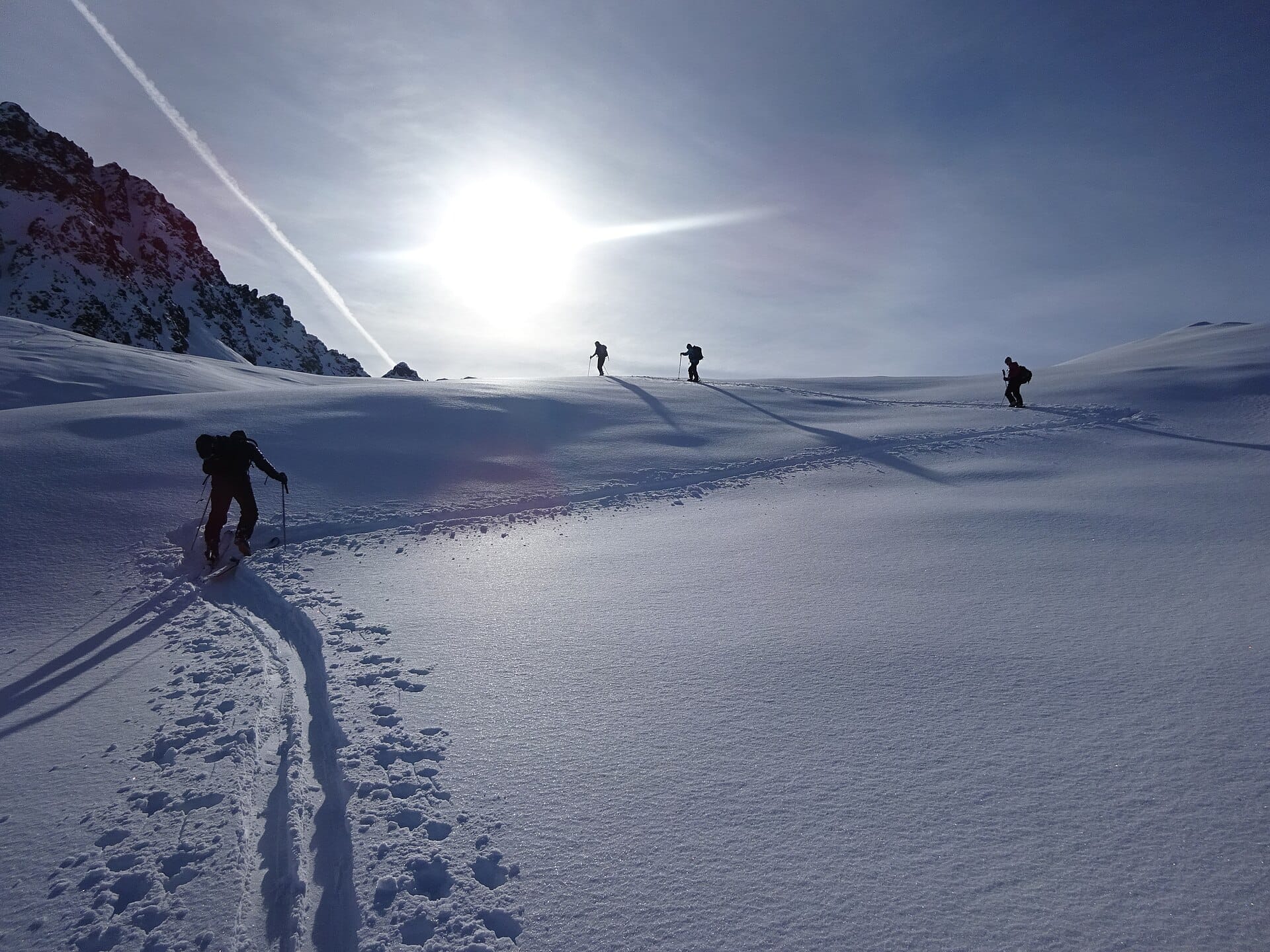
As a beginner, choose an all-round touring ski with a waist of 85–95 mm, about 10 cm shorter than your height (range: minus 5 to minus 15 cm). At 175 cm that means roughly 160–170 cm. Pair it with a pin binding with a brake (stopper) and a touring boot with pin inserts. Skis, bindings and skins are a good buy used: on buycycle, a touring ski with bindings typically costs around €300–425. You need avalanche safety gear (transceiver, shovel, probe) and an avalanche course as soon as you leave the secured piste. For that gear the rule is: buy new, or buy used only after a very careful check.
As of: 3 November 2026, season 2026/27. Used prices: analysis of 268 touring ski listings and 57 touring boot listings on buycycle (private and commercial sellers).
The beginner setup at a glance
| Component | Recommendation for beginners |
|---|---|
| Ski type | All-round touring ski |
| Waist width | 85–95 mm |
| Length | Height minus 10 cm (range minus 5 to minus 15 cm) |
| Binding | Pin (tech) binding with a brake, mounted by a specialist shop |
| Boots | Touring boot with pin inserts, at least 60° of cuff rotation, soft to medium flex |
| Skins | Synthetic or mohair mix, cut to fit the ski |
| Avalanche gear | Transceiver with 3 antennas, metal shovel, probe of 240 cm or longer |
| Course | Beginner course with an alpine club or mountain school before you go into open terrain |
What length of touring skis do I need?
The rule of thumb is your height minus 5 to 15 cm. Beginners should sit towards the shorter end, at minus 10 to minus 15 cm. Sport Conrad, Intersport Rent and Bergzeit (German retailers) all agree on this. Shorter skis turn more easily and make kick turns on the climb simpler. The table shows guide values, not standards: retailers differ on speed and freetouring skis.
| Height | Light/speed (beginner) | All-round (beginner) | All-round (advanced) | Freetouring (advanced) |
|---|---|---|---|---|
| 155 cm | 140–145 cm | 140–150 cm | 150–155 cm | 150–160 cm |
| 160 cm | 145–150 cm | 145–155 cm | 155–160 cm | 155–165 cm |
| 165 cm | 150–155 cm | 150–160 cm | 160–165 cm | 160–170 cm |
| 170 cm | 155–160 cm | 155–165 cm | 165–170 cm | 165–175 cm |
| 175 cm | 160–165 cm | 160–170 cm | 170–175 cm | 170–180 cm |
| 180 cm | 165–170 cm | 165–175 cm | 175–180 cm | 175–185 cm |
| 185 cm | 170–175 cm | 170–180 cm | 180–185 cm | 180–190 cm |
| 190 cm | 175–180 cm | 175–185 cm | 185–190 cm | 185–195 cm |
| 195 cm | 180–185 cm | 180–190 cm | 190–195 cm | 190–200 cm |
Guide values derived from the length rules of Sport Conrad, Bergzeit and Intersport Rent (as of October 2026). Bergzeit even recommends "chin to nose" for beginners, which is a little shorter still. An online length calculator is coming.
When longer, when shorter?
- Heavier than average: towards the long end of the range.
- Pronounced rocker: up to 5 cm longer is possible, because the ski behaves shorter in the snow (Sport Conrad).
- Steep climbs and tight kick turns: rather shorter.
- Lots of powder and open descents: rather longer, but only with experience.
Examples: 168 cm and 180 cm
At 168 cm tall you choose an all-round ski of about 153–163 cm as a beginner, ideally around 158 cm. At 180 cm it is about 165–175 cm, ideally around 170 cm. For a 180 cm skier weighing 80 kg in open terrain, Sport Conrad names 175–185 cm. That applies to descent-oriented skis and experienced skiers, though.
How wide should touring skis be?
For beginners, a waist of 85–95 mm works best. That is wide enough for mixed snow and narrow enough for an easy climb.
| Waist width | Type | Pros | Cons |
|---|---|---|---|
| under 85 mm | Light/speed | very light, efficient uphill | nervous on the descent, little float in powder |
| 85–95 mm | All-round | good compromise, works in almost all conditions | neither the lightest nor the widest ski |
| over 95 mm | Freetouring | more float in powder, calmer on the descent | heavier, more tiring on the climb |
The boundaries are not the same everywhere: Bergzeit and Sport Conrad count freetouring from 95 mm, while other retailers already include 85–95 mm. Bergwelten (an Austrian outdoor magazine) recommends 85 mm (lighter women) to 95 mm (stronger men) for beginners, and a moderate tip rocker.
Which type of touring ski suits beginners?
An all-round touring ski. It forgives mistakes on the descent and is still light enough for long climbs.
| Type | Width | Length (beginner) | Who it is for |
|---|---|---|---|
| Light/speed | under 85 mm | Height minus 10 to 15 cm | Very fit skiers, long tours, good descending technique needed |
| All-round | 85–95 mm | Height minus 5 to 15 cm | Most beginners |
| Freetouring | over 95 mm | Height minus 10 to minus 5 cm | Descent-oriented skiers with experience in the terrain |
Good to know: according to Bergwelten, very light skis from about 750 g are only meant for good skiers.

Pin or frame bindings (and hybrids)?
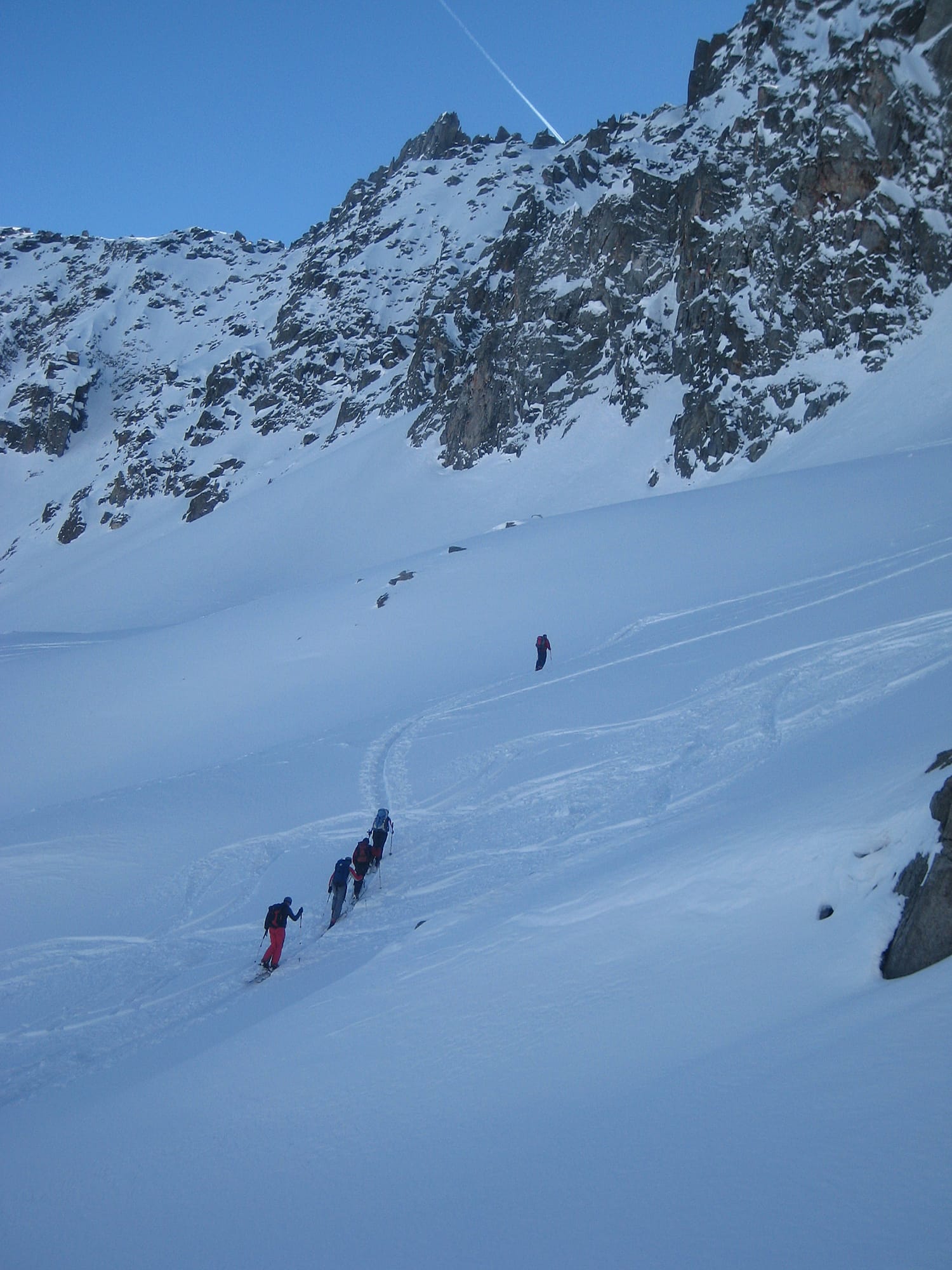
For beginners, a pin binding (also called a tech binding) is the right choice. It is the lightest and is now the standard. Frame bindings are heavier and walk worse. Hybrid bindings such as the Salomon/Atomic Shift or the Marker Duke PT ski almost like alpine bindings, but weigh about three times as much.
| Pin (tech) | Frame | Hybrid (e.g. Shift, Duke PT) | |
|---|---|---|---|
| Weight per pair | approx. 0.6–0.9 kg (e.g. 290–341 g per binding according to the manufacturer) | clearly heavier than pin | approx. 1.8–2.3 kg (Shift 2 13: 920 g per binding according to Salomon) |
| Climbing | very efficient, climbing aids usually two-stage | noticeably heavier, poorer walking motion | like pin, but heavy |
| Descending | good, little damping | good | very good, like an alpine binding |
| Release | varies by model, check the data sheet | front and rear, like an alpine binding | front and rear, DIN range e.g. 6–13 (Shift 2 13) |
| Boots | only with pin inserts | touring sole, sometimes alpine sole | alpine, touring and GripWalk (depending on model) |
| Used price (median, ski with binding) | €490 (128 listings) | €335 (18 listings) | €500 (19 listings) |
Used price: median of listing prices for touring skis with a stated binding type on buycycle, as of 3 November 2026. Frame and hybrid are based on few listings, so treat the figure as a rough guide. Weights according to manufacturers and retailers, models vary.
The used market is dominated by pin bindings: of the touring ski listings with a stated binding type, 78% have a pin binding, 12% a hybrid and 11% a frame binding.
Two things apply to every binding. First: mounting and the release value (Z value / DIN) belong in a specialist shop, not in the garage. Second: not all pin bindings are tested to ISO 13992, and not every one releases at the toe. Ask for the data sheet before you buy.
Stopper or leash?
For beginners, the stopper is the simpler choice. It holds the ski in place when the binding releases. A leash replaces the stopper and is more something for experienced skiers. Stoppers come in different widths (e.g. 100 and 125 mm for the Duke PT). It should be at least as wide as the ski waist.
Climbing aids
Pin bindings usually have two climbing aids (heel risers) for steep and flat terrain. The riser takes the strain off your calf when the slope gets steeper. Try them out in the shop.
Can you use touring skis with normal ski boots?
Only with a hybrid or frame binding that accepts alpine soles, and that is rarely worth it. A pin binding needs boots with pin inserts. Normal alpine boots do not have them.
| Boot | Pin binding | Frame binding | Hybrid binding |
|---|---|---|---|
| Touring boot with pin inserts, touring sole (ISO 9523) | fits | usually fits | fits |
| Touring boot with GripWalk sole (ISO 23223) | fits if the inserts are there | only if the binding approves GripWalk | fits (multinorm models) |
| Alpine boot (ISO 5355) | does not fit | multinorm models only | fits (multinorm models) |
Compatibility differs by model and manufacturer. Check the binding manufacturer's compatibility list and have the sole checked when the binding is mounted.
According to a retailer data sheet, the Marker Duke PT is designed for alpine, touring and GripWalk soles. The Shift 2 is advertised for both alpine and touring use. Both are heavy and expensive, though, and alpine boots are poor for climbing. The Alpine Club (Alpenverein) advises checking before you buy that boot and binding fit together.
Touring boots: fit, walk mode, size
The boot is the one item you absolutely should try on. A bad fit ruins every tour, and a good boot matters more than a light ski.
- Size: Measure your foot in Mondopoint (foot length in cm). The Alpine Club warns: do not choose ski touring boots too big, there is a risk of injury.
- Fit: The boot sits snugly and gives support, but does not pinch. Wear it for 20–30 minutes with your own ski socks and mark pressure points.
- Walk mode: At least 60° of cuff rotation if you go beyond piste ascents (Alpine Club). More rotation means more walking comfort.
- Weight: A guide value is 800–1,000 g per boot (retailer figure). Descent-oriented boots are heavier.
- Flex: Beginners do well with soft to medium flex. The values are not standardised. Fischer classes 80–100 as soft, 100–115 as medium and from 115 as stiff.
- Liner: Heat-moldable liners improve the fit. Bought in a specialist shop, this is often free.
Skins: material, glue, cut
For beginners, synthetic skins (nylon) or a mohair mix are a good fit. Nylon is robust, cheap and easy to care for. Mohair glides better but wears faster and costs more. The mohair mix is the most common (Bergwelten, Intersport Rent).
- Glue or adhesion: Glue-backed skins are the most common and need care. Adhesion skins are more expensive and stick worse when wet.
- Cut: Skins are cut to fit the ski. In a specialist shop this is often free when you buy.
- Used: Check whether the glue still sticks and whether tip and tail hooks are included. Listings with skins cost around €200 more on buycycle than listings without (median €500 for 117 listings with, €300 for 144 without).
Avalanche safety basics: what to know before your first tour
As soon as you enter unsecured terrain on a tour, transceiver, shovel and probe belong in your backpack, and you must practise using them. On secured piste tours you do not need them. The equipment is no substitute for training.


Rescue gear: transceiver, shovel, probe
According to the German and Austrian Alpine Clubs (DAV/ÖAV), a search with transceiver, probe and shovel takes about 11 minutes, with transceiver and shovel about 25 minutes, and with the transceiver alone about an hour. That is why you need all three items.
- Shovel: The Alpine Clubs recommend metal shovels with a telescopic handle and a large blade. They are heavier than plastic but sturdier. Price according to the Alpine Clubs: about €40–125.
- Probe: At least 240 cm long, with a reliable locking mechanism (Alpine Clubs). Retailer prices are around €35–50.
- Airbag backpack: optional. The Alpine Clubs recommend it, but expressly say it is no free pass for risky descents.
The transceiver: 3 antennas, send and search
Buy a transceiver with 3-antenna technology: according to the Alpine Clubs it is the state of the art. The device transmits on 457 kHz. Devices with only one or two antennas are considered outdated.
- Before every tour: group check at the trailhead. Everyone switches to send, one person checks with their device in search mode that all signals arrive. Then everyone switches back to send.
- Batteries: only those recommended by the manufacturer, and take them out at the end of the season.
- Software: install updates if your device supports them.
- Practice: train with the device again and again, before and during the season.
Avalanche bulletin and danger levels
Before every tour, read the avalanche bulletin for your region. The European scale has five levels: 1 low, 2 moderate, 3 considerable, 4 high, 5 very high. Levels 2 and 3 apply on more than 80% of winter days, and according to the SLF (the Swiss avalanche institute), level 3 is the most critical situation for winter sports enthusiasts. Inexperienced people are advised to stay on open descents and routes from level 3 upwards. The level applies regionally and depends on altitude, and the bulletin also says on which aspects.
The bulletin depends on where you ski: Météo-France publishes the BERA for the French Alps and Pyrenees, AEMET the bulletin for the Spanish Pyrenees, and avalanche.report covers Tyrol, South Tyrol and Trentino. In Switzerland it is the SLF.
Avalanche bulletins on avalanche.report → · Météo-France: avalanche risk (French Alps, Pyrenees) · AEMET: avalanche bulletin (Spanish Pyrenees) · SLF: danger levels explained · EAWS: European danger scale
Courses: which ski touring courses exist for beginners?
Book a beginner course before you go into open terrain. You learn the climb, kick turns, the descent, transceiver search and how to assess avalanche danger. Providers are the national alpine clubs (DAV and ÖAV in Germany and Austria, SAC in Switzerland, CAI in Italy, FFCAM in France, the mountaineering federations in Spain), mountain schools and mountain guides; in France ANENA also runs public avalanche courses. In Austria, weekend courses including an overnight stay cost around €350–550 according to current Naturfreunde listings.
Public avalanche courses in France: ANENA → · Ski mountaineering schools in Italy: CAI
Piste touring: rules
On piste tours you practise walking with skins on secured terrain, and many ski resorts have their own ascent routes. Each resort sets its own rules, though, for example on evening closing times or the danger from winch cables. The German Alpine Club has summarised the main rules of conduct (in German) in Ski touring on pistes in Bavaria. Always check the rules of the resort you plan to use.
Rent, buy used or buy new? What a season costs
Used, you get the complete beginner setup for about €850–1,000; new, you pay almost double. In both cases you buy the avalanche gear new.
| Rent | New (guide) | Used on buycycle | |
|---|---|---|---|
| Skis, bindings, skins | €30–45 per day | from €600, high quality from €1,000 | Ski with bindings: median €425 (listing), sold median €299 |
| Touring boots | often part of the rental package | around €500 | Median €200 (listing) |
| Avalanche set (transceiver, shovel, probe) | can be rented | around €360–400 | buy new (see above) |
| Total | from about €300–450 for 10 days, ski set only | approx. €1,500–1,900 | approx. €850–1,000 |
Used prices: median of listing prices on buycycle (268 touring ski listings, of which 205 with bindings; 57 touring boot listings), sold prices from 22 sold touring skis (median €299), as of 3 November 2026. New and rental prices according to Bergwelten, retailers (Sport Conrad, Bergfreunde) and the Alpine Club, in each case a guide only. They come from German-speaking retailers and can differ in other countries. On average a listing is priced at 50% of the stated new price (123 listings with a new price).
If you stop after one season, you sell the set again. On our site you will find tips in our guide to selling skis and in the post What are my used skis worth?.
What you should buy new
Buying used touring skis: the checklist
Touring skis are a good fit for buying used: the length does not have to be right to the centimetre, and on average you save half. The median listing on buycycle is 171 cm long, and 80% of listings lie between 150 and 184 cm. Go by the length printed on the ski, not the length in the listing text.
- Check length and width. Compare both with the table above. The waist width is usually in the model's data sheet.
- Identify the binding. Clarify model, year and type (pin, frame, hybrid). Have it checked by a specialist shop before your first tour and the release value set.
- Clarify the boot sole length. The binding's adjustment range must fit your boot, otherwise it has to be remounted.
- Count the drill holes. Ask whether the ski has been mounted several times. Too many holes weaken the hold.
- Look at the edges and base. Deep scratches, rust on the edges and delamination are a price argument. According to Bergwelten, skis lose tension after about 50–60 tours.
- Check the skins. Does the glue still stick? Are tip and tail hooks included? Are the skins cut to fit this ski?
- Brake width and ski crampons. The stopper must be at least as wide as the ski waist, and the ski crampons must fit the binding.
- Boots only with a try-on. Pin inserts must not be rounded off. Only buy touring boots if you can try them on.
You can find bindings on their own in the category used ski bindings. If you already have a favourite brand: touring skis from Atomic and Völkl as well as skis, boots and bindings from Dynafit regularly come up used.
FAQ
What length of touring skis at 180 cm height?
As a beginner about 165–175 cm, ideally around 170 cm. Experienced skiers with descent-oriented skis choose 175–185 cm.
What ski length at 168 cm height?
About 153–163 cm, ideally around 158 cm, if you ski an all-round ski.
Which touring skis for beginners?
An all-round touring ski with a waist of 85–95 mm, about 10 cm shorter than you, with a pin binding. Used, you typically get it on buycycle for €300–425.
Pin or frame: which is better?
For beginners, pin. It is lighter and more efficient uphill. Frame bindings are cheaper but heavier and feel worse when walking.
Leash or stopper?
As a beginner the stopper is simpler. The leash saves weight but is more something for experienced skiers.
Can you ski touring skis with normal ski boots?
Only with frame or hybrid bindings that accept alpine soles. With a pin binding you need boots with pin inserts.
Can I ski touring skis on the piste?
Yes, you can ski touring skis on the piste too. Many ski resorts have rules for piste touring, so find out beforehand.
Do I need avalanche gear even on easy tours?
Not on secured pistes. As soon as you enter unsecured terrain, transceiver, shovel and probe are part of the kit, plus a course and the avalanche bulletin.
Is a used touring ski set worth it?
Yes. Used, you pay a median of about €425 for skis with bindings; new, a set starts at €600. You buy the avalanche gear new, and you try the boots on.
Sources: Alpine Clubs (DAV and ÖAV): "Schaufel und Sonde", "Der richtige Skitourenschuh", "Vollständige Ausrüstung auf Skitour", "Pistenskitouren"; SLF: avalanche danger levels; AEMET, Météo-France and EAWS (avalanche bulletins and the European danger scale); Sport Conrad, Bergzeit and Intersport Rent (length rules, skins, bindings); Bergwelten (setup, prices); manufacturer information and retailer data sheets for the Salomon Shift 2 and Marker Duke PT. Used prices: analysis of 268 touring ski and 57 touring boot listings on buycycle (private and commercial sellers), as of 3 November 2026.