Ski Boot Size Chart: How to Measure Mondopoint and Convert to EU Size
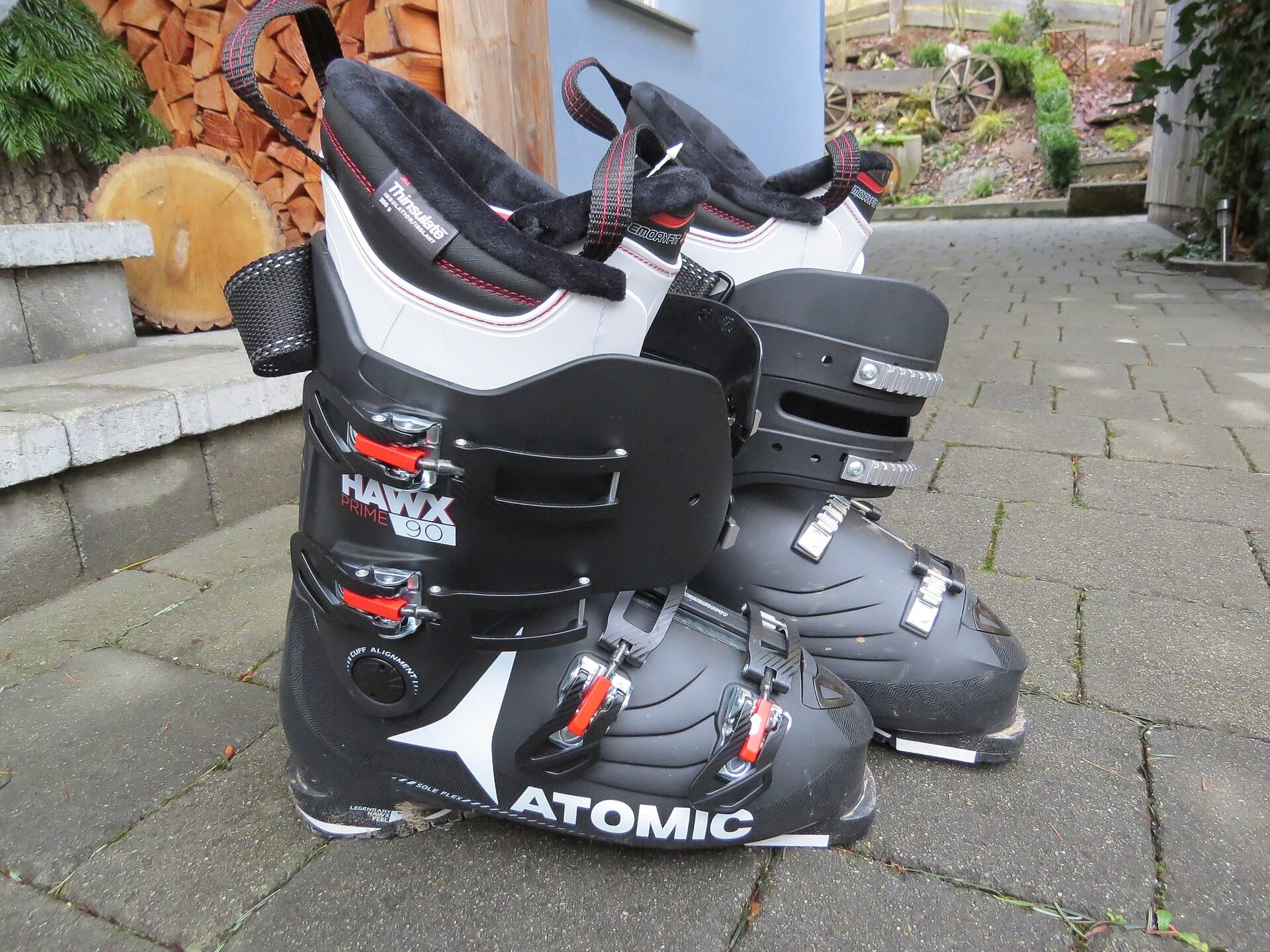
Ski boot sizes are given in Mondopoint (MP), and that is simply your foot length in centimetres: if your longer foot measures 26.5 cm, you need MP 26.5, which is roughly EU 41–42 depending on the brand. Never buy ski boots a size too big. If you are between two sizes, the shell test decides. For used ski boots there is one more rule: take the same size or the smaller twin size, never a bigger one, because the liner has already packed out.
As of November 2026 (2026/27 season). All EU and UK values are guidelines, because street shoe sizes are not standardised. Mondopoint itself is standardised (ISO 9407).
Ski boot size in 30 seconds
- Measure your foot: barefoot, standing, both feet. The longer one counts (heel to longest toe).
- Convert the length to Mondopoint: divide the millimetres by 10 and round up to the next half size. 262 mm is MP 26.5.
- Don't buy bigger: an oversized ski boot costs you control and gives you cold feet.
- Check the fit: your toes lightly touch the front when you stand upright, and come free when you flex into skiing position. The heel stays locked in.
- Don't forget the width: length alone doesn't tell you whether the boot fits. We cover last width (98, 100, 102 mm) further down.
What is Mondopoint?
Mondopoint is a sizing system under ISO 9407 that states the foot length a boot is built to hold. It is the same for women, men and children, and is given in centimetres (26.5) or millimetres (265).
Because Mondopoint is a real length, it works as a measurement. EU sizes, on the other hand, are a manufacturer convention for street shoes, and they vary a little from brand to brand. That is why the charts you find online contradict each other: at MP 26.0 some list EU 39.5 (the Fischer chart at Skatepro), others 40.5 or 41. Below we have put all the values together, shown the range openly and flagged the outliers.
How to measure your foot length and width
You need a sheet of paper, tape, a pen and a wall without a skirting board.
- Tape the sheet to the floor with its short edge against the wall.
- Stand barefoot with your heels against the wall, weight evenly distributed.
- Have someone mark the tip of your longest toe, on both feet.
- Measure from the wall to the mark. The larger value is your foot length.
- Ideally measure in the evening, when your feet are at their largest, and barefoot. Thick socks don't change your Mondopoint size, they only take up room in the boot.
Measure the width at the widest point of the forefoot (the ball). You need it to compare with the last width of the boot, see below.
Ski boot size chart: Mondopoint, EU and UK compared
The table shows Mondopoint, foot length, the EU size that is usual on the boots, and the range found in common charts. It applies to women and men. The Mondopoint value is the same, only the mapping to street shoe sizes (EU, UK, US) is not uniform.
| MP (cm) | Foot length (mm) | EU typical on boots | EU range in charts | UK |
|---|---|---|---|---|
| 22.0 | 220 | 35 | 34–35 | 2.5–3 |
| 22.5 | 225 | 35 | 35–36 | 3 |
| 23.0 | 230 | 36 | 36–36.5 | 3.5–4 |
| 23.5 | 235 | 37 | 36.5–37 | 4 |
| 24.0 | 240 | 37.5 | 37.5–38 | 4.5–5 |
| 24.5 | 245 | 38 | 38–39 | 5–5.5 |
| 25.0 | 250 | 39 | 38.5–40 | 5.5–6 |
| 25.5 | 255 | 39.5 | 39.5–40 | 6–6.5 |
| 26.0 | 260 | 40 | 40–41 | 7 |
| 26.5 | 265 | 41 | 41–42 | 7.5 |
| 27.0 | 270 | 42 | 42 | 8 |
| 27.5 | 275 | 42.5 | 42.5–43 | 8.5–9 |
| 28.0 | 280 | 43 | 43–44 | 9–9.5 |
| 28.5 | 285 | 43.5 | 43.5–45 | 9.5–10 |
| 29.0 | 290 | 44 | 44–45 | 10–10.5 |
| 29.5 | 295 | 45 | 45–46 | 11 |
| 30.0 | 300 | 46 | 45.5–47 | 11–12 |
| 30.5 | 305 | 47 | 46–48 | 12–12.5 |
| 31.0 | 310 | 47.5 | 47–48 | 13 |
Sources: the "typical" EU mapping comes from around 1,270 ski boot listings by partner retailers on buycycle that show Mondopoint and EU size side by side (as of October 2026; for MP 22.0 and from MP 30.5 upwards taken from the tables below). Range: Bergzeit (October 2026), snow-how, Outdoor-Renner, size.ly. For the US size only a rough rule applies: men about UK + 1, women about UK + 2.
I wear EU 35 to 47: which ski boot size do I need?
Use your street shoe size only as a rough guide for working back to Mondopoint: your foot decides, not the number in your everyday shoes. The table shows the usual value and the neighbouring size that goes with it at some brands. If in doubt, measure again.
| Street shoe (EU) | Ski boot (MP) typical | Also possible |
|---|---|---|
| 35 | 22.5 | 22 |
| 36 | 23 | 22.5 |
| 36.5 | 23.5 | 23 |
| 37 | 23.5 | 24 |
| 37.5 | 24 | – |
| 38 | 24.5 | 24 |
| 38.5 | 25 | 24.5 |
| 39 | 25 | 24.5 |
| 39.5 | 25.5 | – |
| 40 | 25.5 | 26 |
| 40.5 | 26 | – |
| 41 | 26.5 | 26 |
| 41.5 | 26.5 | – |
| 42 | 27 | 26.5 |
| 42.5 | 27.5 | 27 |
| 43 | 27.5 | 28 |
| 43.5 | 28.5 | 28 |
| 44 | 28.5 | 29 |
| 44.5 | 29 | – |
| 45 | 29.5 | 29 |
| 45.5 | 30 | 29.5 |
| 46 | 30 | 29.5 |
| 47 | 30.5 | 31 |
Derived from the table above. If you fall between two values, measure your foot and do the shell test.
Ski boot size 24, 25, 26, 27, 28: what does that mean?
- MP 24.0 = 240 mm foot length, about EU 37.5–38, UK 4.5–5.
- MP 25.0 = 250 mm, about EU 39 (up to 40), UK 5.5–6.
- MP 26.0 = 260 mm, about EU 40–41, UK 7.
- MP 26.5 = 265 mm, about EU 41 (up to 42), UK 7.5. Ski boot size 26.5 is often read as "265": that is the same 26.5 cm.
- MP 27.0 = 270 mm, about EU 42, UK 8.
- MP 27.5 = 275 mm, about EU 42.5–43, UK 8.5–9.
- MP 28.0 = 280 mm, about EU 43–44, UK 9–9.5.
Small sizes and kids' sizes follow further down.
Why does every brand fit differently?
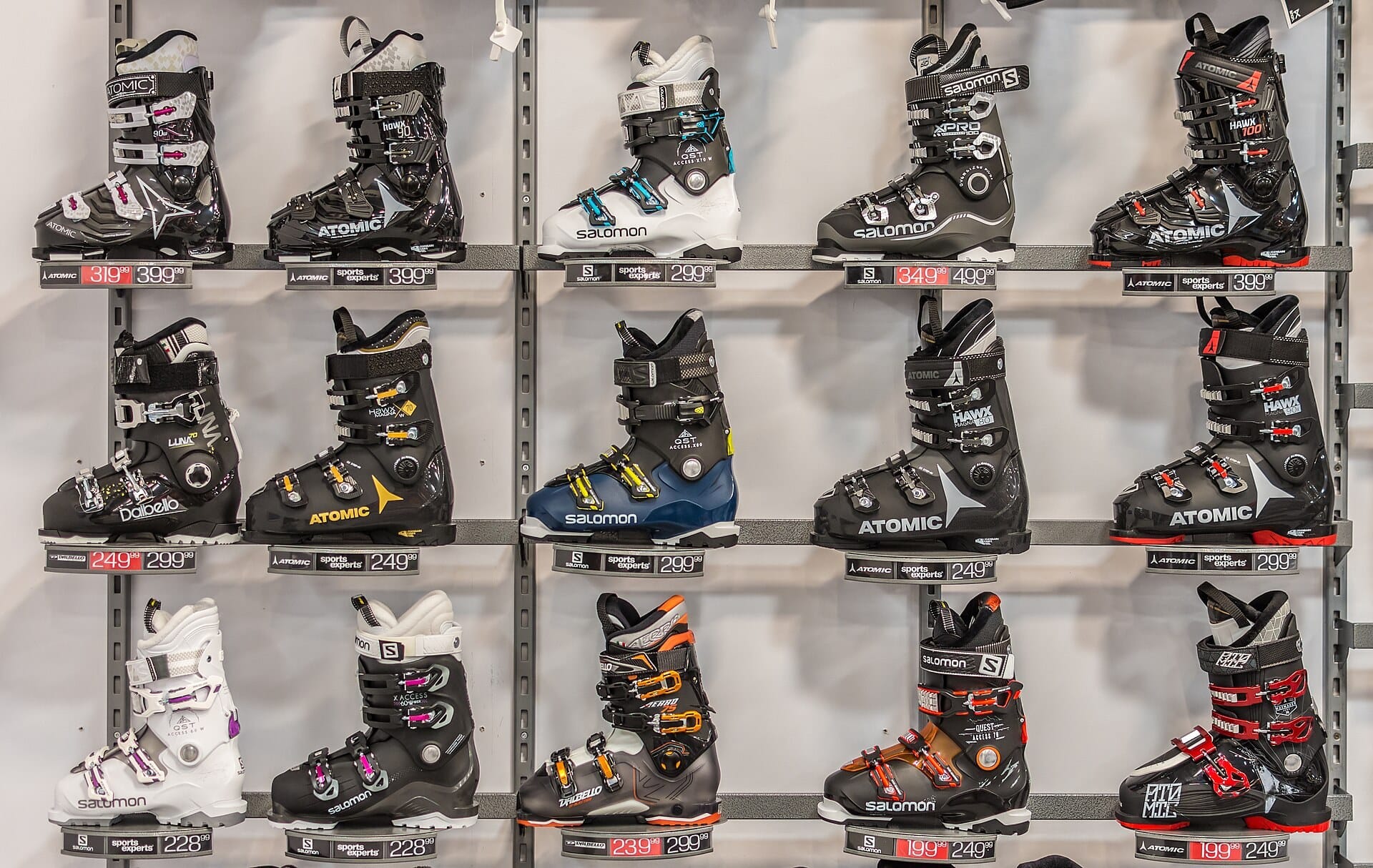
On the boot itself, almost every brand says the same thing: MP 26.5 is EU 41. Our listings show this. The differences are elsewhere: in shop charts, in the shape of the shell and in the fit of individual models.
| MP | Head | Rossignol | Salomon | Nordica | Lange | Atomic | Tecnica | Dalbello |
|---|---|---|---|---|---|---|---|---|
| 23.5 | 37 | 37 | 37 | 37 | 37 | 37 / 36.5 | 37 | 37 |
| 25.5 | 39.5 | 39.5 | 39.5 | 39.5 | 39.5 | 39.5 | 39.5 | 39.5 |
| 26.5 | 41 / 41.5 | 41 | 41 | 41 | 41 | 41 | 41 | 41 |
| 28.5 | 43.5 | 43.5 | 43.5 | 43.5 | 43.5 | 43.5 / 44 | 43.5 / 44 | 43.5 |
| 29.5 | 45 | 45 | 45 | 45 | 45 | 45 | 45 | 45 |
EU sizes as they appear next to the Mondopoint value in around 1,270 ski boot listings by partner retailers on buycycle (as of October 2026; most common entry per brand).
Three things still cause differences:
- Shop charts disagree. The same MP 26.0 is EU 39.5 in the Fischer charts (Skatepro) and 41 at Bergzeit. The brand chart from the data sheet beats any general chart.
- Performance and race fits are sometimes chosen a whole Mondopoint size smaller, for example at Nordica (according to the manufacturer's chart). This is for skiers who want a very tight fit, not for beginners.
- Women's models often have a different volume and calf height than men's models. Mondopoint stays the same, the fit does not.
Between two sizes: go bigger or smaller?
If your foot length falls between two Mondopoint sizes, try both and decide with the shell test. There is no blanket "always bigger" or "always smaller": the retailers contradict each other on this. For used boots the rule is: when in doubt, take the smaller size, because the liner has already packed out.
- Skatepro and Bergzeit advise the larger size when in doubt, Bittl and Intersport lean towards the smaller one.
- Half sizes often share a shell: MP 26.0 and 26.5 are frequently the same shell with a different liner thickness. That is why twin sizes fit you almost the same.
- The liner expands over time and gives up to half a size (according to Intersport Rent). New ski boots may therefore fit snugly. This is a main reason not to buy bigger.
- Don't rely on advice like "just go a whole size up". A boot that starts out with a size of room is too big after a few days.
Does the ski boot fit? Shell test and trying on
A ski boot fits when the heel is locked in, the toes come free when you bend your knees and nothing presses permanently. Two simple tests:
- Shell test: take the liner out, step into the shell and push your foot forward until your longest toe lightly touches the front. Behind the heel there should then be about 1 to 1.5 cm of space (roughly one finger wide). At 2 cm the shell is too big, under 1 cm it is too tight (unless you want a race fit).
- Skiing position: buckle the boot with light pressure, bend your knees and push against the tongue. Standing upright your toes may touch the front, but in skiing position the pressure must clearly ease. The heel lifts only minimally at most.
A boot is too big if the heel lifts clearly, the foot slides forward or sideways and you have to close the buckles very tightly. It is too small if you get numbness, cold feet or pressure points that persist after a few days of skiing.
If the pressure points are small, a bootfitter can adjust the liner or the shell. For numbness or pain, the boot belongs with a specialist, not on the next ski day.
Last width (LV/MV/HV) and flex: a short explanation
Last width is the width of the boot in the forefoot in millimetres, flex is the stiffness of the cuff. Both are part of the fit, but they don't belong in this chart. Here is just the essentials.
| Last width | About | For whom |
|---|---|---|
| Narrow | up to 98 mm | narrow feet, race fit |
| Medium | 99–102 mm | most feet |
| Wide | from 103 mm | wide feet, comfort |
Retailers draw the limits differently: Bittl calls 98 mm narrow, 99–100 medium and 101–103 wide, while Glisshop, for an MP 26.5 boot, uses 97–100, 100–102 and over 102 mm. The table shows rough bands, the boot's data sheet is what counts.
| Flex | For whom | Share of listings |
|---|---|---|
| 60–80 (soft) | beginners, occasional skiers, light skiers | 28% |
| 85–100 (medium) | intermediate skiers, all-round | 39% |
| 110–130 (stiff) | sporty skiers, heavy skiers | 31% |
| 140+ (race) | racers | 2% |
Share of 2,007 used ski boot listings on buycycle with a flex figure, as of October 2026. The assignment to skier types is a rough guideline.
We are writing separate guides on wide feet, thick calves and the right flex. Until then: when buying used, width matters more than any discount, because a boot that is too narrow won't get wider.
Sole length is not ski boot size
Sole length is the outer length of the boot sole in millimetres, and it determines whether the boot fits your binding. It is a three-digit number on the boot, usually moulded into the shell at the heel, for example 305.
You cannot work back to the Mondopoint number from it. Sole lengths are not standardised, and one shell often covers several Mondopoint sizes. Example Atomic, according to the Bergzeit chart (as of October 2025): MP 26–26.5 is 288 mm for the Backland, 300 mm for the Hawx Ultra and 302 mm for the Hawx Ultra XTD. Same size, up to 14 mm difference.
When buying used, this is the most important figure after the size:
- Bindings have only a limited adjustment range, some cover up to three shell sizes, lightweight touring bindings often none at all.
- If the sole length doesn't match your binding, you have to have it readjusted or remounted.
- Always have the binding set by a specialist shop according to ISO 11088, especially with used boots or a new boot and ski combination.
Kids' ski boots: size and growth
Kids' ski boots use the same Mondopoint system, but feet grow, so retailers allow for a little room. Depending on the source that is about 0.5 to 1 Mondopoint sizes above the measured length (Bergzeit mentions around 10 mm), but no more: a boot that is too big makes kids insecure and cold.
| MP (cm) | Foot length (mm) | EU approx. |
|---|---|---|
| 18.0 | 180 | 28–29 |
| 18.5 | 185 | 29 |
| 19.0 | 190 | 30 |
| 19.5 | 195 | 30–31 |
| 20.0 | 200 | 31 |
| 20.5 | 205 | 32 |
| 21.0 | 210 | 33 |
| 21.5 | 215 | 34 |
From MP 22 the big table above applies. Guideline values according to Outdoor-Renner and snow-how.
Kids often outgrow their boots in one to two seasons. That is a good case for used: a boot that is only worn for one or two seasons doesn't need to be new. Measure your child shortly before buying, because feet grow in spurts.
And ski touring boots?
Ski touring boots use the same Mondopoint size, but a different sole standard. They have a walk mode, so many people choose them a little more comfortable. In ski mode your toes shouldn't hit the front. Important when buying used: alpine, GripWalk and touring soles don't fit every binding. Check that sole and binding are compatible.
Buying used ski boots: the right size without trying them on
Used ski boots are plentiful on buycycle, but they sell slowly. Around 3,500 ski boots are listed on buycycle, and only about 60 of them have sold so far. We can't prove why. The obvious explanation is uncertainty about size: you can't try them on, and a boot that doesn't fit is worthless.
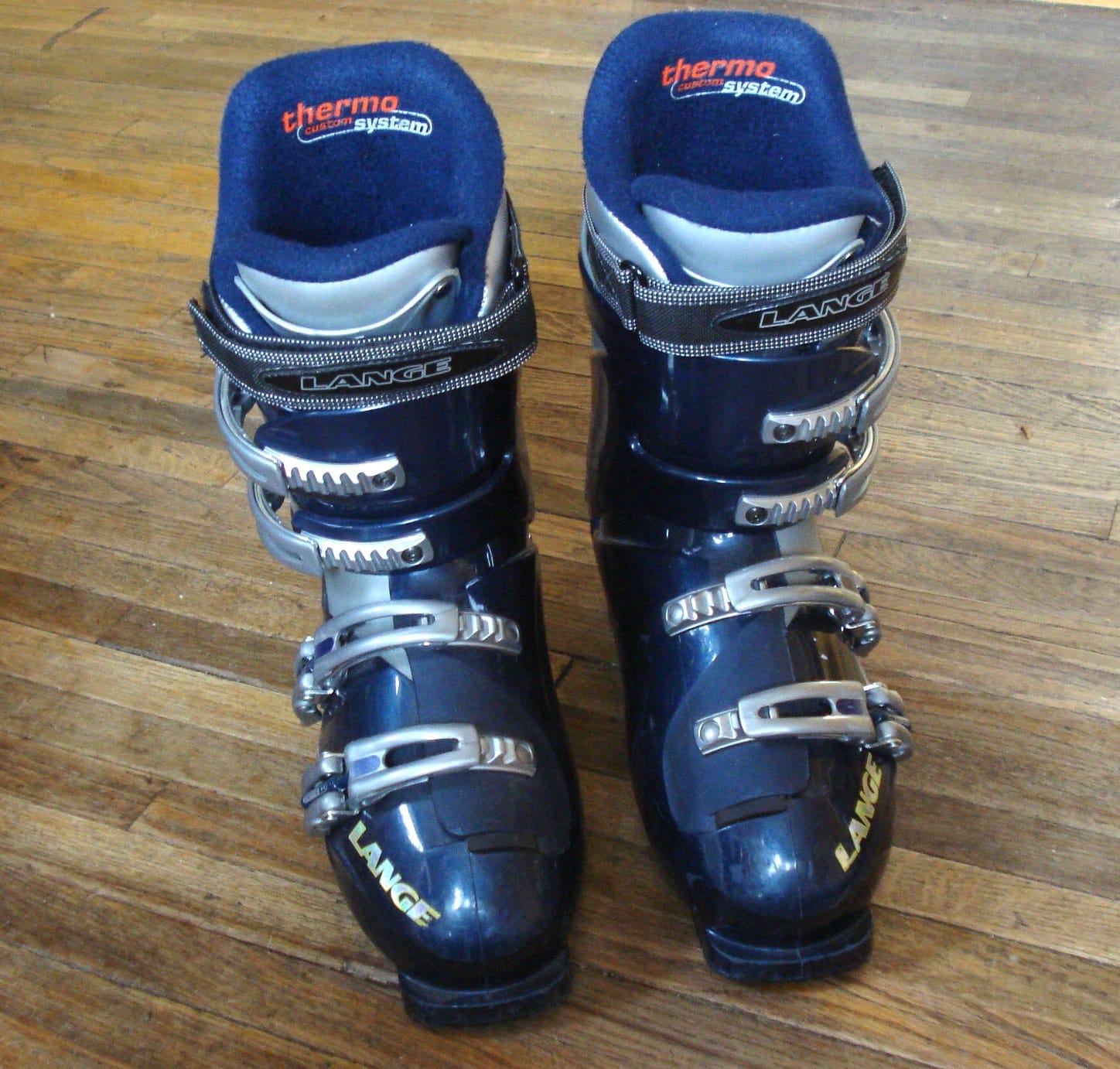

This can be solved if you go about it systematically. And it is worth it, because used ski boots are much cheaper:
| Age of the boot | Listings | Typical asking price | Share of new price |
|---|---|---|---|
| 0–1 years | 608 | €250 | 63% |
| 2–3 years | 630 | €150 | 49% |
| 4–5 years | 389 | €80 | 38% |
| 6–7 years | 346 | €63 | 33% |
| 8+ years | 605 | €52 | 29% |
Median asking prices of ski boot listings on buycycle (private and commercial sellers) with a model year, as of November 2026. "Share of new price" = asking price divided by the new price stated in the listing, only where given. Selling prices are slightly higher (median of sold ski boots: €180, only about 60 sales, so no split by age).
With ski boots, fit beats price. Feel free to try boots on in a specialist shop to find out your size and last width, and then look for the right boot used.
How to go about it:
- Know your Mondopoint size and your width. Measure your foot as described above. If you are unsure, have a specialist shop determine your size and foot shape, and note down the model, size and last width of the boots that fit well.
- Ask the seller for Mondopoint and sole length. The MP size is usually inside on the tongue or on the liner, the sole length in mm at the heel. Compare them with the brand's data sheet.
- Take the same size or the smaller twin size, never a bigger one. Used liners have already packed out and are moulded to the previous owner. The packing can account for up to half a size.
- Do the shell test on arrival (see above) and try the boot on at home with ski socks. Send it back if it doesn't fit.
- Check sole and binding. Are the toe and heel lugs worn down? Does the sole standard (alpine, GripWalk, touring) match your binding? When in doubt, have a specialist shop look at it.
- Have the liners adjusted. A bootfitter can re-mould heat-mouldable liners if they no longer fit after the previous owner.
With big feet the choice gets thinner: from EU 45.5 up, only about 4% of ski boot listings are available (125 of around 3,000 with an EU size). Patience and a saved search are worth it.
For more on pricing, see our ski price guide. If you want to sell skis or boots, the selling guide will help.
Here you can find used ski boots:
Sorted by brand: Salomon, Atomic, Nordica, Head, Tecnica, Lange, Rossignol, Fischer and K2. For the rest of your gear: skiing on buycycle.
FAQ
What size am I in ski boots?
Your ski boot size is your foot length in centimetres, rounded up to the next half size (Mondopoint). Measure the longer foot barefoot while standing. 265 mm is MP 26.5, about EU 41–42.
What size is 25 in ski boots?
MP 25.0 corresponds to a foot length of 250 mm, about EU 39 (up to 40 depending on the chart) and UK 5.5–6.
What is ski boot size 27.5?
MP 27.5 = 275 mm foot length, about EU 42.5–43, UK 8.5–9.
What shoe size is 265 mm?
A foot length of 265 mm = Mondopoint 26.5, about EU 41 (up to 42), UK 7.5.
What ski boot size for EU 38?
EU 38 usually corresponds to MP 24.5, at some brands also MP 24. Measure your foot again: 245 mm is 24.5.
What ski boot size for EU 40?
EU 40 corresponds to MP 25.5, at some brands MP 26. Here too, the measured foot length decides.
What size is 26.5?
MP 26.5 is a foot length of 265 mm, about EU 41–42, UK 7.5. The twin size MP 26.0 often shares the same shell.
Should you buy ski boots a size bigger?
No. Unlike with street shoes, the Mondopoint size already contains everything you need. A boot that is too big gives you less control and cold feet. For used boots: the same size or the smaller twin size.
Sources: ISO 9407 (Mondopoint, via Bergzeit and Outdoor-Renner); Bergzeit Magazin, "Mondopoint-Größe bei Skischuhen" (13.10.2026) and "Sohlenlänge Skischuhe" (22.10.2025); snow-how size charts; Outdoor-Renner Mondopoint chart (31.10.2026); size.ly Ski Boot Size Chart (June 2026); Skatepro (Fischer, Salomon); Nordica size chart (manufacturer data); Intersport Rent; Sport Bittl; Glisshop. Our own data: analysis of around 3,500 ski boot listings on buycycle (private and commercial sellers) and around 1,270 listings by partner retailers with a Mondopoint figure, as of October/November 2026.