Cycling has been on the rise in recent years, and the pandemic has further accelerated this trend in cities worldwide.
And the sport's increased popularity also means that more people are using their two wheels to commute to work. Data from the US Department of Transportation shows an increase in the number of people commuting to work by bicycle over the last couple of years, which equates to around just under 350,000 Americans.
There are lots of reasons why this may be the case, with benefits including helping people stay fit and healthy, cutting carbon emissions for our planet, and avoiding the frustration of traffic jams.
Another benefit that perhaps many overlook is that cycling to work can save you money.
Quite a bit of money.
Driving is becoming more expensive in the United States as previously falling gas prices spiked at the start of this year, sparked by higher oil costs, reveals Forbes.
And while the American Public Transport Association states that monthly public transit fare prices here have not increased since 2020, some US cities have ranked as having some of the most expensive ticket costs in the world.
That’s why, at buycycle, we’ve found out how much the average commuter could save if they swapped their car or public transport journey for one on two wheels across the world’s largest and most cosmopolitan cities. - Alice Huot @ buycycle.
Of course, we recognize that some workers have adopted a more hybrid work approach since the pandemic, so savings will be lower for those who don’t commute five days a week.
Let’s take a look!
How much money cycling commuting could save you in the US
Interesting findings
- California stands out as the state where the most savings can be made with the top three cities offering the highest salary savings for car users switching to bikes being in the state.
- San Jose is the Californian city that ranks lowest for savings, due to high average salaries and lower gas prices than elsewhere in the state.
- Philadelphia, Pennsylvania, is the US city that averaged out as having the highest savings across both car and public transport commuters, ranking fourth and third, respectively.
- Of the cities in the study where the average public transport commuting distance is available, New York has the shortest commute but the highest overall monthly pass, paying around 36 cents per distance traveled.
San Francisco
It’s no secret that San Francisco’s diverse workforce (which spans roles in tech giants, finance, biotech firms, and creative industries) has to navigate a daily commute consisting of long travel times and congestion. Recent news reports reveal that the city’s rush hour traffic was one of the worst in the US last year. And workers are paying the price of this.
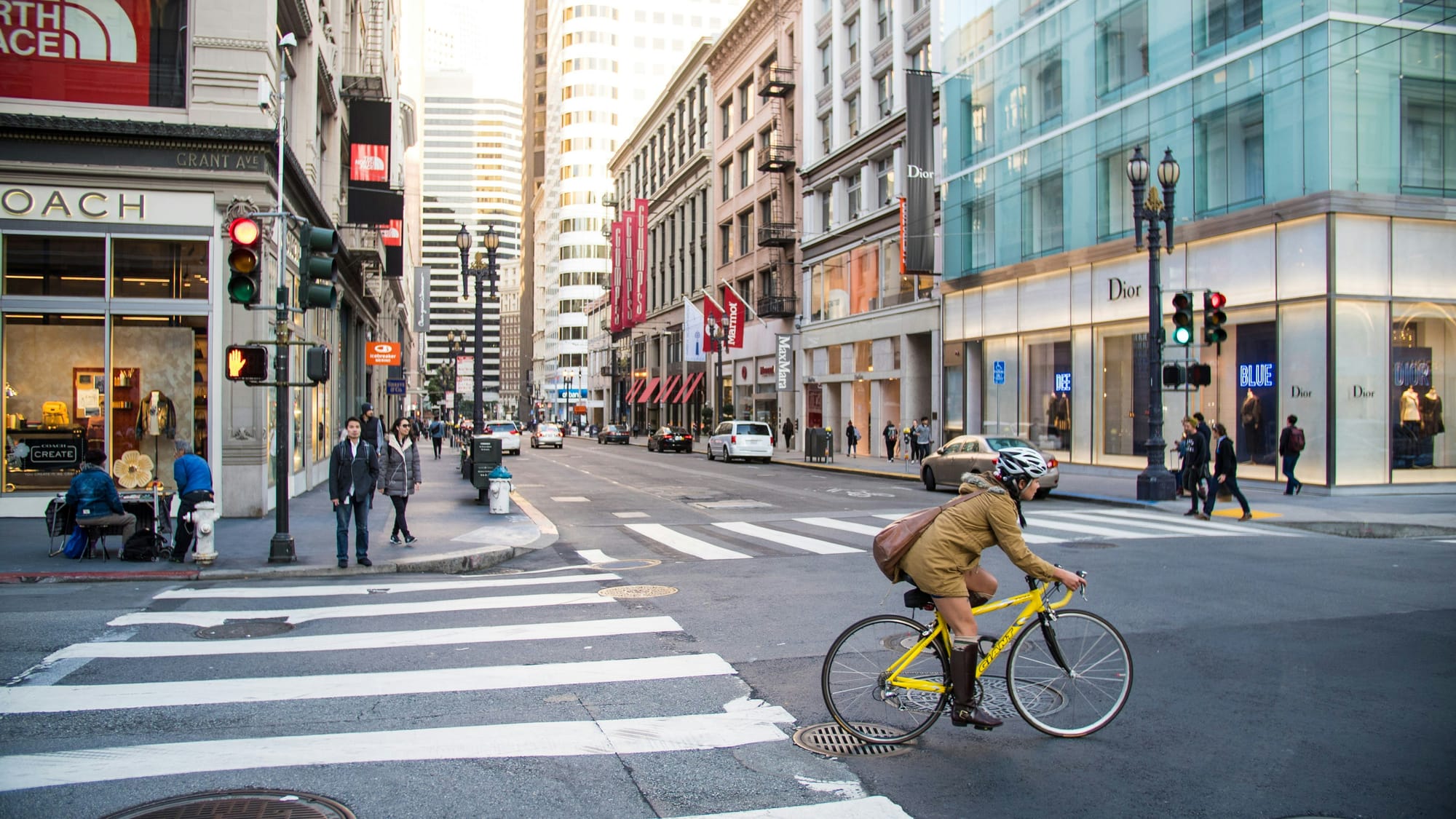
Despite having the biggest monthly wage of American cities in the study, San Francisco was also the US city where the highest percentage of salary was spent on driving to and from work. On average, San Franciscans spend around 7% of their $7,711 pay slip on commuting by car. Their average one-way distance of 38.45 miles can cost them around $339.14 monthly.
New York
Whether they’re heading to Wall Street or Broadway, New York’s bustling workforce heavily relies on the city’s public transport system for their daily commute. However, those who do use the subway system and commuter trains have to grapple each day with packed carriages and long journeys. Well, commuters in the Big Apple could avoid dealing with this daily - and save some money in the process - by cycling to work.
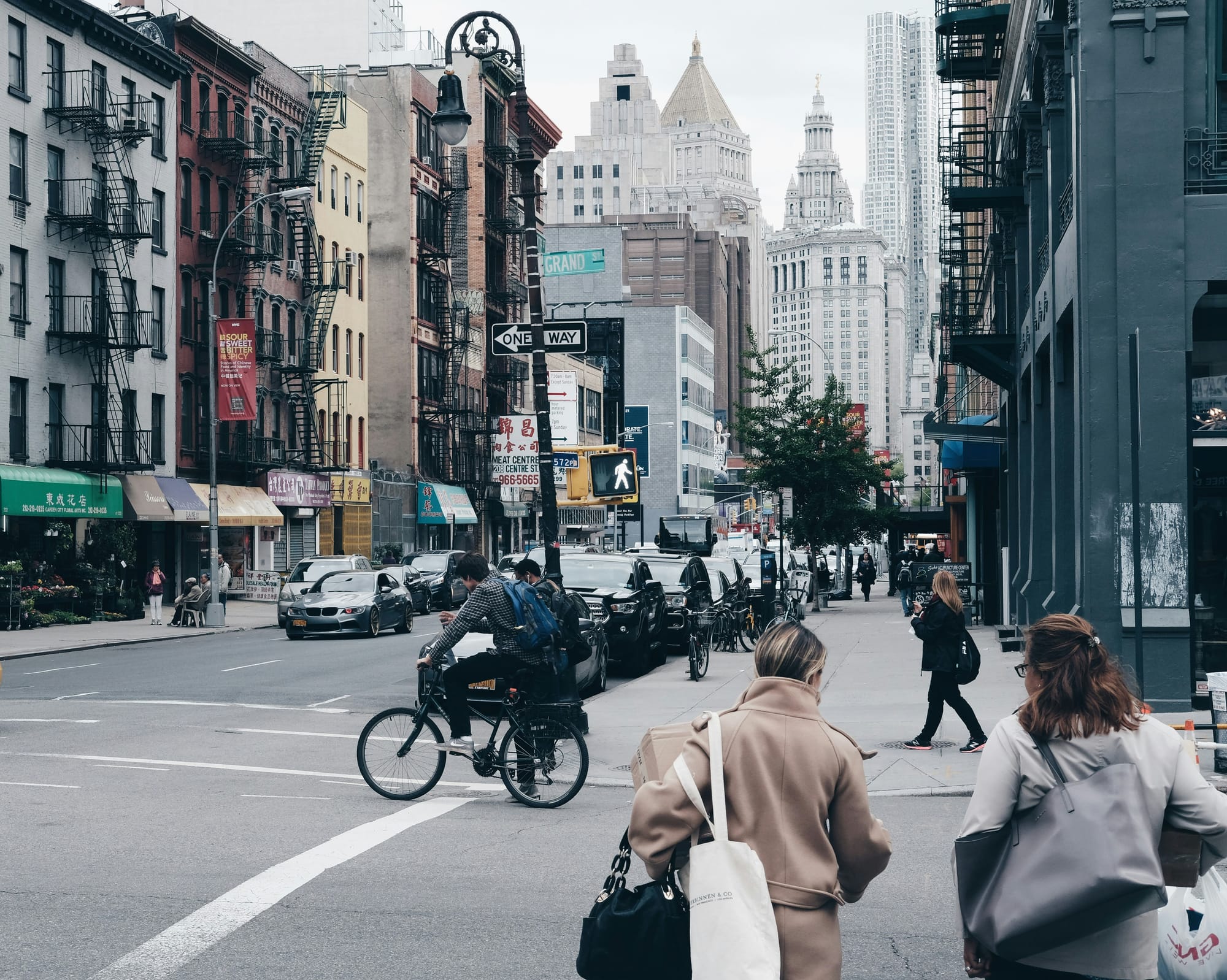
Of those who use public transport, the average New Yorker’s commute is just 8.44 miles between their home and their place of work. A distance that is definitely cyclable and will likely seem more appealing when they learn that doing so could save them $132.00 monthly! Although commuting only equates to 2.31% of their monthly salary, a chunk of money could be easily saved.
And what about elsewhere in the world?
How much money cycling commuting could save you around the world
Interesting findings
- On average, people in the world’s biggest cities spend around 5.54% of their monthly salary on driving to work, compared to 2.46% of those who use public transport.
- Drivers in Zurich could save $385.19 per month by cycling, although this only equates to 4.70% of their hefty salary.
- In Kuwait City, commuters spend the least amount of their salary on driving to work, with gas to and from their workplace only costing around 1.22% of their monthly wages.
- At the time of this study, Hong Kong had the highest gas prices, with the average gallon costing the equivalent of $11.66.
- Regarding the furthest commutes, San Francisco took the trophy with an average distance of 38.45 miles each way for those using a car, followed by Los Angeles with a 36.03-mile average.
- The shortest average commute is for those in Gothenburg, using public transportation, with a distance of just 1.24 miles.
London
London was ranked as the most congested city in the world only last year, with drivers spending an average of 156 hours stuck in traffic during 2022, according to data. However, government reports released in 2023 revealed that cyclists are now the single largest vehicular mode counted during peak times on city streets.
Aside from avoiding traffic jams and not having to play sardines on London’s underground network, another reason to cycle to work in the city will undoubtedly be the cost-saving benefit. Londoners commuting on the tube spend around 5% of their monthly salary just to get to and from work, and they could save as much as $255.50 each month on their average 12-mile journeys if they cycled.
Buenos Aires
Perhaps the most shocking statistic is that those commuting to work by car in Buenos Aires could be spending as much as a fifth of their salary on doing so. The city's sprawling urban layout and limited public transport mean that driving to work is a necessity for many professionals, but it appears to be costing them around 19.63% of their $428.65 monthly salary.
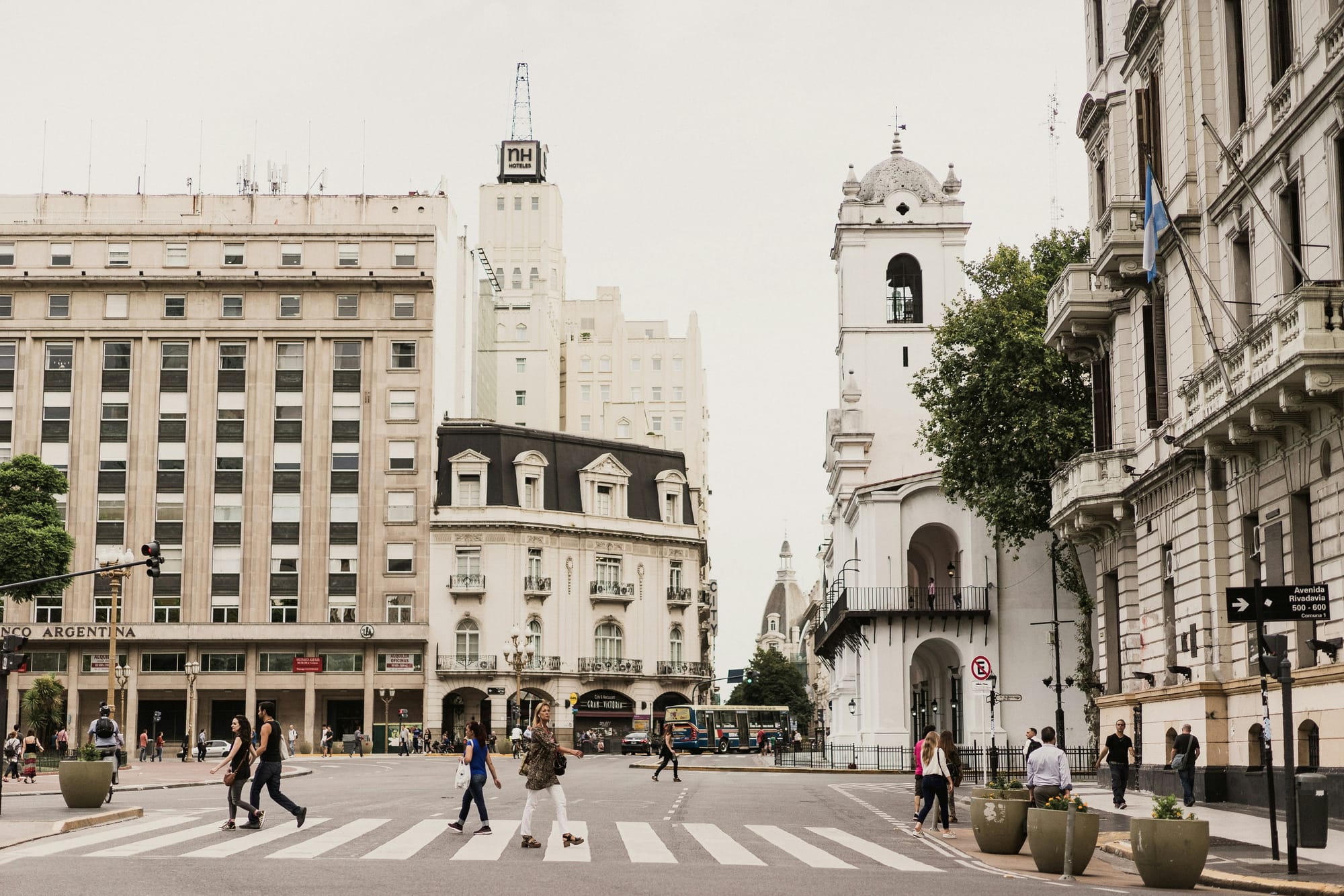
Their average 14-mile commute will cost Porteños the equivalent of $84.13 each month, with gas in Buenos Aires costing around $3.47 per gallon. The city, and Argentina in general, has been grappling with fuel costs in the last year, with prices having more than doubled in the last few months, according to reports. There is certainly a lot to be said about cycling to work in Buenos Aires, particularly from a cost point of view, and there are positive plans to add to the 250 km bike lanes it already has.
Bogota
Speaking of the biggest savings to be made by cycling to work, commuters in Bogota could recoup the most. On average, Bogotanos use 10.67% of their monthly salary commuting to work on public transport, with the average monthly cost of a pass being around $40. Considering that the average commute distance is just 3.73 miles, it’s cyclable and made even more appealing knowing that they could save a tenth of their paycheck.

Commuting by public transport doesn’t sound like a pleasurable experience either. Statista data has shown that Colombia's capital ranked first for the Latin American city, with the highest average time people spend on public transport on their way to work and an average commute time of an hour and 37 minutes!
Methodology
A list of worldwide cities was compiled using Resonance’s “World's Best Cities” list, and a list of US cities was taken from the 50 most populous.
We found the average price of monthly commutes using a car or public transport, where available, for each city.
For driving commutes, we calculated the amount of gas needed for each city's average commute distance and found the cost using the current gas price in that city.
For commutes via public transport, we used the average price of a monthly train/underground pass in each city.
We then found the average monthly salary in each city after tax and calculated the average commuting costs as a percentage of this.
The data is correct as of June 2024. A complete dataset is available upon request.
- Where to buy a bike: what are the options?
- Are Craigslist bikes, Ebay or Pinkbike good options to sell/buy a bike?
- Buying a bike at Canyon Outlet, Cube factory or Rose Outlet
- When to buy a bike?
- How much does a bike cost?
- Should I buy a new or used bike?
- What to look for when buying a used bike?
- Which type of bike should I get?
- A guide to bike size chart and wheel bike size chart